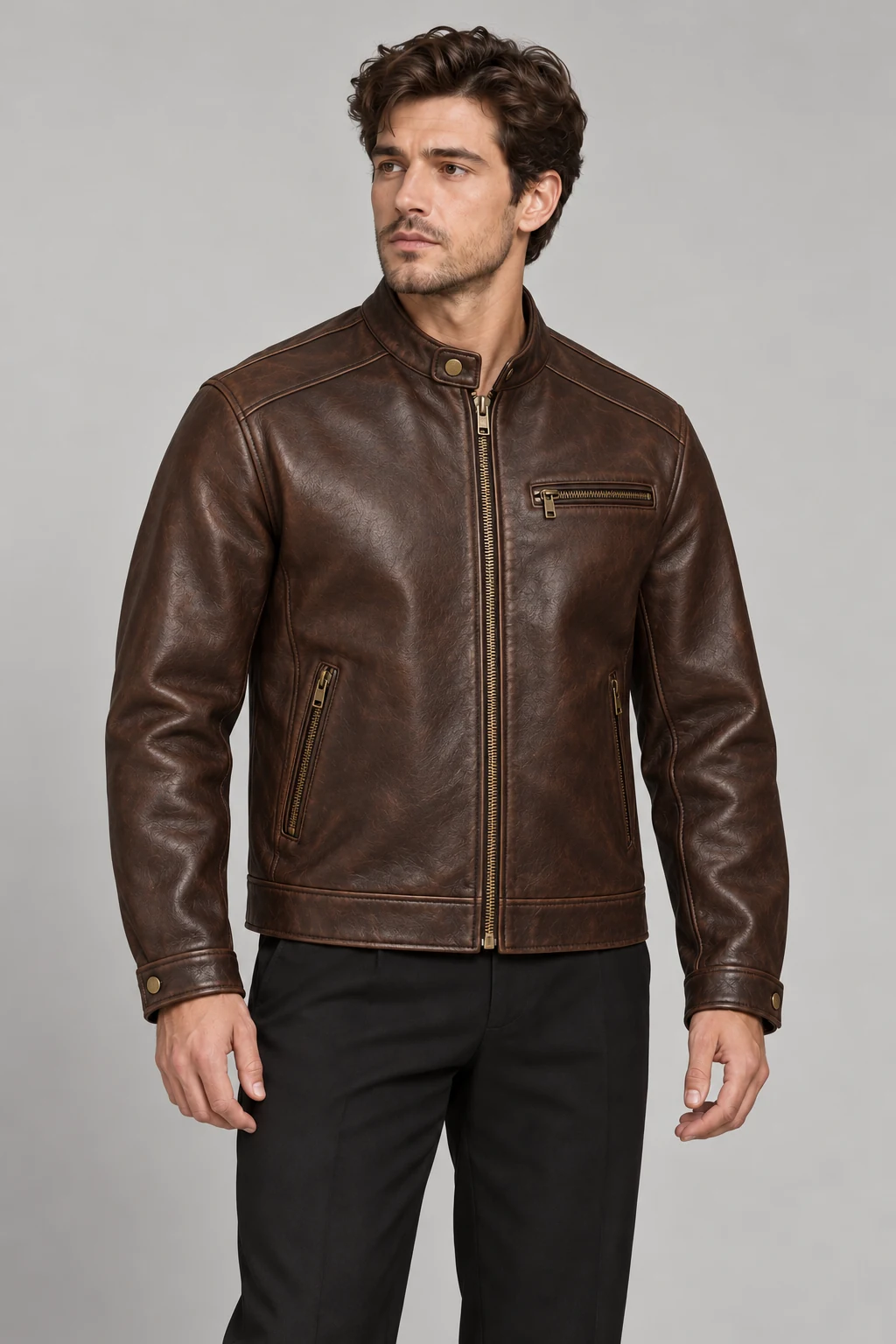
An oil-waxed leather jacket collection starts with a material decision, not just a colour palette. A promising image still needs to become an approved leather swatch, a wearable sample and a clear production specification. For brands and retailers, those steps help keep the finished range consistent with its intended price point and customer.
This guide focuses on sheep-leather jackets with an oil-and-wax finish. Use it to compare five design directions, prepare an OEM development brief and decide what to approve before ordering bulk production.
What is oil-waxed sheep leather?
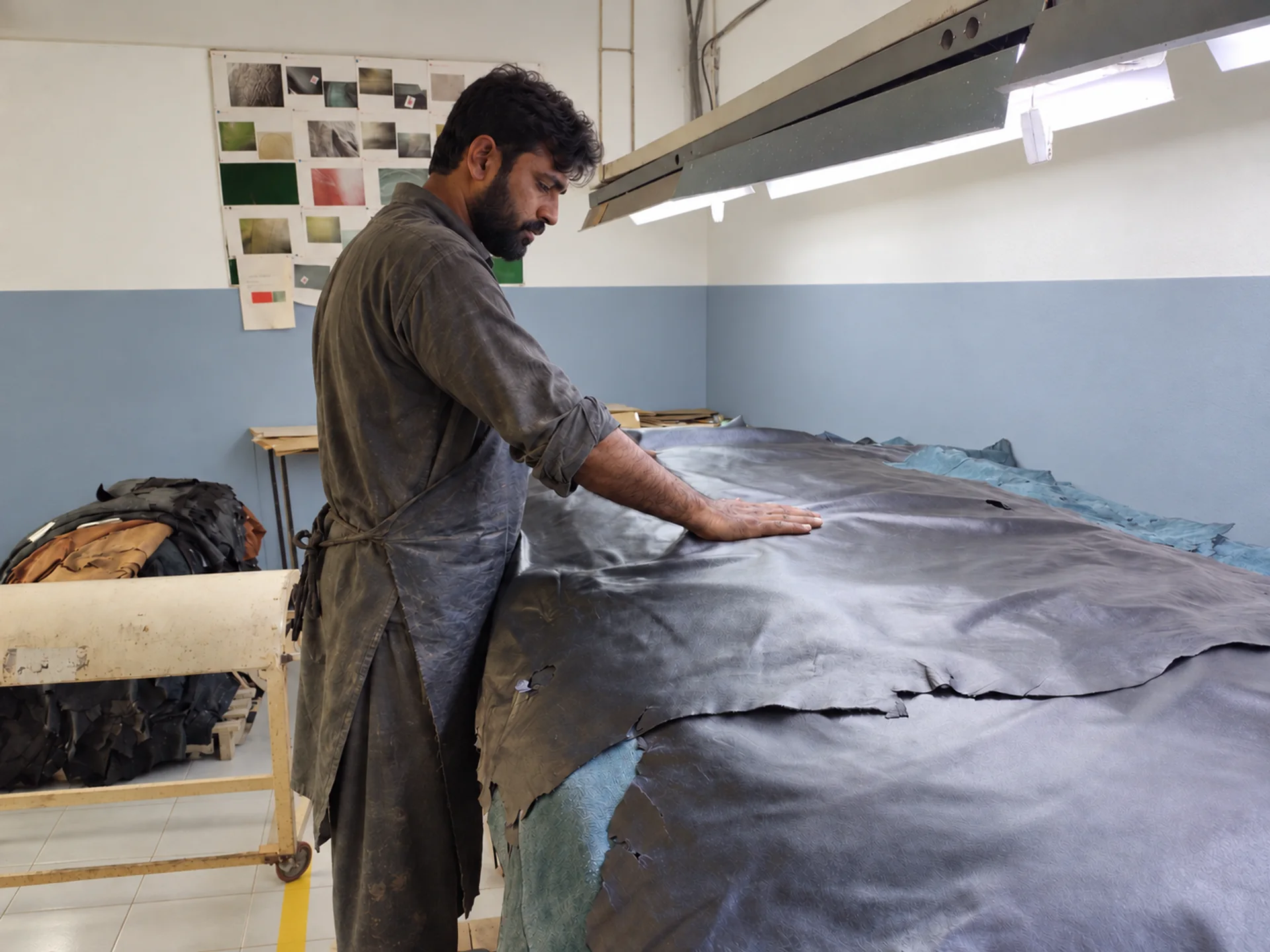
The description combines the hide species with a finishing direction. Sheep leather identifies the animal source; oil-waxed describes a treatment that must be specified separately. The name alone does not establish grain quality, thickness, softness, waterproofing or durability.
Ask for a representative physical swatch and a written material description. Confirm the leather substrate, thickness range, finish system, colour, hand feel and acceptable surface variation. An attractive screen image cannot establish any of these properties.
Some oil-and-wax systems produce a lighter appearance when flexed, often described as pull-up. Do not assume every oil-waxed leather has the same effect. Agree on the intended contrast on the actual material. Our waxed leather guide and pull-up leather guide explain the broader material terminology.
Choose the collection role before choosing details
Decide whether the jacket is intended as a fitted fashion piece, an everyday outer layer or a longer winter silhouette. Identify the clothing customers will wear underneath and the fit you want across the size range. A cropped wrap jacket and a field jacket require different movement, coverage and fastening checks.
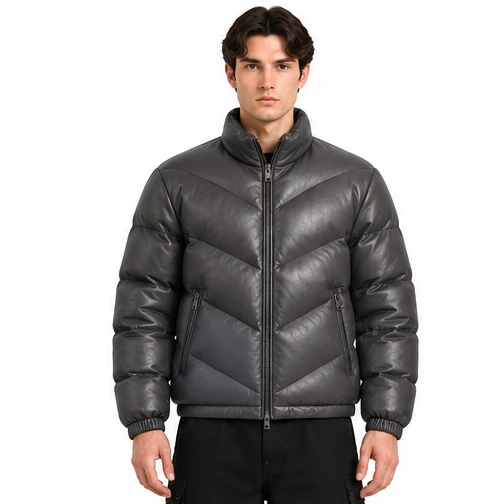
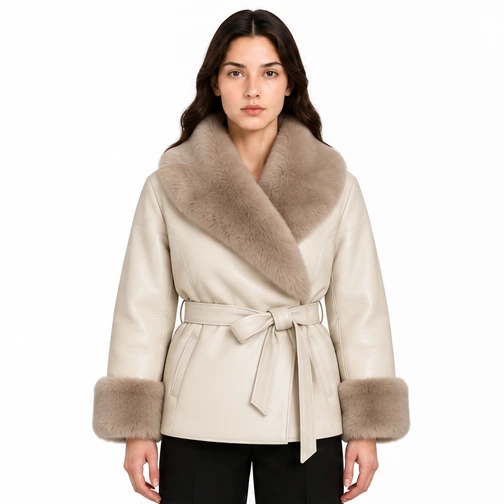
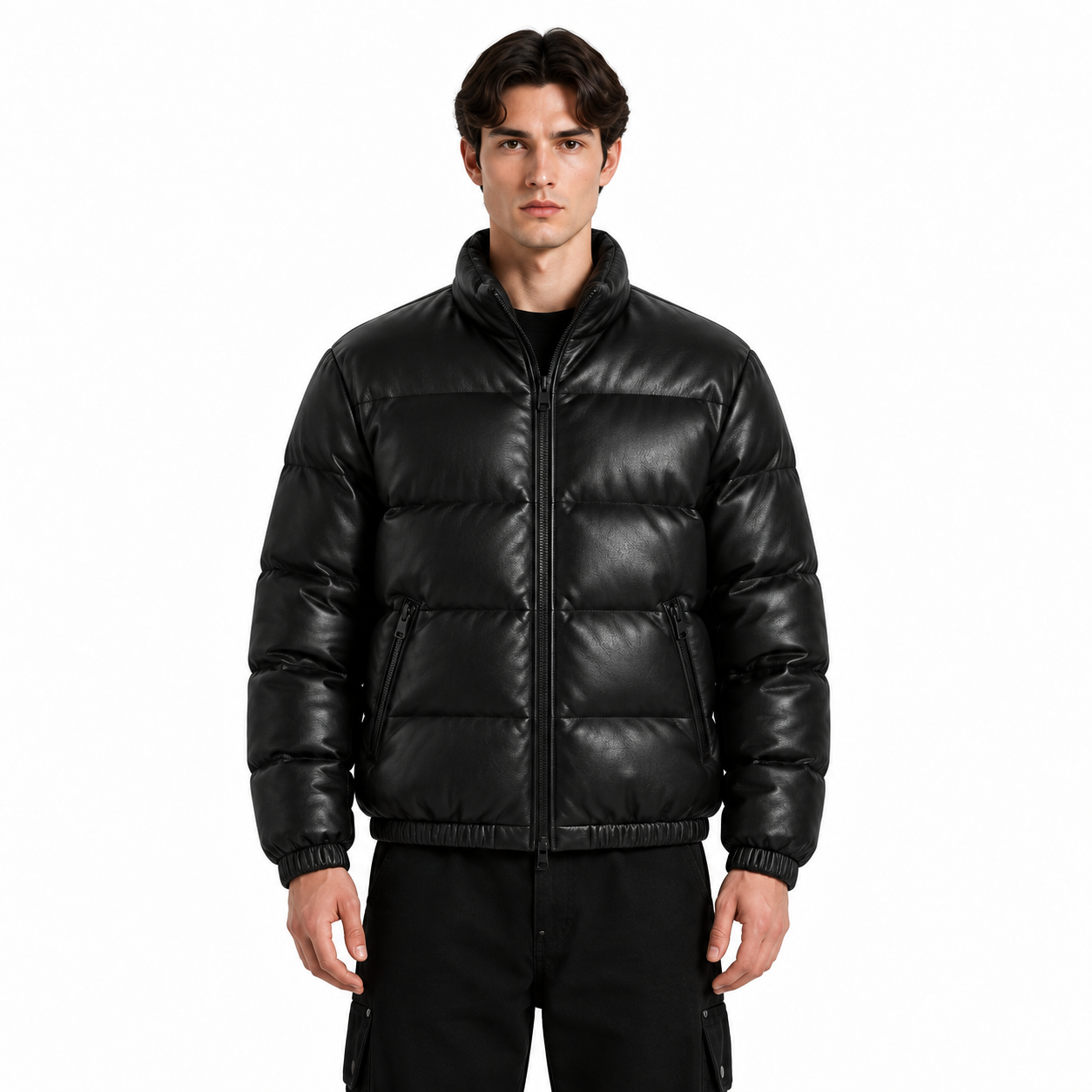
Use the five concepts below as development starting points. Images are AI-generated design concepts; materials, measurements, lining and construction require physical sample approval. They are not evidence of tested warmth or finished stock.
| Design | Collection direction | Priority sample check |
|---|---|---|
| Men’s tobacco cafe racer | Clean, fitted everyday style | Neck comfort, reach and zipper operation over the intended underlayer |
| Men’s olive utility trucker | Casual utility layer | Chest-pocket placement, snap operation and shoulder movement |
| Women’s cognac wrap jacket | Adjustable high-hip silhouette | Wrap overlap, belt position and coverage when seated |
| Women’s espresso cropped peacoat | Tailored double-breasted direction | Front overlap, lapel balance and button placement |
| Women’s charcoal belted field jacket | Longer utility outerwear | Hip ease, belt position and access to all four pockets |
A focused first range can share selected lining, hardware or packaging where that suits the designs. Ask the factory how shared components affect sourcing quantities, cost and scheduling rather than assuming that five styles can use one combined minimum order.
Approve a finish range, not one perfect photograph
Request swatches showing the proposed colour and acceptable variation. Review them in consistent lighting and record the agreed reference. For a tonal finish, agree how much contrast is acceptable between adjacent panels, at folds and around seams.
- Record thickness, softness, gloss and the expected response to bending.
- Define acceptable natural markings and areas where prominent marks should be avoided.
- Review surface marking and colour transfer against intended linings and light clothing.
- Agree suitable test methods and acceptance criteria for the destination market.
- Retain matching buyer and factory references for production comparison.
Discuss whether pressing, folding or packing changes the finish appearance. Include a packed sample in the review where practical. Do not promise a uniform appearance if the approved material intentionally has tonal variation.
Specify lining and winter comfort separately
Leather finish alone does not establish how warm a jacket will feel. Lining, insulation, fit, openings and intended conditions all affect the finished garment. For these concepts, quilted polyester lining and synthetic insulation are proposals; final composition and fill weight must be agreed during development.
Record lining composition, colour, insulation type and weight, quilting layout and attachment points. Check whether the chosen combination adds unwanted bulk at the armhole, belt or front overlap. A fitted cafe racer may need a different allowance from a longer field jacket.
Use the leather garment lining guide to prepare questions, then review the actual sample. Avoid temperature ratings, waterproof claims or performance descriptions without evidence for the finished construction.
Check fit, movement and size grading
Provide a measurement chart with clearly defined measuring points and tolerances. State whether chest figures are flat garment widths, garment circumferences or body measurements. Mixing those methods can produce a major sizing error even when the numbers appear reasonable.
Fit the sample over the intended underlayer. Check forward reach, elbow bend, sitting comfort, hem position and closure strain. Review collar comfort on the cafe racer and trucker, wrap coverage on the cognac design, front balance on the peacoat and hip movement on the field jacket.
Approve the base size before finalizing grading. Review additional sizes where needed rather than treating a proposed seven-size chart as a tested fit guarantee. Record agreed changes with photographs and updated measurements.
Review hardware, branding and care information
Confirm zipper and snap specifications, metal colour, button dimensions and any belt hardware. Test closures on the finished sample, including operation through the intended layers. Review reinforcement around stress points and inspect how hardware sits against the leather.
For private-label branding, provide vector artwork, logo dimensions, placement and label requirements. Approve embossing or debossing on the selected finish: a result on another leather is not an adequate production reference.
Care instructions should follow the approved material and construction. Do not prescribe a generic oil, wax or cleaning treatment without checking compatibility with the supplier. Agree protective packing, hangtags, labels and carton markings before final pricing.
Prepare a comparable factory quotation
Send your chosen design, intended buyer, target quantity per style and colour, size breakdown, leather specification, lining, hardware, branding artwork, packaging, destination and requested delivery date. Identify details that are fixed and those you want the factory to propose.
Hashbloom’s listed starting MOQ is 50 pieces per style, subject to the confirmed quotation. Custom leather, colour splits and trims may affect minimum quantities. Typical stated development schedules are 7–10 working days for samples and 25–35 working days for bulk after approval, subject to materials, revisions and capacity. Confirm the actual schedule in writing; transport and customs time are separate.
Ask the offer to identify sample charges, tooling, revision allowances, payment terms and shipping responsibilities. Share the same brief with each supplier so differences in price can be traced to materials, construction or scope.
Discuss development with our leather clothing manufacturing team in Pakistan. For a structured approval record, use the leather jacket sample approval checklist.
Frequently asked questions
Is oil-waxed sheep leather automatically waterproof?
No. The finish name does not establish waterproof performance. Any claim needs suitable evidence for the material and finished garment.
Can the colour and finish be customized?
Request the desired reference and a physical swatch. Availability, minimum quantities and acceptable variation must be confirmed with the factory before committing to a colour range.
Are these five designs ready-made stock?
They are proposed private-label design concepts. Confirm current availability and approve materials, measurements and construction through sampling before placing a production order.
What should I send to request a sample?
Send the preferred style, target fit, size chart, leather direction, lining, quantity, branding and delivery destination. Include your target date so the team can assess feasibility.
Request an oil-waxed jacket sample and quote
Choose your preferred concept and send your quantity, size range, colour reference and branding brief. Our team can review the material and construction requirements and confirm the next sampling steps.
Request a private-label jacket sample and factory quotation or explore the leather jacket collection.