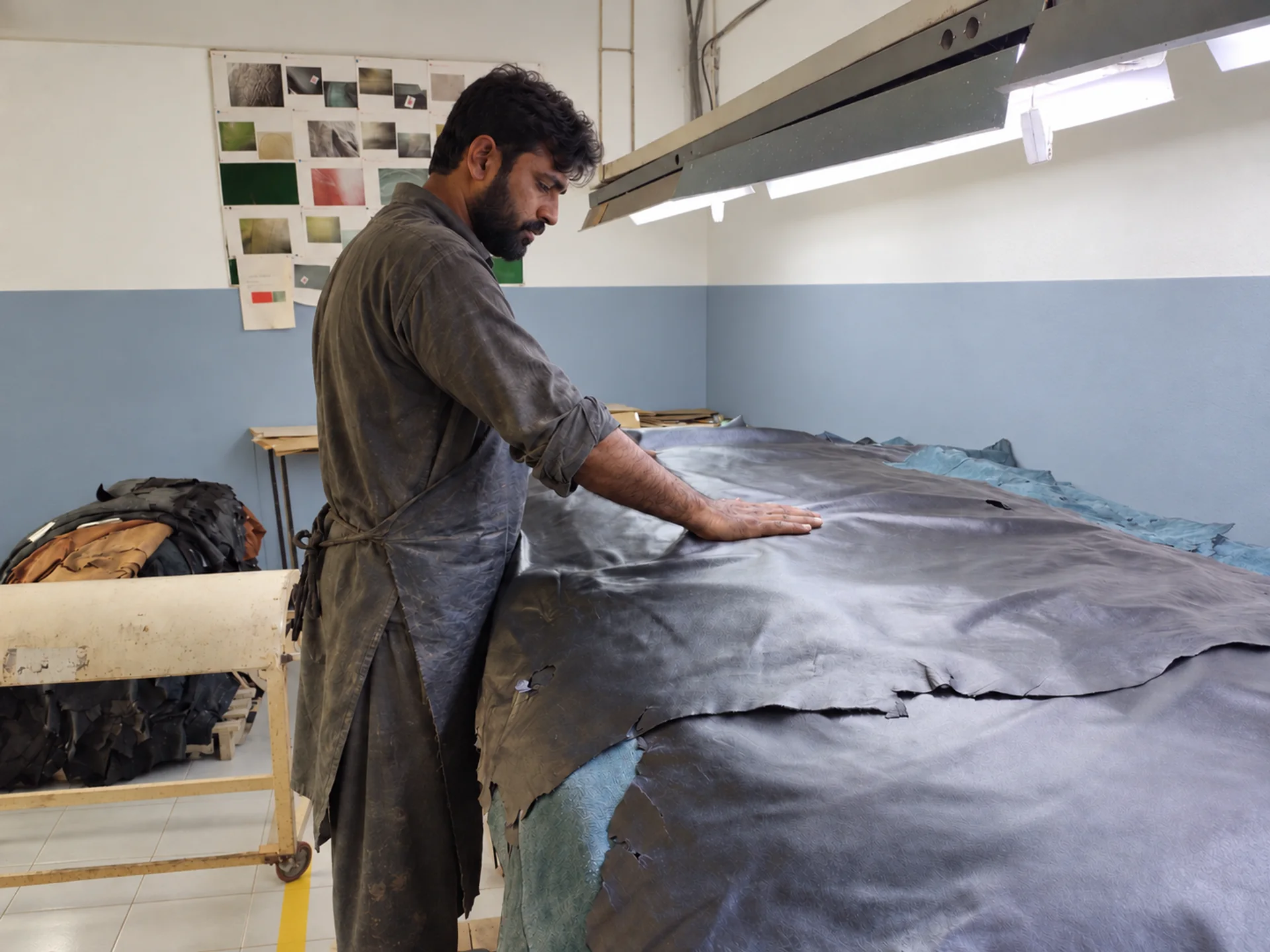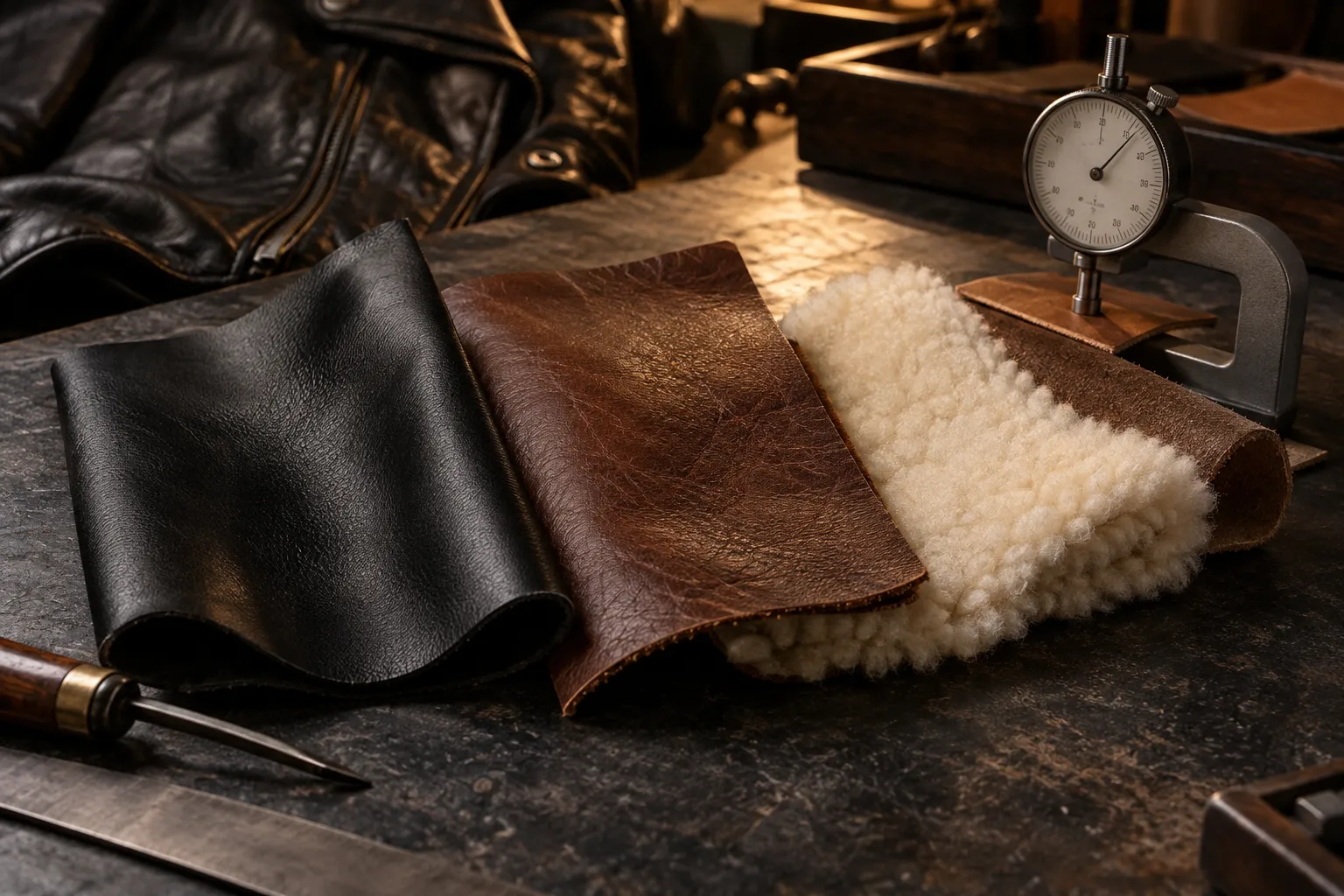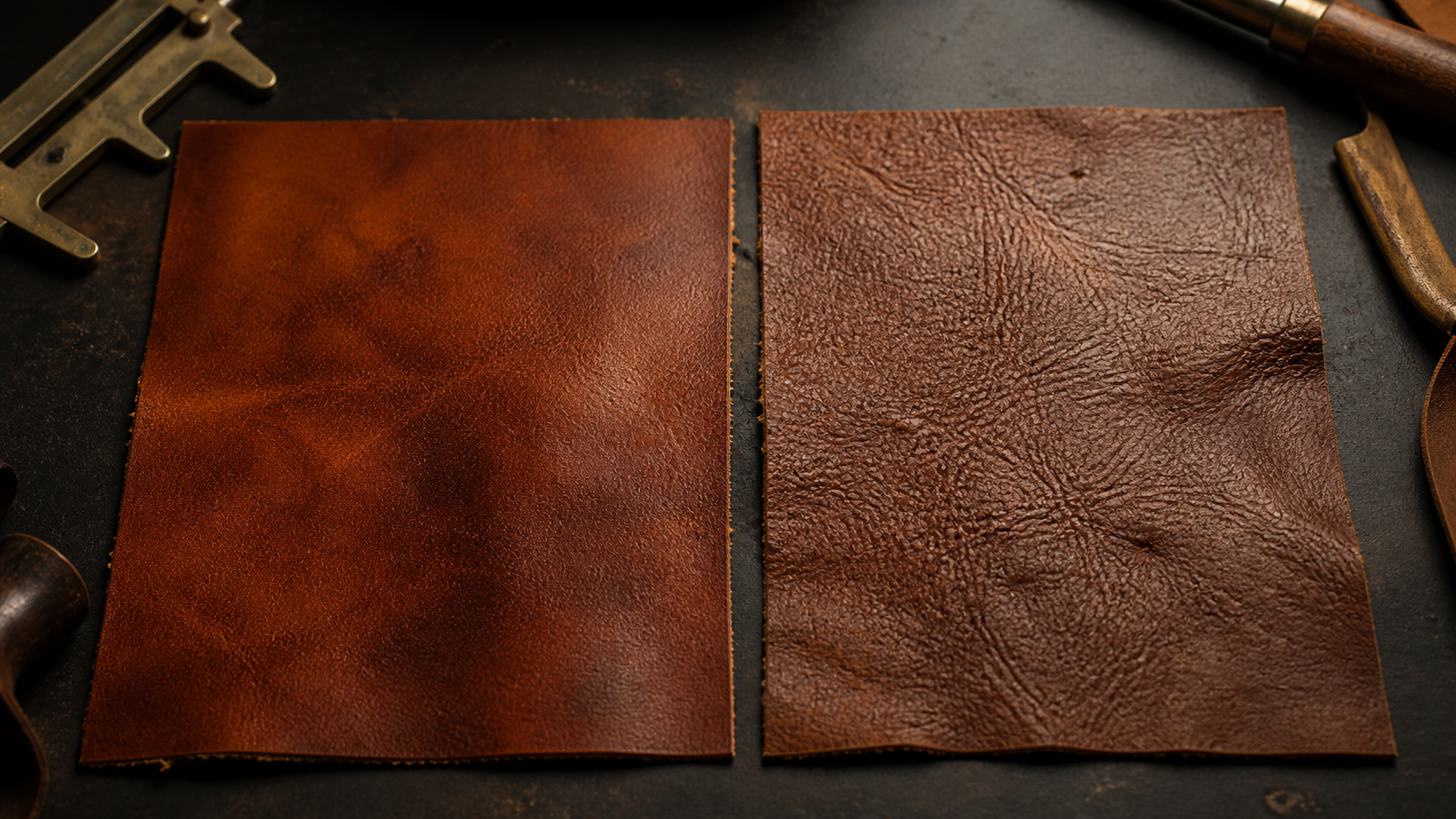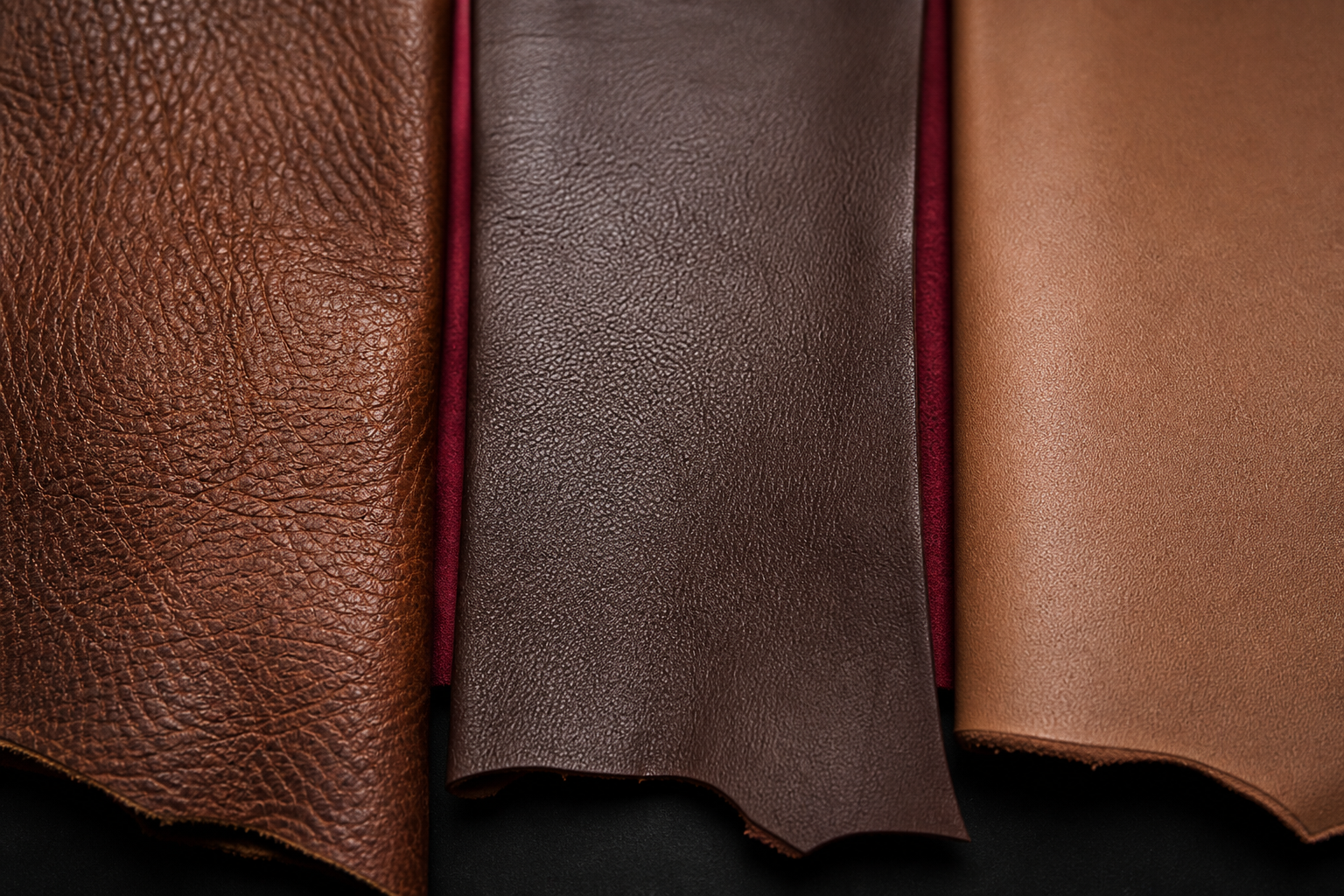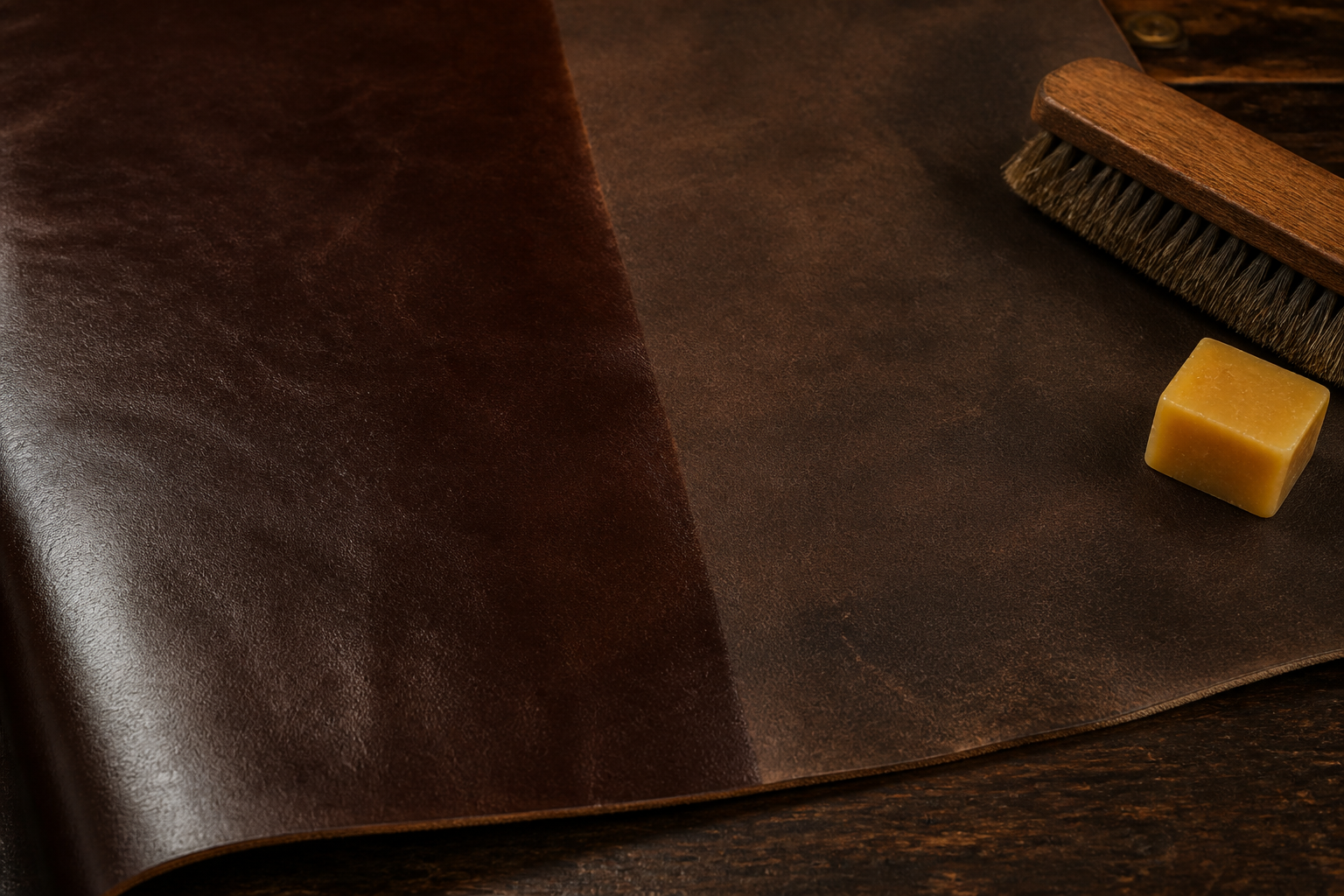
Short answer: waxed leather is leather treated with natural, synthetic or blended waxes during tannery finishing or after the product is sewn. The wax can deepen color, change gloss and touch, improve initial water repellency, create pull-up or burnished effects and help the surface develop a controlled patina.
What Is Waxed Leather?
Waxed leather is defined by its finish, not by animal species or hide layer. Cow, sheep, goat, nubuck, suede, full-grain and top-grain articles can all receive wax treatments. The result depends on the base leather, wax chemistry, application weight, penetration, polishing, heat and protective topcoat.
Some wax stays mainly on the surface and produces a smooth satin sheen. Some penetrates the grain and moves when flexed, giving a pull-up effect. Other waxes are applied to suede or nubuck to darken the nap and create a rugged, weathered appearance.
Why Tanners Use Wax
- To deepen transparent color and increase visual richness.
- To create a warm, dry, draggy or silky touch.
- To control gloss from matte through polished.
- To produce pull-up, burnished, antique or vintage effects.
- To improve initial water shedding and surface protection.
- To make minor rub marks blend through polishing.
- To support a patina that changes attractively with use.
Main Types of Waxed Leather
| Type | Surface behavior | Typical use |
|---|---|---|
| Surface-waxed leather | Wax is concentrated near the grain for touch, sheen and rub-responsive highlights | Jackets, bags, belts and footwear |
| Wax pull-up leather | Mobile waxes shift when the leather flexes, creating lighter bend marks | Heritage jackets, boots and luggage |
| Waxed suede or nubuck | Wax partially lays or darkens the nap and creates a rugged tonal surface | Casual outerwear, boots and bags |
| Burnished wax finish | Rubbing and polishing produce darker edges and selected high-gloss areas | Premium fashion, footwear and accessories |
| Garment-applied wax | Wax is added after sewing to emphasize seams, folds and wear zones | Vintage jackets and statement pieces |
Natural, Synthetic and Blended Waxes
Finishing systems may use beeswax, carnauba, paraffin, microcrystalline waxes, synthetic wax dispersions or proprietary blends. Natural waxes can contribute distinctive touch and polish, while engineered waxes help control melting point, flexibility, migration and batch consistency. Commercial formulas often combine several waxes with oils, resins and auxiliaries.
A higher natural-wax content does not automatically mean better performance. The finish must survive manufacturing, shipping temperature, flexing, abrasion and consumer care without becoming sticky, brittle or unstable.
How Waxed Leather Is Manufactured
- Base leather preparation: hides are tanned, retanned, drum dyed, fatliquored, dried and mechanically softened to the required thickness and temper.
- Surface preparation: grain is cleaned and, where specified, lightly buffed or sealed to control wax absorption.
- Wax application: hot wax, solvent-free dispersion or wax blend is applied by roller, spray, curtain coater, plating or hand work.
- Heat and penetration: controlled heat helps wax melt, level and migrate into the upper fibre structure.
- Cooling and setting: the wax crystallizes as the leather cools, establishing touch and surface appearance.
- Polishing or burnishing: brushing, glazing, ironing or rubbing develops sheen and contrast.
- Protection: a compatible light topcoat may improve rub resistance while preserving the desired wax response.
Waxed Leather vs Pull-Up Leather
The terms overlap but are not identical. Waxed leather simply contains a deliberate wax finish. Pull-up leather must visibly lighten when bent or stretched because mobile oils or waxes move within the surface. Some waxed leather has a strong pull-up; some stays relatively uniform and uses wax only for touch, gloss or protection.
For a detailed explanation of color migration, recovery and testing, read our complete pull-up leather guide.
Waxed Suede and Waxed Nubuck
On suede and nubuck, wax partially compresses the nap, darkens selected areas and creates a more rugged appearance. Flexing and brushing may reveal lighter fibres beneath. The effect can be attractive for boots, casual jackets and bags, but bulk consistency is challenging because nap direction and absorbency influence the shade.
Performance Advantages
- Rich color depth and premium tactile character.
- Attractive patina and vintage development.
- Initial water repellency when the finish is properly formulated.
- Minor scuffs may blend with gentle rubbing or brushing.
- Finishing versatility from matte and dry to polished and glossy.
- Good visual differentiation for heritage and luxury products.
Limitations and Quality Risks
- Heat sensitivity: wax may soften, migrate, bloom or alter gloss during warm storage.
- Color transfer: dark dyes, oil or loose wax can mark lining, clothing and packaging.
- Wax bloom: pale haze may develop as components crystallize on the surface. Some bloom is intentional and buffable; uncontrolled bloom is a defect.
- Shade variation: uneven absorption can create unacceptable panel differences.
- Water spotting: wax improves shedding but does not make the article waterproof.
- Over-application: too much wax can make leather heavy, sticky, greasy or difficult to sew.
- Adhesion problems: oily or waxy surfaces can interfere with glues, edge paint, printing and some topcoats.
How to Identify Waxed Leather
Inspect the surface under raking light for a controlled satin or polished film. Rub a small hidden area with a clean cloth: waxed surfaces often warm, darken or increase in sheen. Bend the sample to see whether it also has pull-up. On waxed nubuck, rubbing may temporarily lay the nap and deepen color. Identification by touch alone is unreliable, so buyers should confirm the tannery article and finish specification.
Buyer and QC Checklist
How to Specify Waxed Leather
State the animal species, grain or split construction, thickness tolerance, temper, base shade, wax-effect shade, gloss range, touch, pull-up strength if required, water repellency target, rub fastness, heat-aging and migration requirements. Define whether bloom is acceptable, whether the surface should recover after rubbing and how panels must be matched.
Seal both a flat leather swatch and a finished-product sample. Sewing pressure, steaming, garment washing, ironing and packaging can all change wax distribution, so approval of the flat skin alone is not sufficient.
Care and Re-Waxing
Remove dust with a soft dry brush or cloth and blot spills immediately. Avoid detergent, alcohol, silicone polish and direct heat. Condition or re-wax only when the surface becomes dry, using a product compatible with the original finish. Test first in a hidden area because wax usually darkens leather and can change gloss or pull-up contrast.
Apply a very thin, even layer, allow it to absorb and buff gently. Heavy DIY application can clog pores, attract dust, stain clothing and make professional cleaning more difficult. Leather garments should normally be handled by a specialist cleaner familiar with wax finishes.
Final Takeaway
Waxed leather is valuable because it combines appearance, touch and evolving character. Its success depends on matching the wax system to the base leather and end product, then controlling shade, migration, bloom, flexing and care. Buyers should describe the desired behavior—not merely request “waxed leather”—and approve the effect on the finished article.