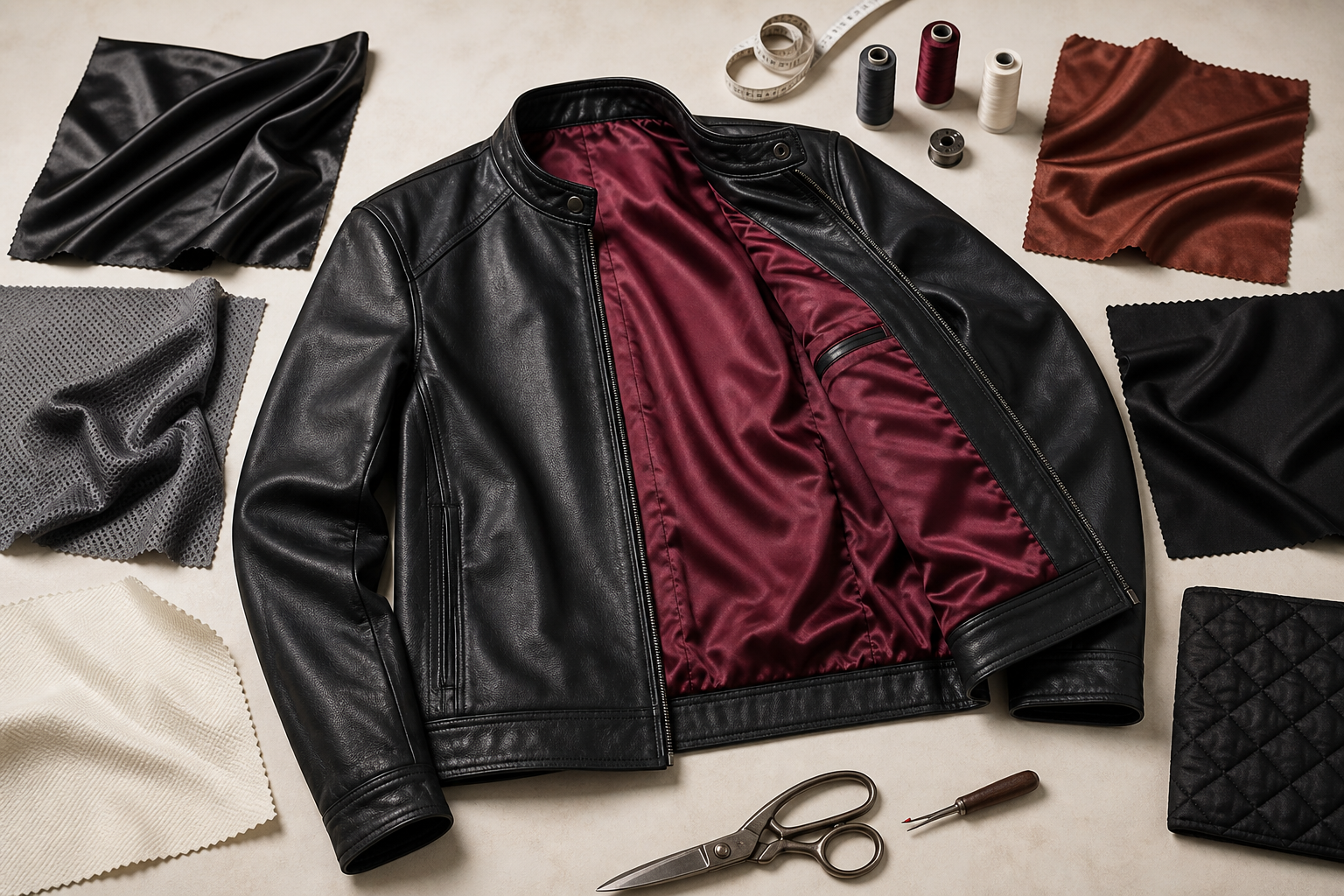
Quick recommendation: polyester satin is the dependable commercial choice; viscose or cupro suits premium fashion; cotton supports heritage styling; quilted constructions add winter warmth; and mesh is preferred for ventilated motorcycle or performance garments. The correct specification depends on the outer leather, climate, end use and target price.
Why Lining Selection Matters
Leather is heavier, less air-permeable and more resistant to needle corrections than ordinary fabric. Its lining must move with the shell without pulling seams, twisting sleeves or restricting the wearer. A good lining also protects the reverse side of the leather, hides internal construction, supports pockets and labels, and makes the garment easier to put on.
“Most demanded” does not mean one fabric wins every program. Fashion brands often prioritize drape and hand feel, motorcycle buyers need ventilation and abrasion-aware construction, while winter collections need thermal performance. The best manufacturer presents options against a clear product brief.
Most Requested Leather-Garment Linings Compared
| Lining | Common demand | Strengths | Best applications |
|---|---|---|---|
| Polyester satin | High-volume fashion | Smooth, durable, colorfast, economical | Jackets, skirts, pants and vests |
| Viscose / rayon | Premium fashion | Soft hand, breathability, fluid drape | Nappa jackets, skirts and tailored garments |
| Cupro / Bemberg-type | Luxury tailoring | Silky touch, breathability, anti-cling comfort | Premium jackets, blazers and coats |
| Cotton twill / poplin | Heritage and casual | Natural hand, structure, printability | Workwear, truckers and bags |
| Quilted polyester | Cold-weather | Insulation, shape and warmth | Winter jackets, bombers and coats |
| Polyester mesh | Moto and performance | Ventilation, low weight, moisture movement | Riding jackets, suits and perforated garments |
1. Polyester Satin: The Commercial Standard
Polyester satin is widely requested because it combines a smooth dressing surface, strong color options, dimensional stability and accessible cost. It works across leather jackets, pants, skirts and vests and can carry custom jacquard or printed branding. Its durability makes it practical for high-volume wholesale collections.
The tradeoff is lower moisture absorption than cellulosic linings. Specify a suitable fabric weight, anti-static performance where needed and enough ease through the body and sleeves. Very light satin can snag at pocket bags, zipper ends and rough leather edges.
2. Viscose and Rayon: Soft Premium Comfort
Viscose-based linings offer a softer, more breathable hand and fluid drape than standard polyester. They pair particularly well with sheep Nappa, lambskin and tailored leather because the lining supports a premium feel without making the garment rigid.
Buyers should confirm shrinkage, colorfastness and seam strength. The fabric may need careful cutting and handling, and the supplier should approve both shade and weight before bulk production.
3. Cupro: Luxury Jacket and Tailoring Lining
Cupro—often requested in premium tailoring for its silky hand, breathability and reduced cling—creates a refined inside finish. It moves comfortably over shirts and knitwear and is suitable for luxury leather jackets, blazers and coats.
It costs more than standard polyester and requires good sewing control. Confirm the exact fiber content rather than using a premium trade description generically, and test seam slippage on the selected construction.
4. Cotton Twill and Poplin: Heritage Character
Cotton linings give trucker, workwear and field jackets a natural, substantial interior. Twill adds structure and durability, while lighter poplin reduces bulk. Cotton also accepts prints well and can reinforce a heritage or utility brand story.
Because cotton does not slide over clothing as easily as satin, many programs use cotton in the body and a smoother lining in the sleeves. Shrinkage and colorfastness must be controlled before cutting.
5. Quilted and Insulated Linings: Winter Demand
A quilted lining sandwiches insulation between a face fabric and backing, adding warmth and body to bombers, aviators and winter coats. Diamond quilting remains common, but channel and custom quilting can support a distinctive brand identity. Insulation type and weight should be selected for the target climate.
Bulk must be allowed for in the pattern. Armholes, sleeve circumference and across-back ease that fit a thin satin lining may feel restrictive after insulation is added.
6. Mesh and Performance Linings: Moto and Ventilated Garments
Polyester mesh is requested for motorcycle jackets, riding suits and perforated leather styles because it supports airflow and reduces weight. It can also separate the wearer from armor pockets and internal reinforcements. Mesh selection should consider snag resistance, stretch direction and contact comfort.
Performance programs may combine mesh zones with solid fabric at high-friction areas. A full construction review is more reliable than selecting one fabric for every panel.
Printed, Jacquard and Branded Linings
Custom interiors turn the lining into a brand surface. Repeating logos, seasonal artwork, contrast colors and woven jacquards can make an unbranded exterior feel proprietary. Buyers should approve motif scale, repeat alignment, color standards and print rub resistance. Labels and interior pockets must remain readable against the artwork.
For related branding options, see our private-label leather branding guide.
How to Match Lining to the Garment
- Soft Nappa fashion jacket: viscose, cupro or premium lightweight satin.
- Cowhide biker jacket: durable satin, twill-body/satin-sleeve combination or removable quilted liner.
- Motorcycle suit: breathable mesh with reinforced pocket and armor zones.
- Winter aviator or bomber: quilted insulation, shearling construction or thermal lining.
- Leather skirt or pants: lightweight smooth lining with stretch compatibility where required.
- Heritage trucker or field jacket: cotton twill body with smooth sleeve lining.
Buyer Specification and QC Checklist
The lining should be approved inside a complete fit sample, not only as a loose swatch. Inspect sleeve twist, movement, hem attachment, pocket access, seam puckering and whether any lining is visible at cuffs or the front opening. For washed leather garments, test the complete assembly because leather, lining, thread and interlining may shrink differently.
Common Lining Problems
- Insufficient ease causes pulling or torn armhole seams.
- Light fabric snags on zipper stops, pocket hardware or unfinished leather edges.
- Poor shade fastness transfers color to clothing or the leather reverse.
- Uncontrolled shrinkage creates a hanging or twisted shell.
- A stiff lining changes the intended drape of soft leather.
- Incorrect stretch direction restricts leather pants or fitted garments.
Final Recommendation
Choose lining by product function first and price second. Polyester satin remains the versatile commercial option; viscose and cupro elevate premium fashion; cotton supports structured heritage garments; quilting adds warmth; and mesh serves ventilated moto construction. A sealed sample and clear performance tests are the safest route from an attractive swatch to reliable bulk production.