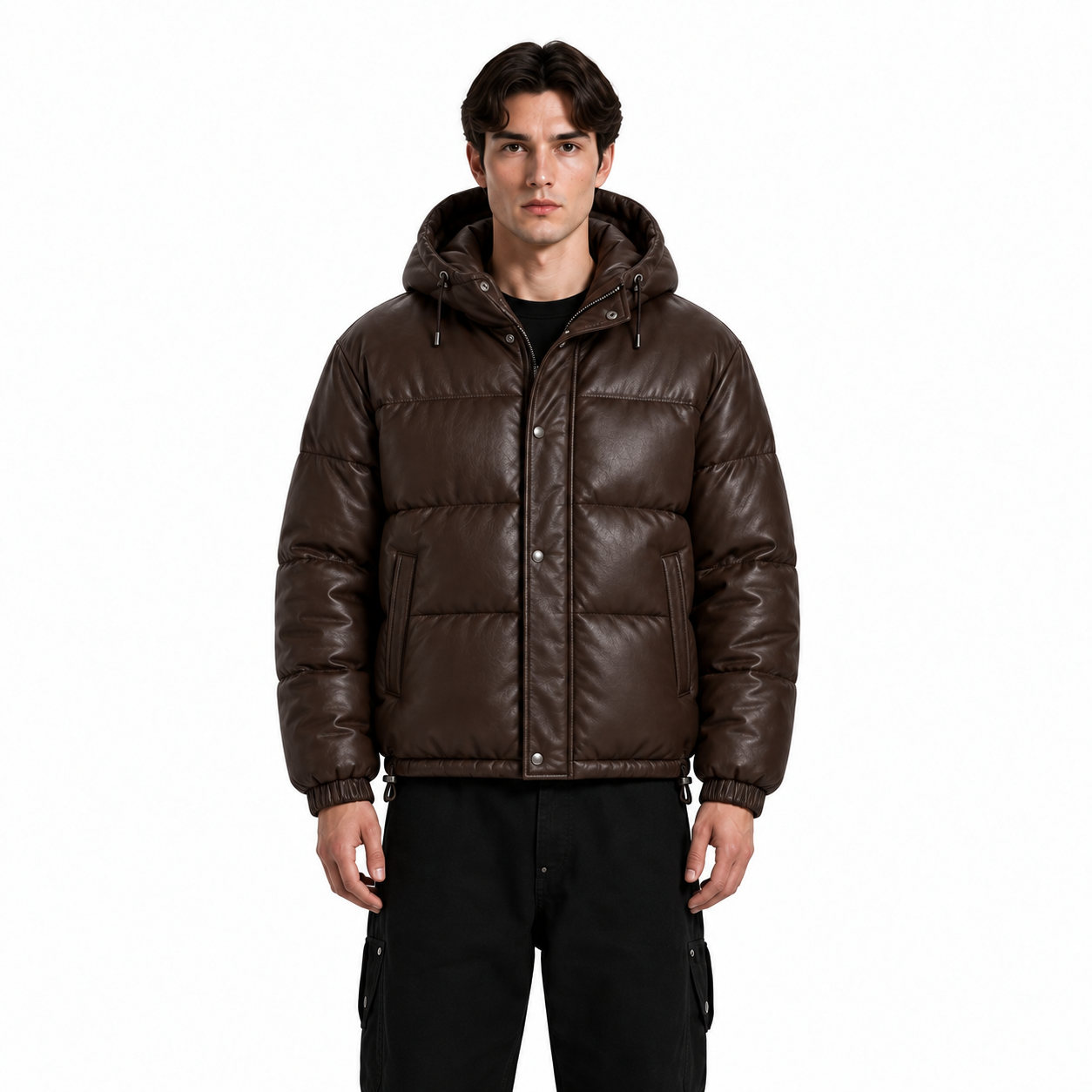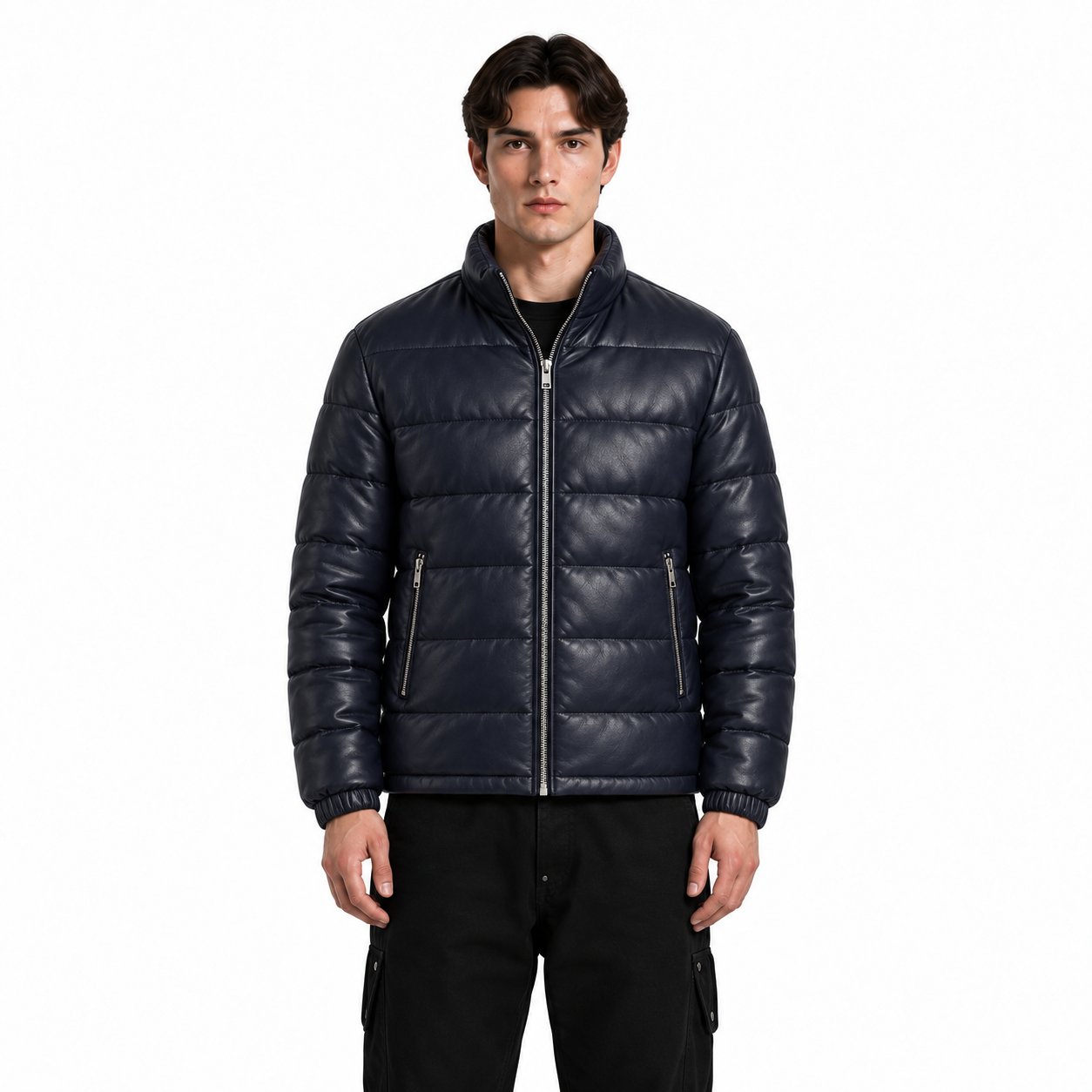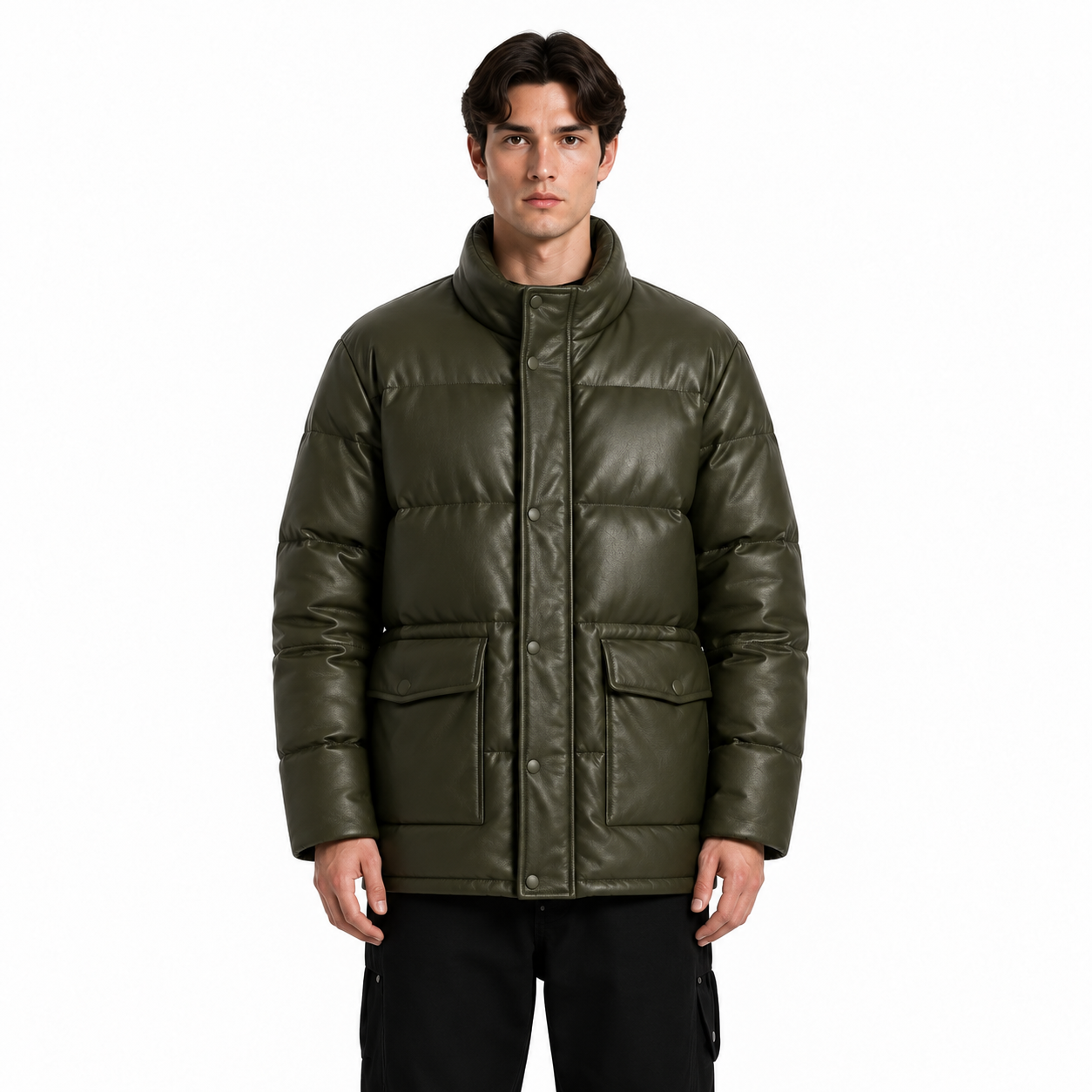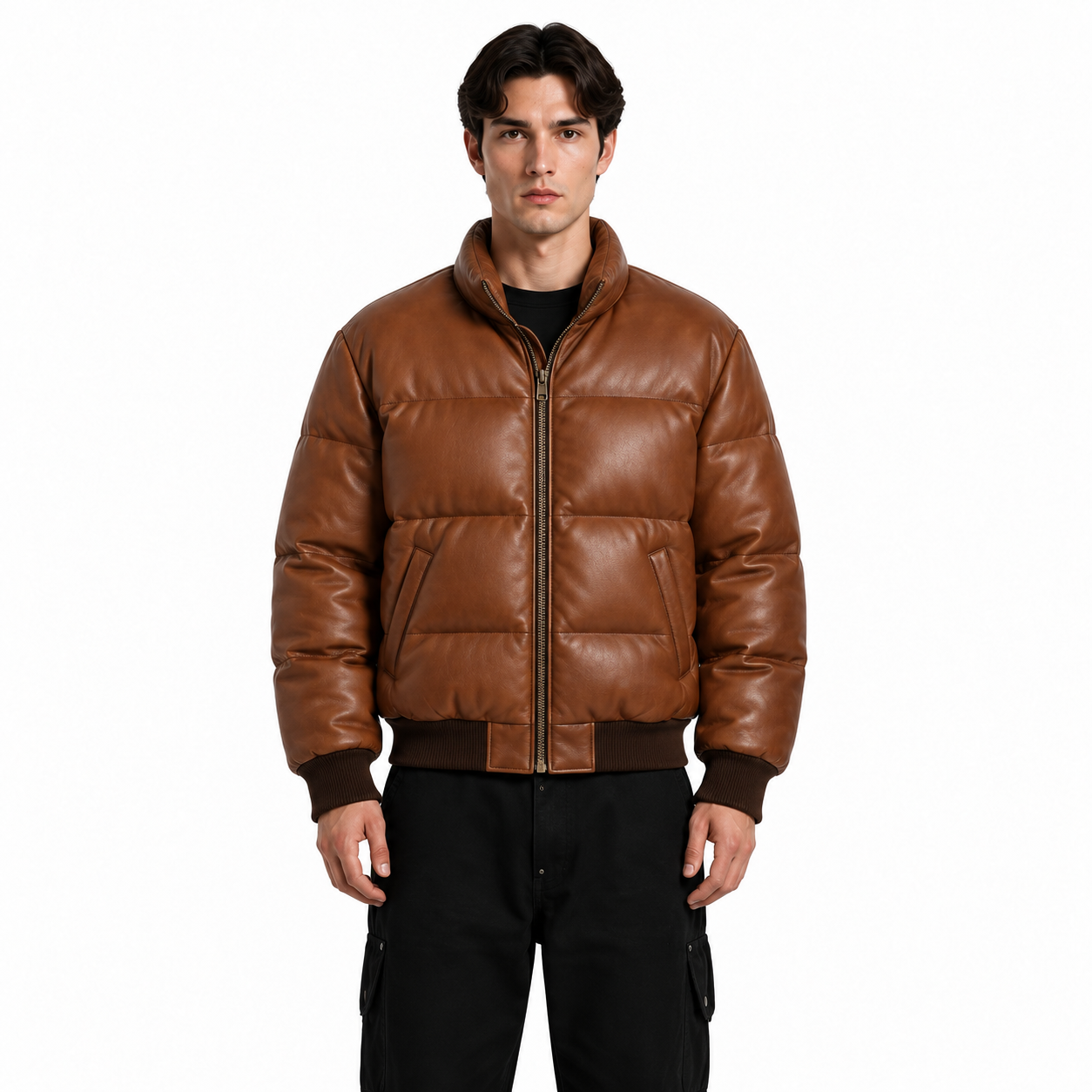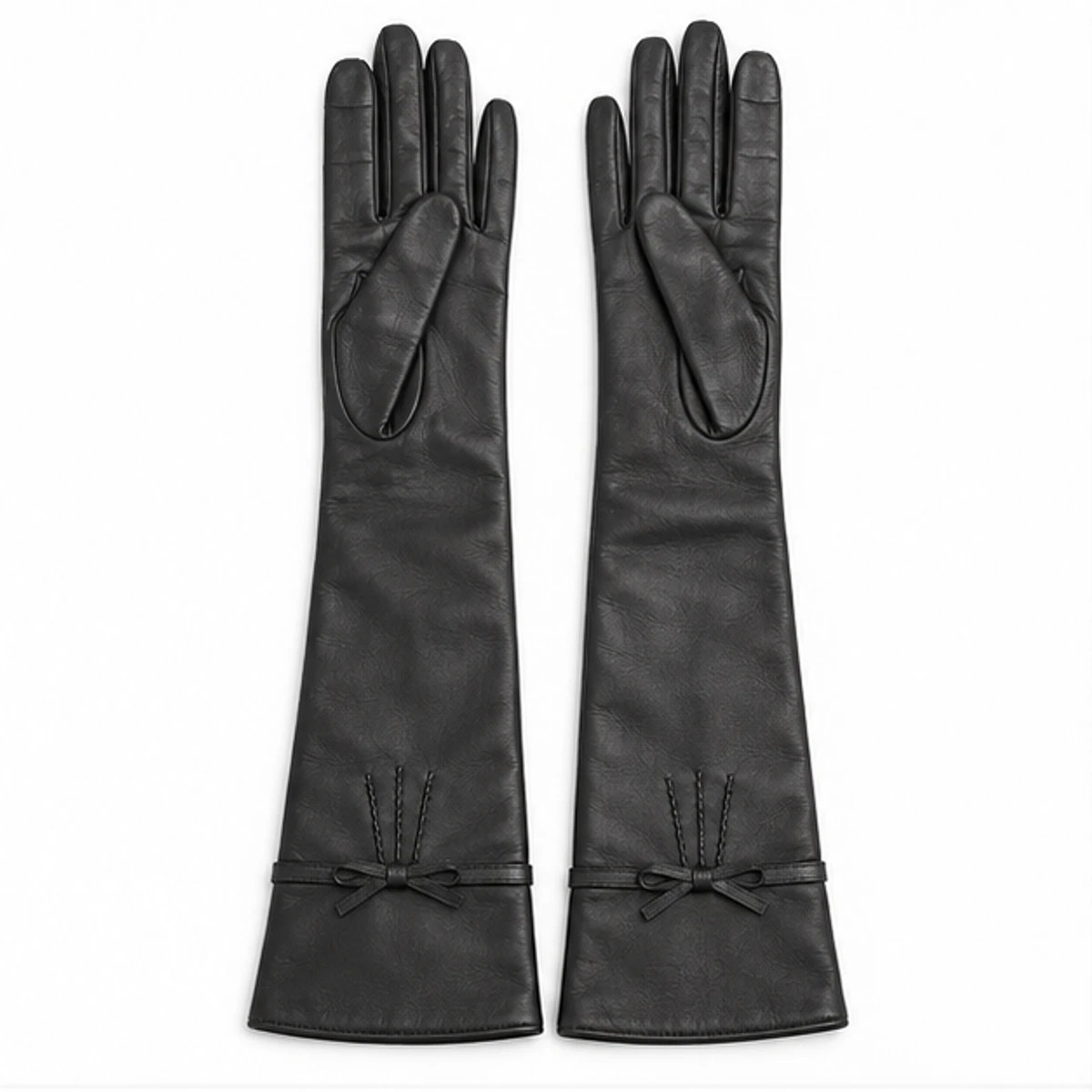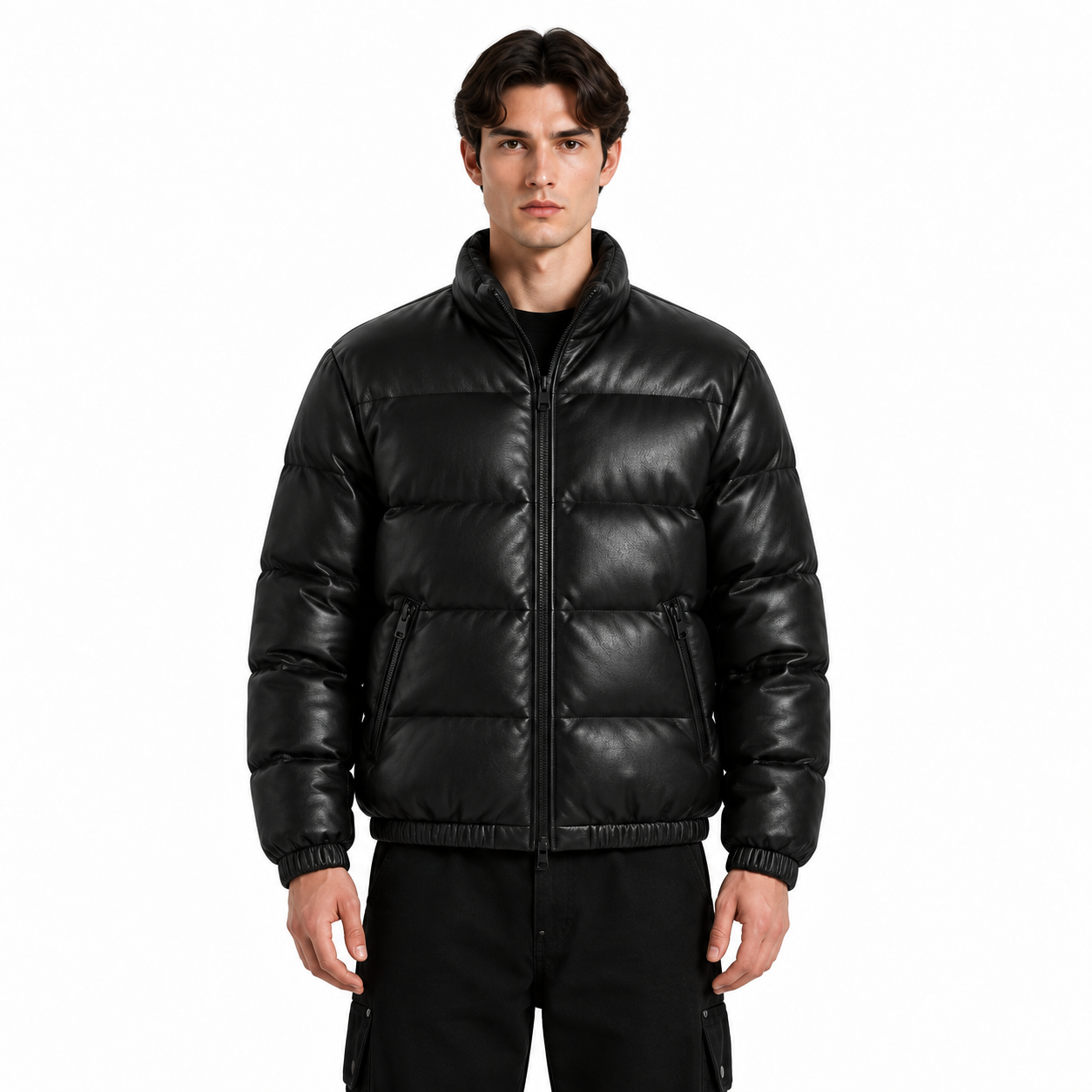
For a fashion brand, a leather puffer is both a design statement and a development project. The shell, padding, lining and pattern must work together. This guide helps private-label buyers turn a mood board into a sample brief for men's and women's sheep leather outerwear, with checkpoints before bulk production.
Start with the silhouette, then build the specification
Picture the jacket in use: a cropped style over a dress, a regular-fit bubble jacket over knitwear, or an oversized hooded piece for a streetwear collection. Decide the finished length, shoulder shape, collar height and intended layers first. These decisions influence pattern volume, pocket access and the amount of room needed inside the padded garment.
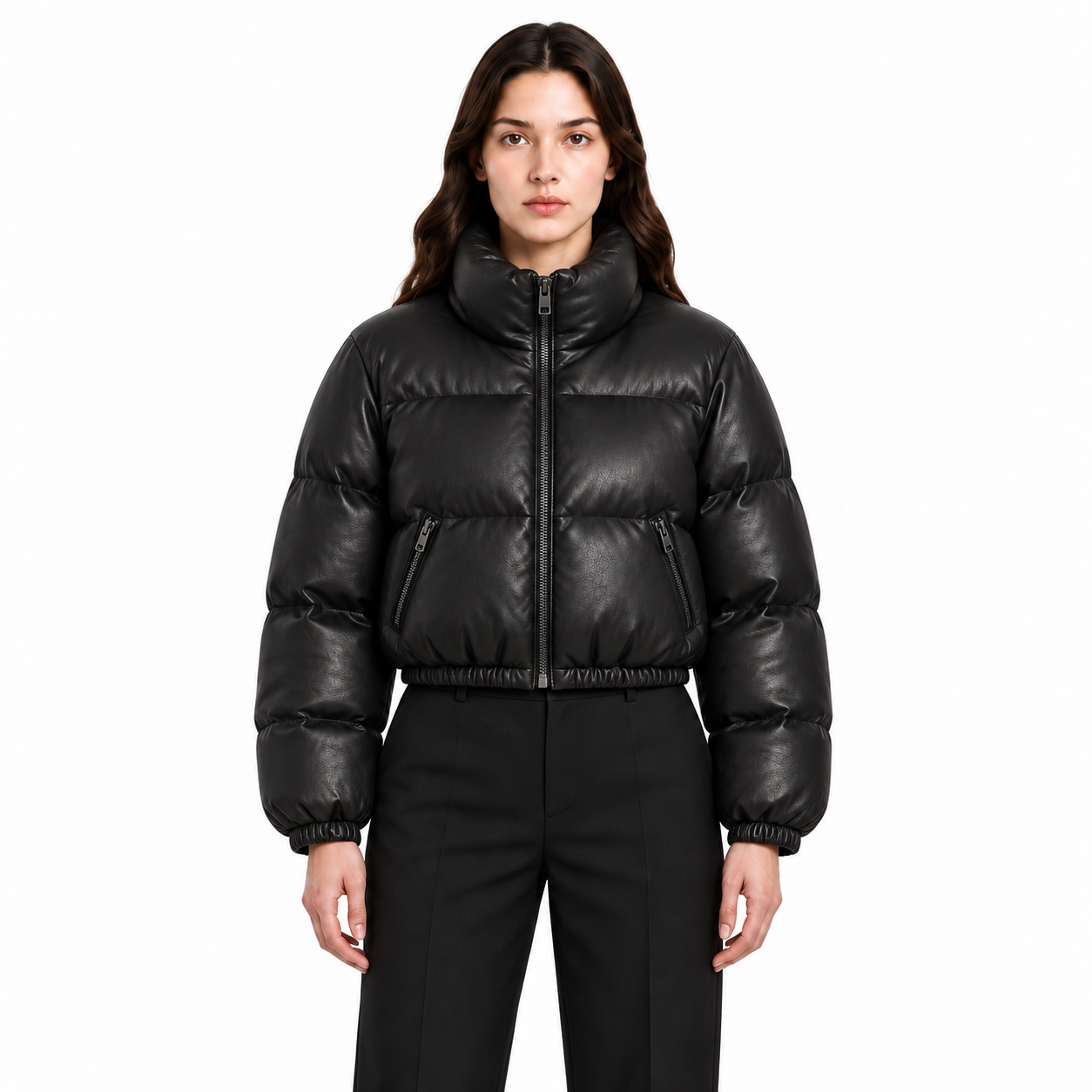
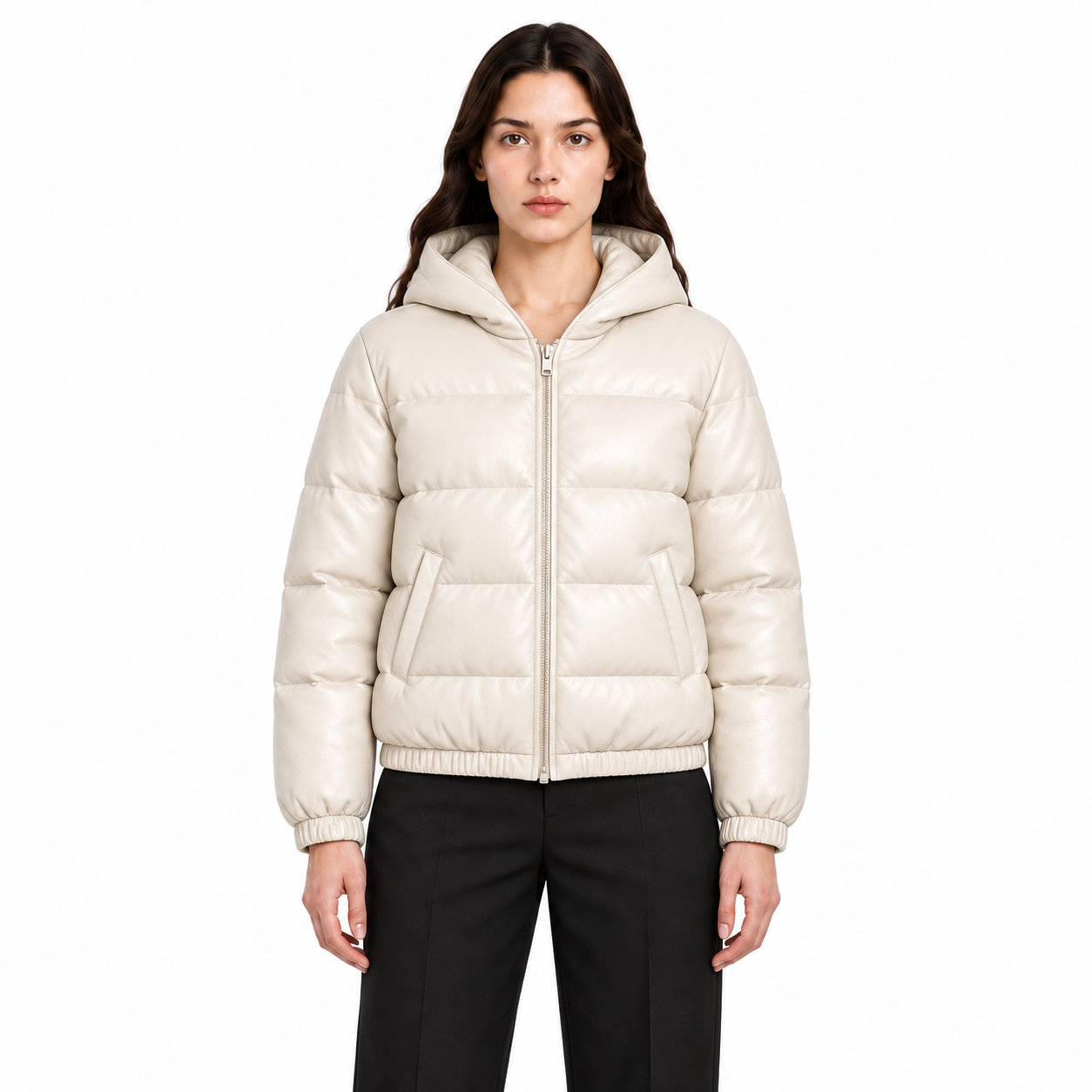
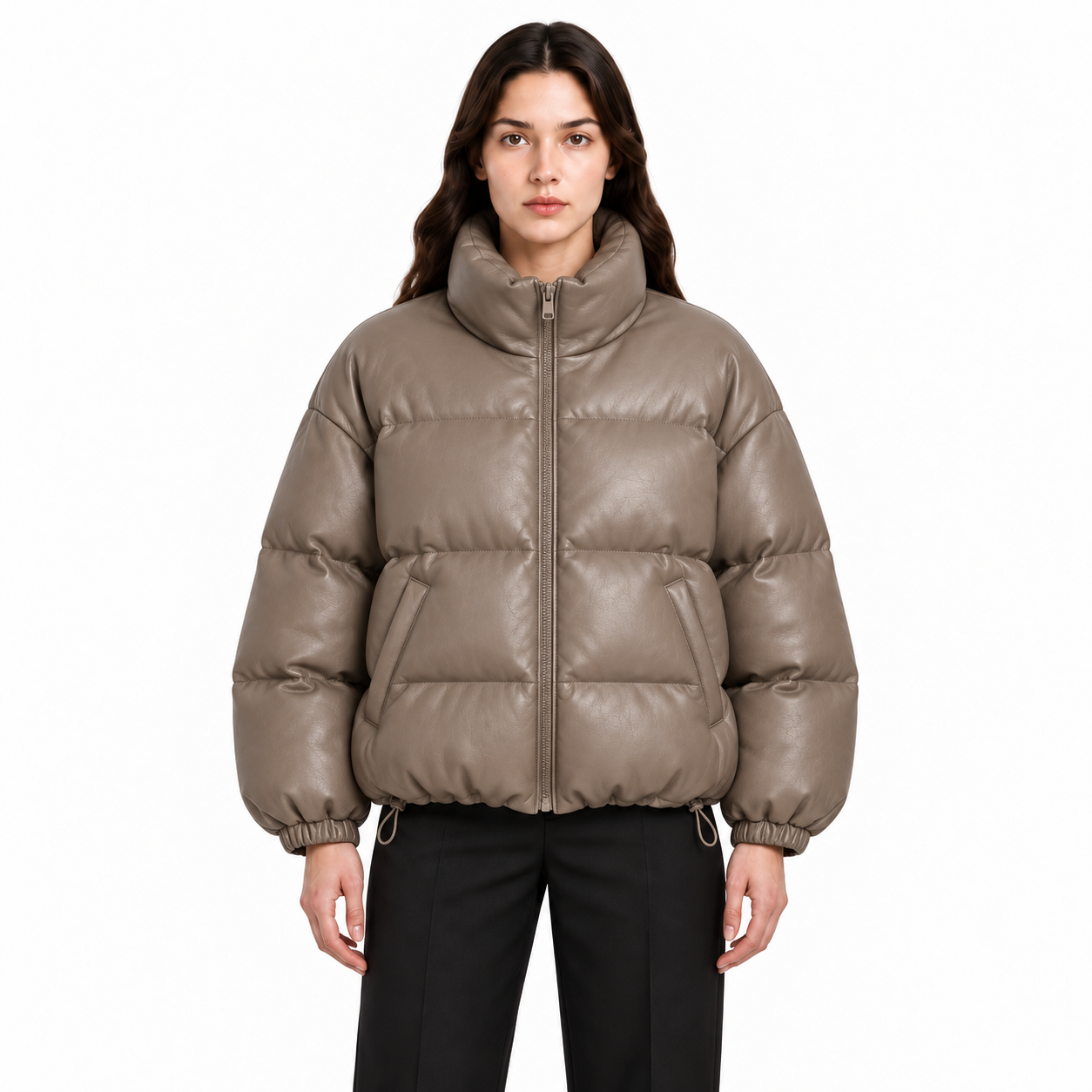
Bubble
Rounded volume and broad padded sections. Approve the profile from the side as well as the front.
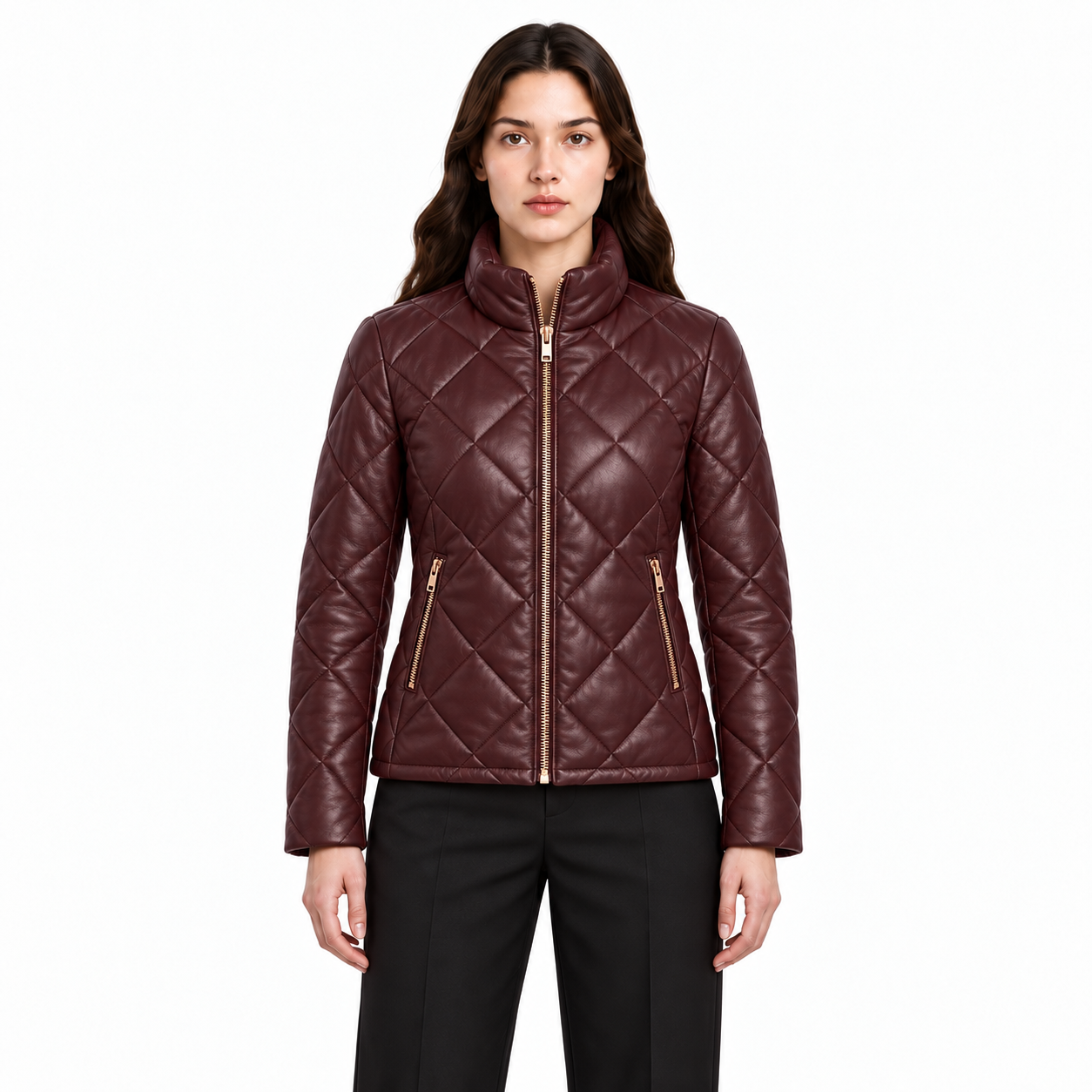
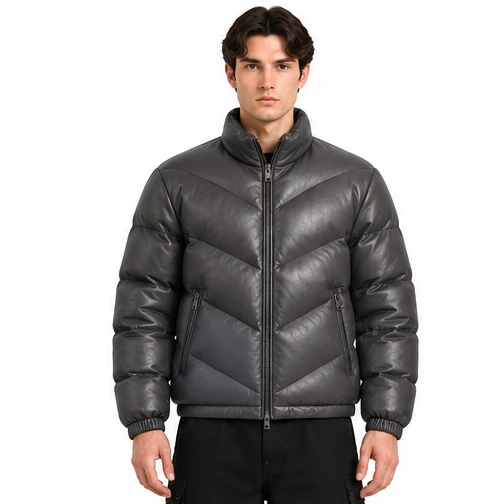
Quilted
A defined stitched layout. Specify panel spacing, symmetry and alignment across the zipper.
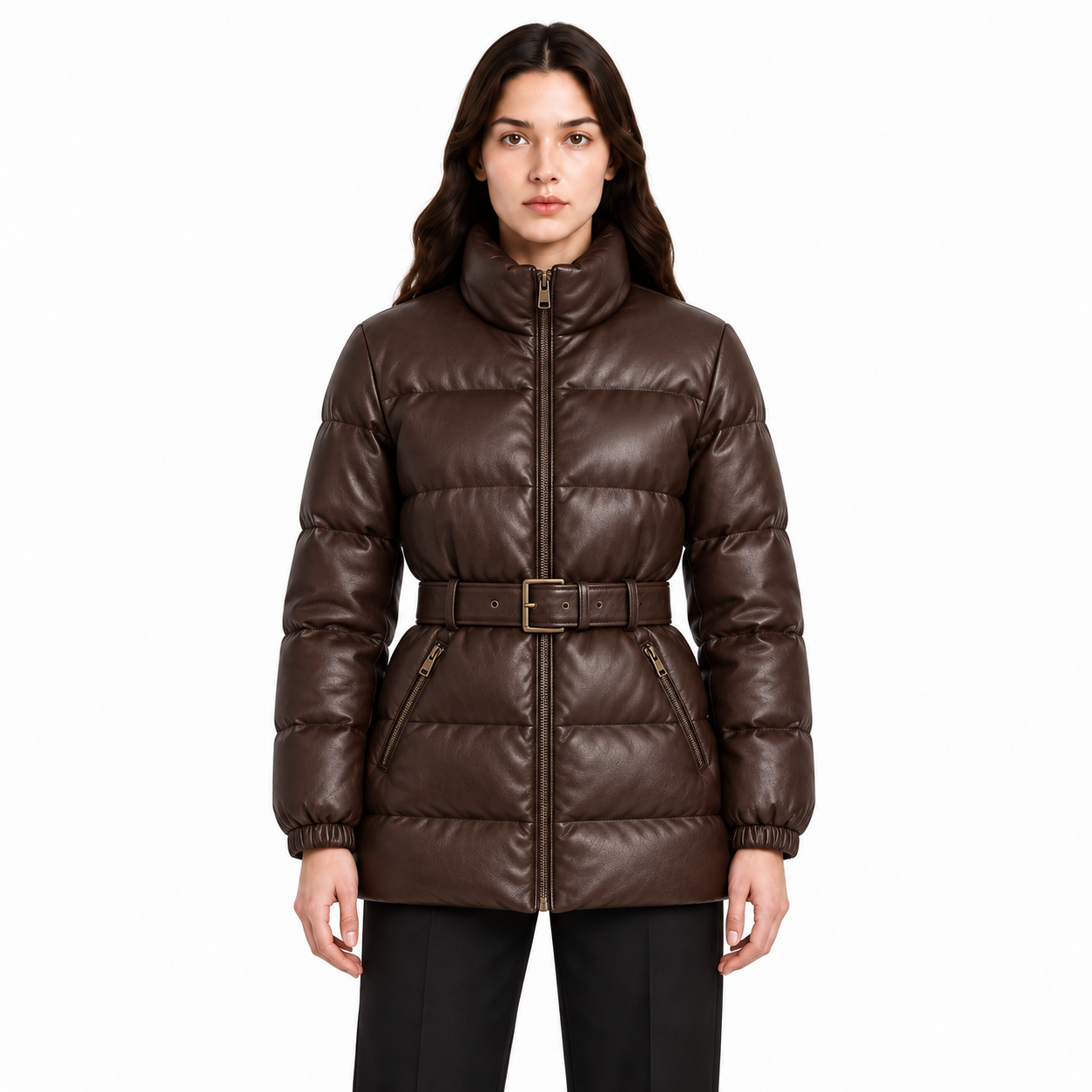
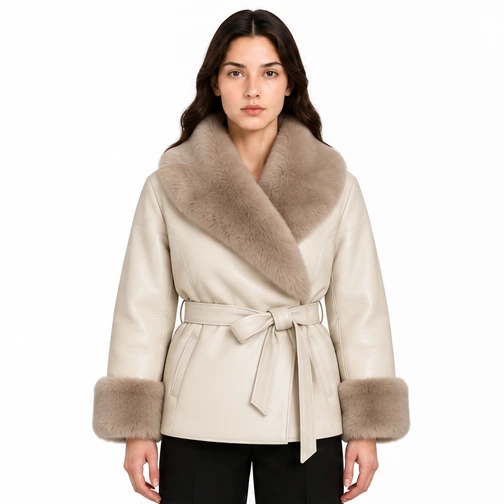
Belted
A shaped waist with adjustable definition. Check the belt position over the actual filled sample.
These are design directions, not insulation grades. A bigger-looking jacket is not automatically warmer. Treat warmth and weather-performance claims as separate requirements supported by appropriate testing.
Choose sheep leather by the approved swatch
Our puffer concepts specify a genuine sheep nappa leather shell. The word “premium” alone cannot tell a cutting team what to use. Record the leather article, finish, colour reference, agreed thickness range, sheen and hand feel. Compare how the swatch folds and recovers, then check it again in a stitched and padded panel.
Natural variation needs an agreed limit. Identify acceptable grain, marks and shade differences, especially where broad panels meet across the front. Approve a physical swatch under consistent lighting; a screen image is useful for direction but cannot be the final colour standard. Our leather thickness guide explains how to write a measurable material brief.
Specify the inside as carefully as the outside
A puffer's volume depends on its insulation and construction as well as its shell. Ask the factory to identify the proposed fill composition, weight and distribution, how it is held in position, and the lining specification. Review a section sample where needed before approving a complete jacket.
- Insulation: agree the actual material and weight; do not assume “puffer” means down-filled.
- Panel construction: mark the stitch layout and agree how bulk is controlled at seams, cuffs and closures.
- Lining: check movement, comfort, pocket bags and compatibility with the intended layers.
- Performance: define any test method before advertising thermal, water-resistant or waterproof claims.
The collection does not imply a down composition or temperature rating. Lining and insulation are confirmed during quotation and sampling. Compare options in our leather garment lining guide.
Fit the filled jacket, not just the paper pattern
Padding takes up space. Approve the fit with the final proposed shell, lining and insulation, worn over the layers your customer will use. Check forward arm reach, sitting comfort, zipper tension and collar clearance. A cropped jacket needs a deliberate hem position; an oversized jacket still needs controlled sleeves and usable pockets.
For both men's and women's ranges, define chest, shoulder, sleeve, back length, hem opening and relevant waist or hip measurements. State whether each measurement is taken flat, fastened or stretched, and agree tolerances. Do not grade every point by the same increment without reviewing the resulting proportions.
The charts on our concept listings are proposed garment measurements. They are a starting point for discussion, not a substitute for measuring and approving a finished sample in the required size range.
Make the brand visible in the details
Choose a small set of details that belong to your brand: a particular zipper finish, lining colour, pocket shape, embossed mark or woven label. Confirm artwork size and placement before cutting. Test embossing on the selected leather and finish, since the result can differ between articles and colours.
For hooded styles, check hood depth, neckline balance and how the hood sits when lowered. For belted styles, confirm belt length and loop positions across sizes. Review packaging with the padded construction in mind and agree how garments will be packed and recovered after transport.
From first brief to approved production
- Send the brief: design references, target customer, quantity by style and colour, size range, destination and target delivery date.
- Approve materials: review leather swatches, lining, insulation, hardware and branding references.
- Review the development sample: record fit and construction comments using clear photos and measurement points.
- Seal the standard: approve the final sample, revised tech pack, size chart and tolerances before bulk cutting.
- Check production and packing: compare workmanship, measurements, labels and packing against the approved standard.
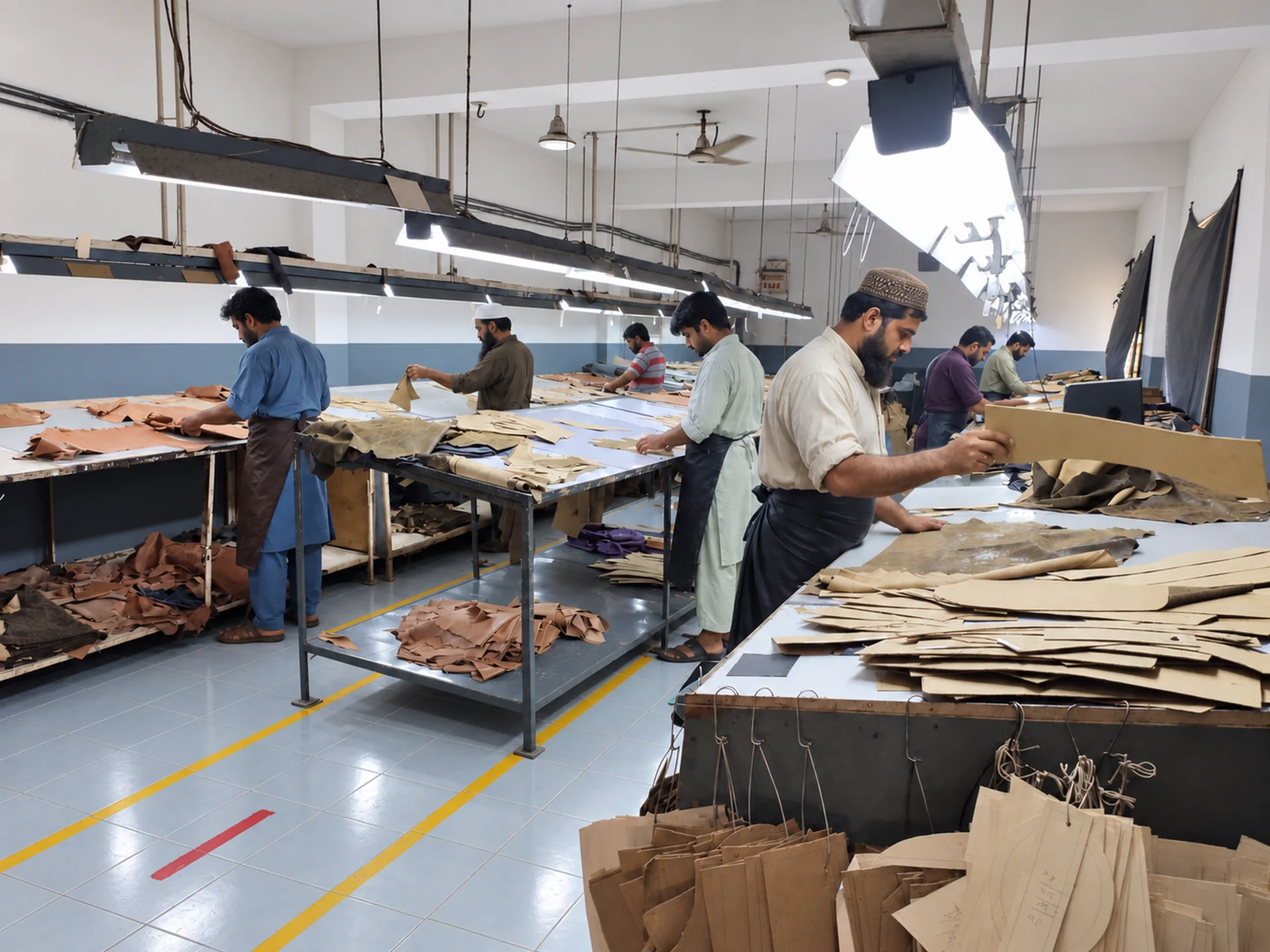
What should the quality checklist include?
Inspect front-to-back balance, matching quilt lines, even filling distribution, seam appearance, leather shade matching and hardware operation. Compare left and right pocket positions and confirm that labels match the approved artwork. Measure garments using the agreed method rather than stretching them to meet a chart.
Check the sample after ordinary movement and handling for changes in panel shape or lining tension. Define any seam, durability or other performance testing in the purchase specification. Our pre-shipment QC guide provides a broader inspection framework.
Buyer questions before requesting a quotation
What is the minimum order quantity?
The sheep leather puffer collection lists a starting MOQ of 50 pieces per style. Confirm colour splits, size allocation, leather availability and custom-trim minimums in the quotation. Read our MOQ and sampling guide before planning the first order.
How long do samples and bulk production take?
Request a schedule against your actual brief. Material sourcing, bespoke trims, sample revisions and quantity affect timing. Confirm sample and bulk lead times in writing, and allow time for approval and shipping before setting a launch date.
Can I use one of these designs for my label?
Use a collection concept as a starting point for development. Share the changes you need, your own branding and your target fit. Final specifications and production suitability are agreed through sampling; the visualization alone is not a production approval.