1. Translate the tech pack into an approved sample
The buyer's drawings, size chart, leather reference, lining, hardware, label artwork and packing instructions define the target. A pattern maker must check that those parts work together: a bulky seam may change a pocket opening, while a heavier hide may change the drape of a sleeve. Questions are cheaper to settle on paper and on a sample than after a bulk cutting run.
Before production, ask for a sample that identifies the exact leather and trim references used. Record fit comments by measurement point, revise the pattern, and keep the final approved sample and dated specification as the comparison standard. Our jacket tech pack guide lists the details a factory needs to quote and sample accurately.
2. Inspect the leather before laying out panels
Leather is not a uniform roll of fabric. Hides differ in shape, grain, shade, thickness and visible marks. The cutting team reviews each hide so important jacket panels can be matched and placed around areas that do not meet the buyer's agreed appearance standard. The buyer should approve the acceptable range of natural variation on a physical swatch and sample.
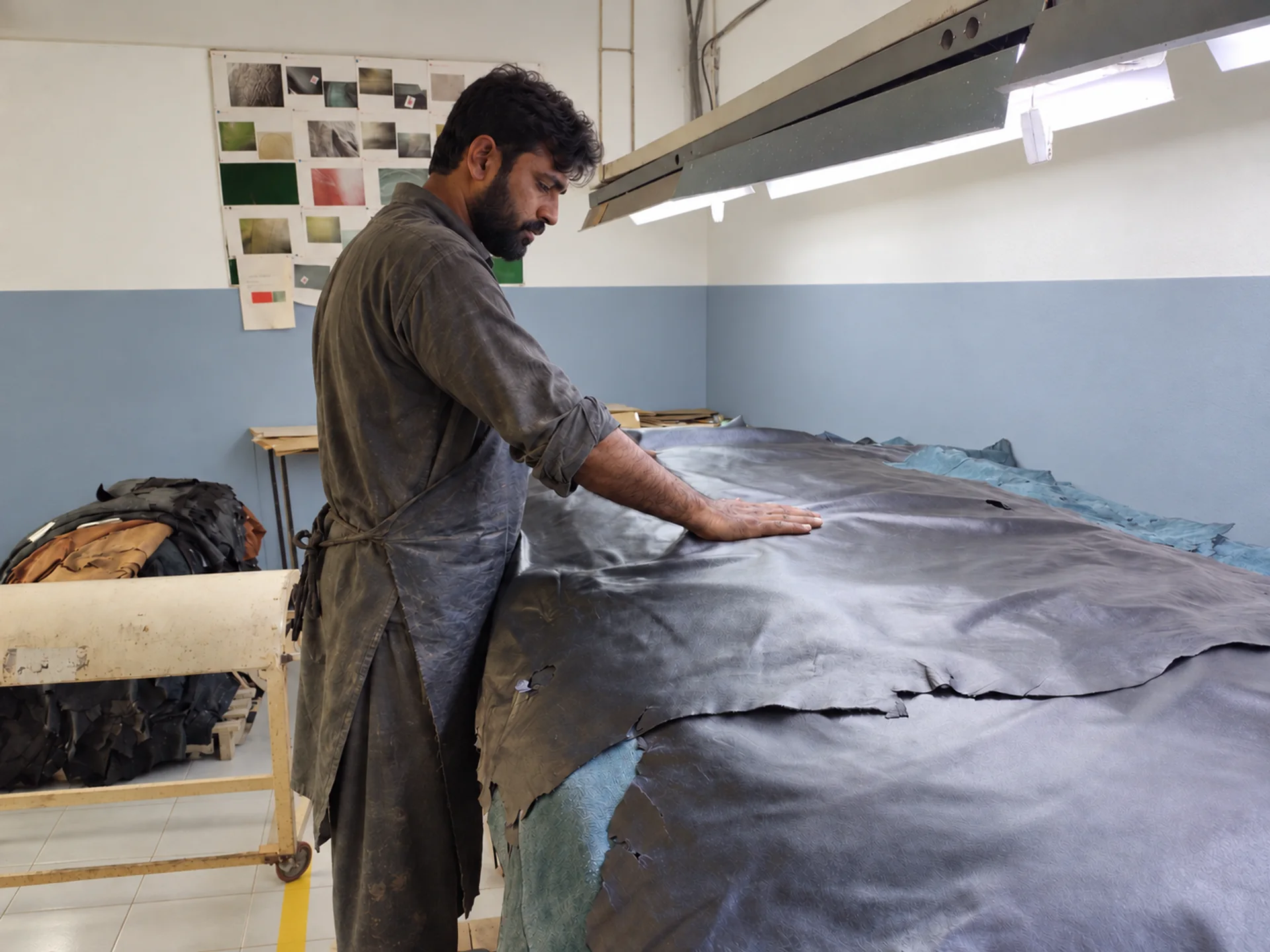
If a substitute hide or finish is needed, matching only the color name is insufficient. Compare hand feel, thickness, grain and finish against the approved reference. See our hide thickness guide for a measurable material brief.
3. Place and cut patterns with panel matching in mind
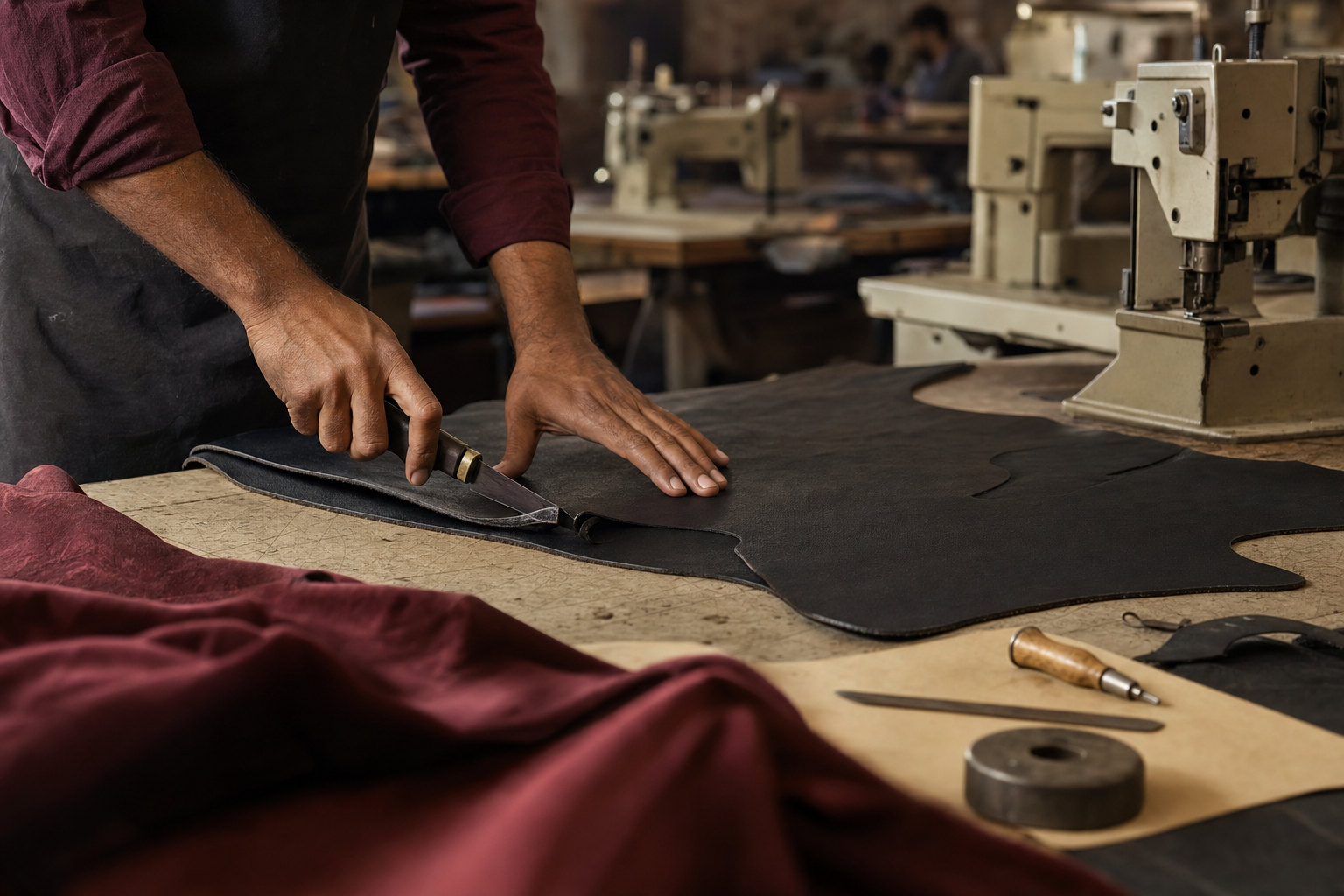
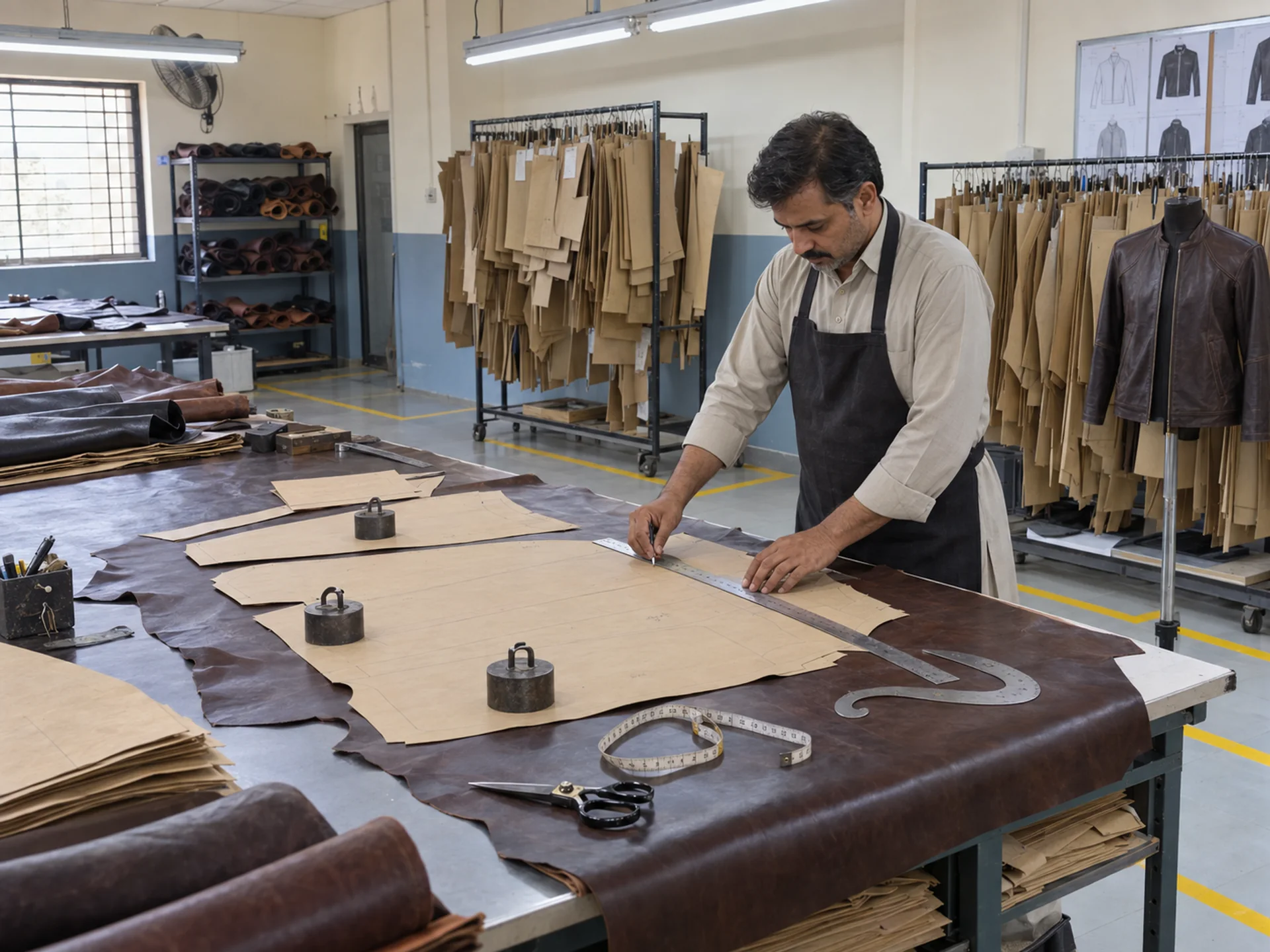
Jacket fronts, sleeves, collars and smaller pieces have different visual and structural demands. Cutters place pattern pieces on usable parts of the hide while considering grain direction, stretch and shade. Pattern placement also affects material consumption, so a quotation should be based on the approved construction and material—not just a sketch of the jacket.
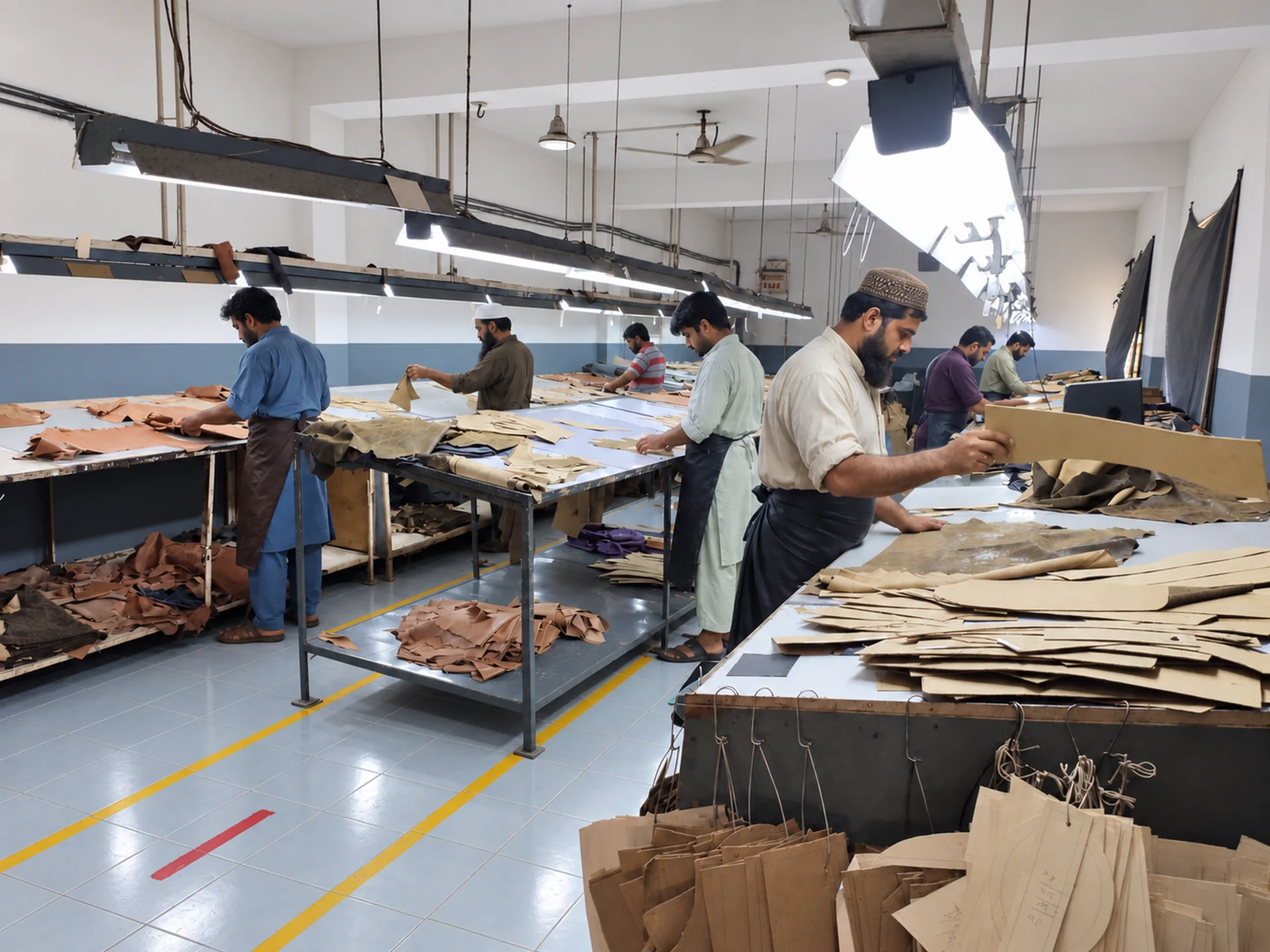
For a branded program, the approval record should also identify panel-matching expectations, size grading, leather article and any approved reinforcement or contrast material. If the sample pattern changes, the bulk pattern and consumption estimate may need to change too.
4. Assemble the jacket and check construction details
During stitching, operators bring the cut panels together with the specified seam, lining, zipper, pockets and labels. Leather is less forgiving than fabric: needle holes remain visible when a seam is unpicked. The approved sample should therefore settle hardware placement, seam appearance and any edge treatment before the bulk run.
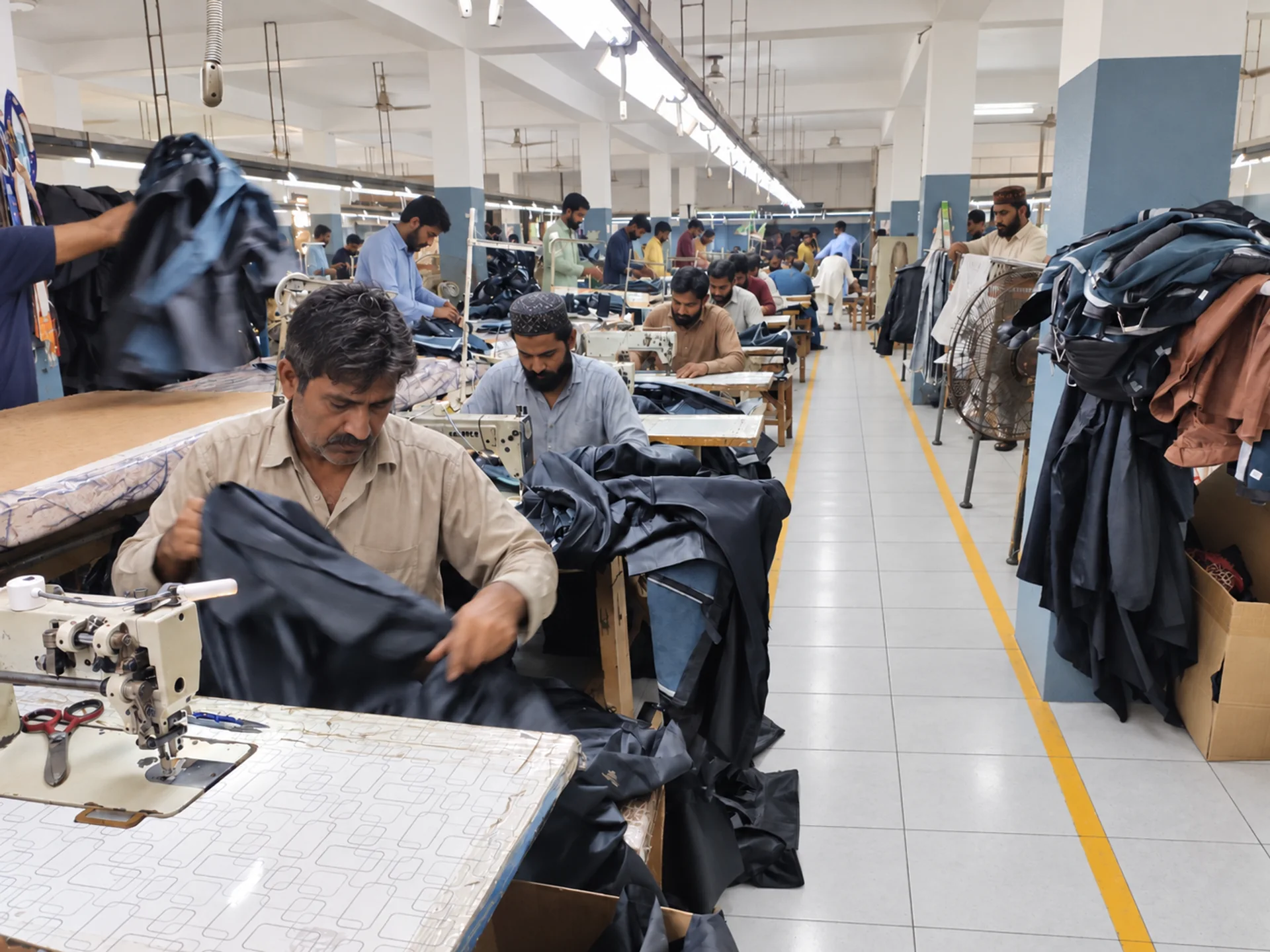
Brands should check the features customers notice first: left and right panel balance, collar shape, sleeve length, pocket placement, zipper operation and lining movement. Document these points in the sample comments rather than relying on a general instruction to “match the sample.”
5. Compare bulk garments against the approved standard
A finished garment needs more than a visual glance. The inspection plan should state which measurements matter, their tolerances, and how leather appearance and workmanship will be judged. Review labels, hardware function, seam consistency and finishing alongside the fit measurements. Agree how defects will be recorded and resolved before packing.
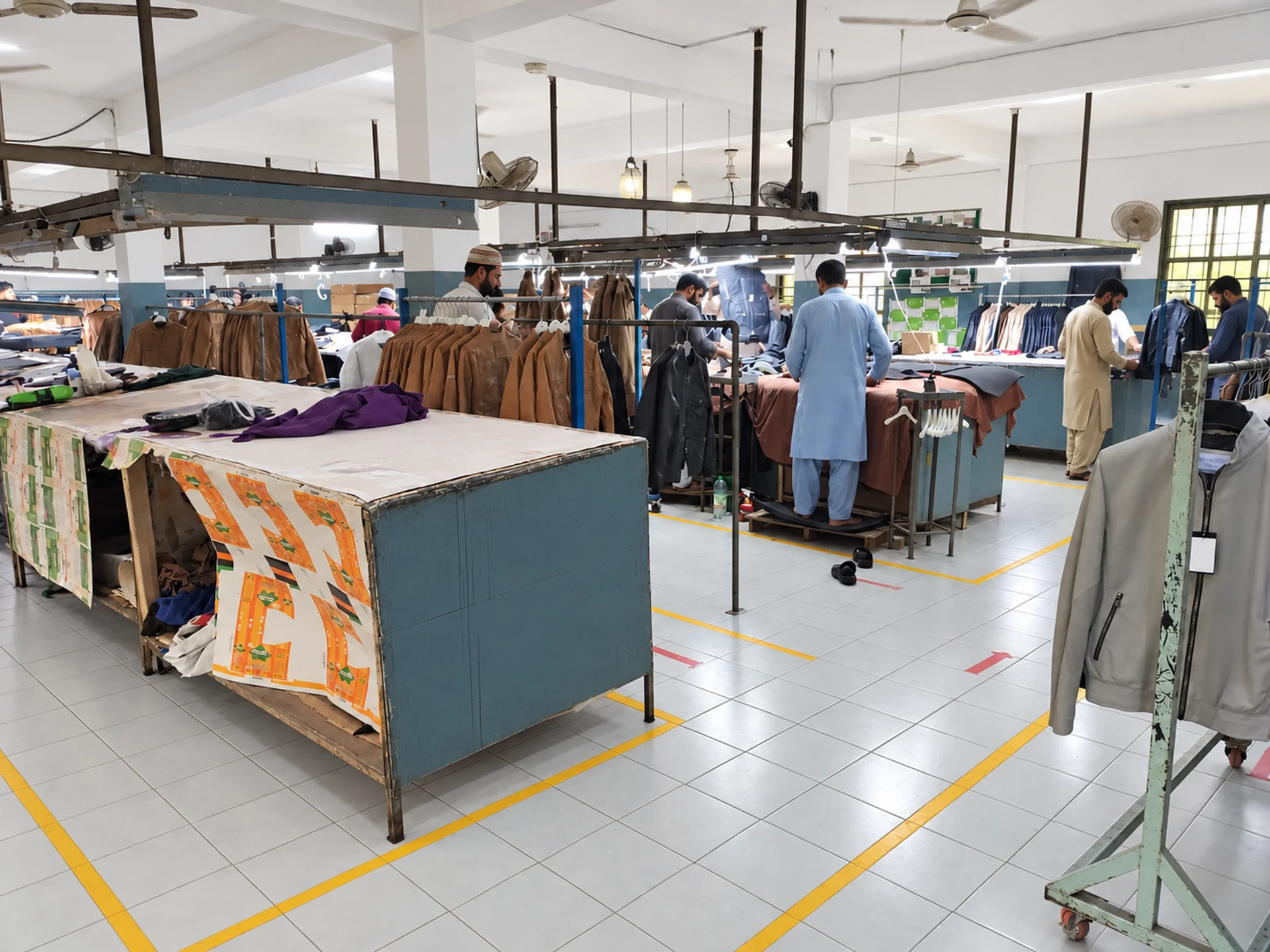
Our leather apparel QC checklist gives buyers a practical inspection brief. For export orders, packing, carton marks, documentation and delivery terms should be confirmed in the purchase order before shipment; those details are not established by the production photos.
What to send with your first RFQ
- Tech pack or clear reference images, target size range and expected quantity per style and color.
- Leather swatch or a description of species, finish, hand feel and acceptable appearance variation.
- Zipper, snap, lining, label and packaging requirements, including buyer-supplied artwork.
- Destination, preferred delivery term, target date and any warehouse intake rules.
- Questions that must be settled in sampling before a bulk price or production date is final.
Explore our leather jacket manufacturing capabilities or send the details through the jacket RFQ form. We can discuss the sample path and quote against the actual brief.
Before releasing your order, use our leather jacket sample approval checklist to document fit, materials, corrections and the final production reference.