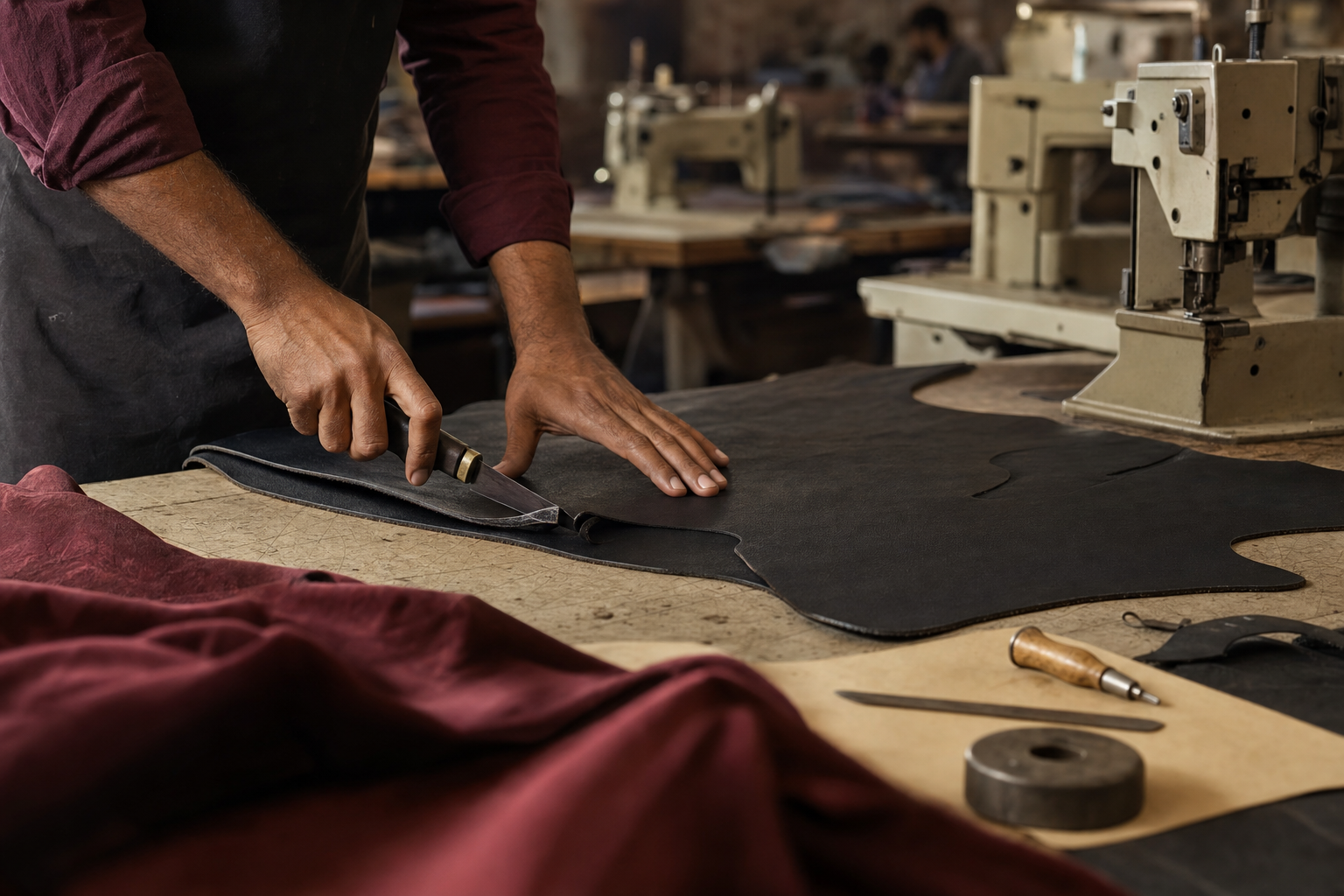
Why Leather Production Doesn't Look Like Fabric Production
A fabric mill delivers continuous rolls of consistent material; a tannery delivers irregular hides that vary piece to piece. That single difference reshapes the entire production line — pattern pieces have to be nested across an irregular shape rather than a rectangular roll, and every hide needs to be graded before it is ever cut, because a flaw in one section of a hide can be worked around if it is caught early.
The Seven-Stage Leather Production Sequence
| Stage | Process | Detail |
|---|---|---|
| 01 | Hide Selection & Grading | Hides are sorted by grade, thickness, and surface quality before cutting begins. |
| 02 | Pattern & Nesting | Pattern pieces are laid out (nested) across each irregular hide to minimize waste. |
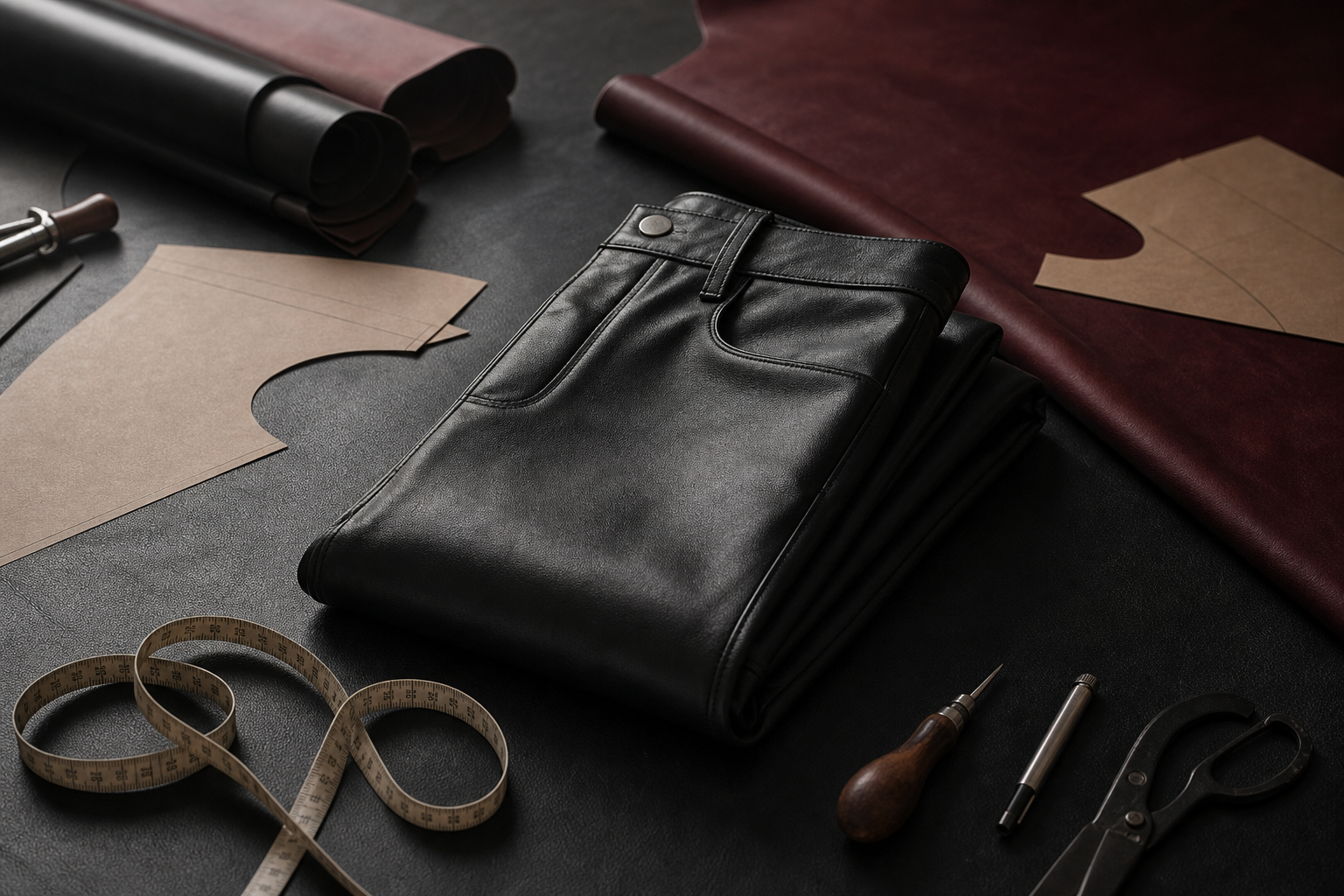
| 03 | Cutting | Panels are die-cut or hand-cut, matching grain direction and color across a garment. |
| 04 | Skiving & Edge Prep | Edges are thinned (skived) at seam lines so folded or stitched edges lie flat. |
| 05 | Sewing | Post-bed and cylinder-arm machines stitch curved and tubular panels leather machines are built for. |
| 06 | Hardware & Lining | Zippers, snaps, and lining are set once the shell is fully assembled. |
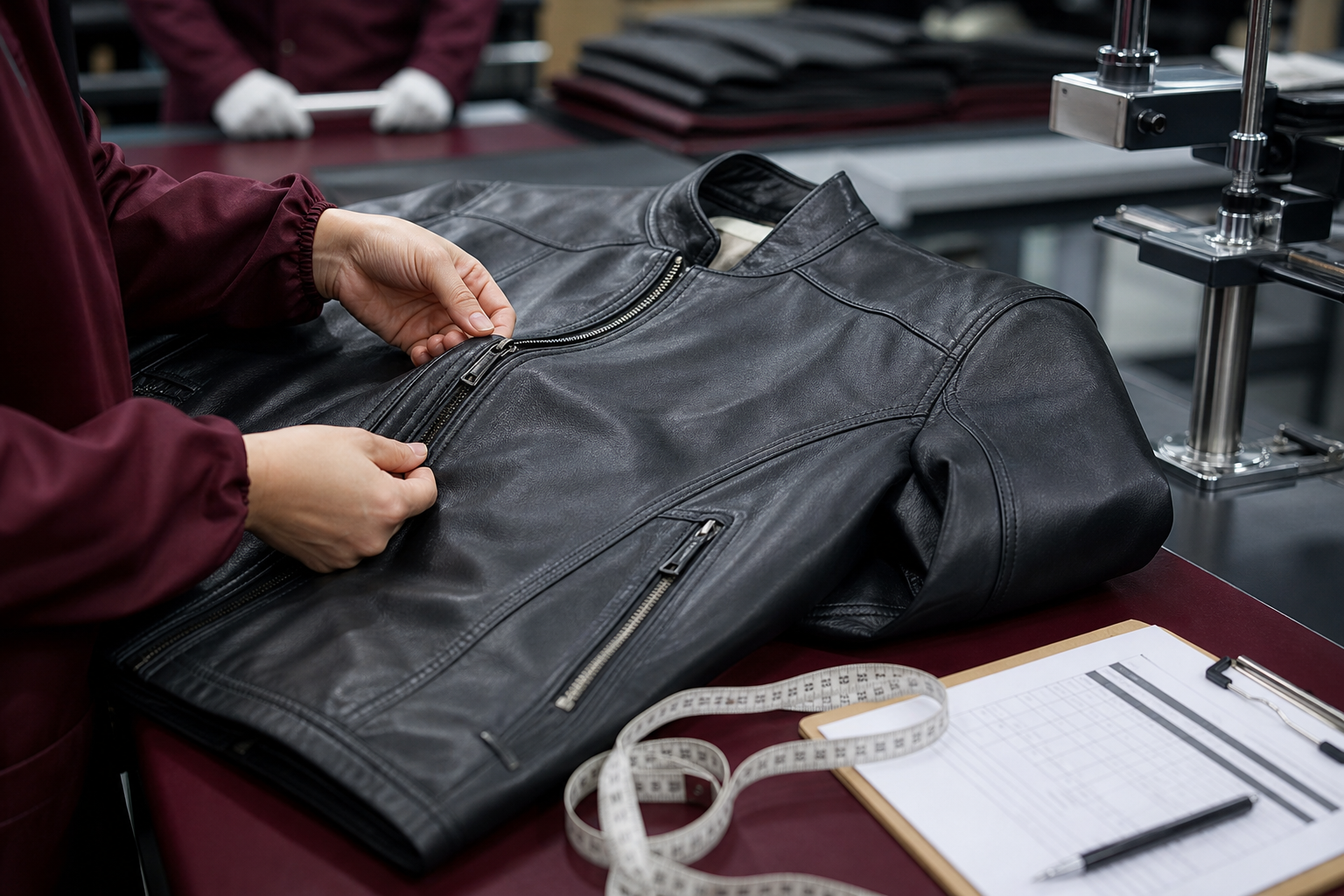
| 07 | Finishing & QC | Edge burnishing, pressing, and a full inspection against the sealed sample. |
Why Nesting and Grading Matter to Your Cost
Nesting efficiency — how tightly pattern pieces fit onto each irregular hide — directly affects unit cost, since wasted hide is wasted money on the most expensive input in the garment. A factory with an experienced pattern room will nest more efficiently and grade hides more precisely, which is part of why two quotes for the "same" jacket can differ meaningfully even with identical fabric specs on paper.
- Higher-grade hides cost more but yield more usable panel area
- Skilled nesting reduces waste and can lower per-unit hide cost by 10–15%
- Skiving and edge prep quality shows up directly in how seams lie once sewn
- Post-bed and cylinder-arm machines are purpose-built for leather's thickness and curves
Seeing the Process at Hashbloom International
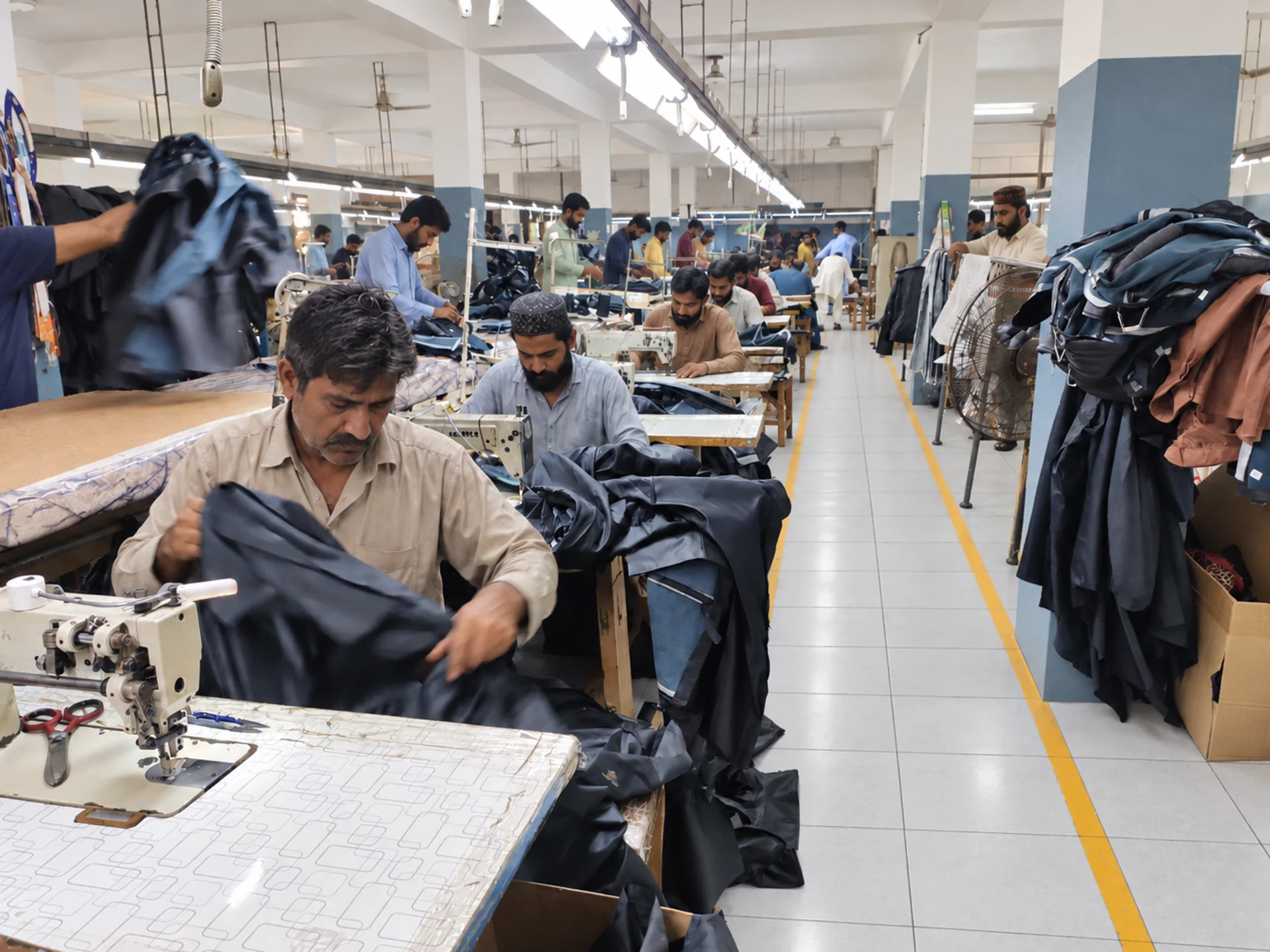
Hashbloom International runs this full sequence in-house in Sialkot, Pakistan, from hide grading through final QC, at a 50-piece MOQ. Buyers can request production photos or a video walkthrough during sampling to see exactly how their garment is being built before bulk starts.
For photos of our pattern, cutting, stitching and checking areas alongside the buyer approvals at each stage, read our leather jacket tech-pack-to-bulk walkthrough.