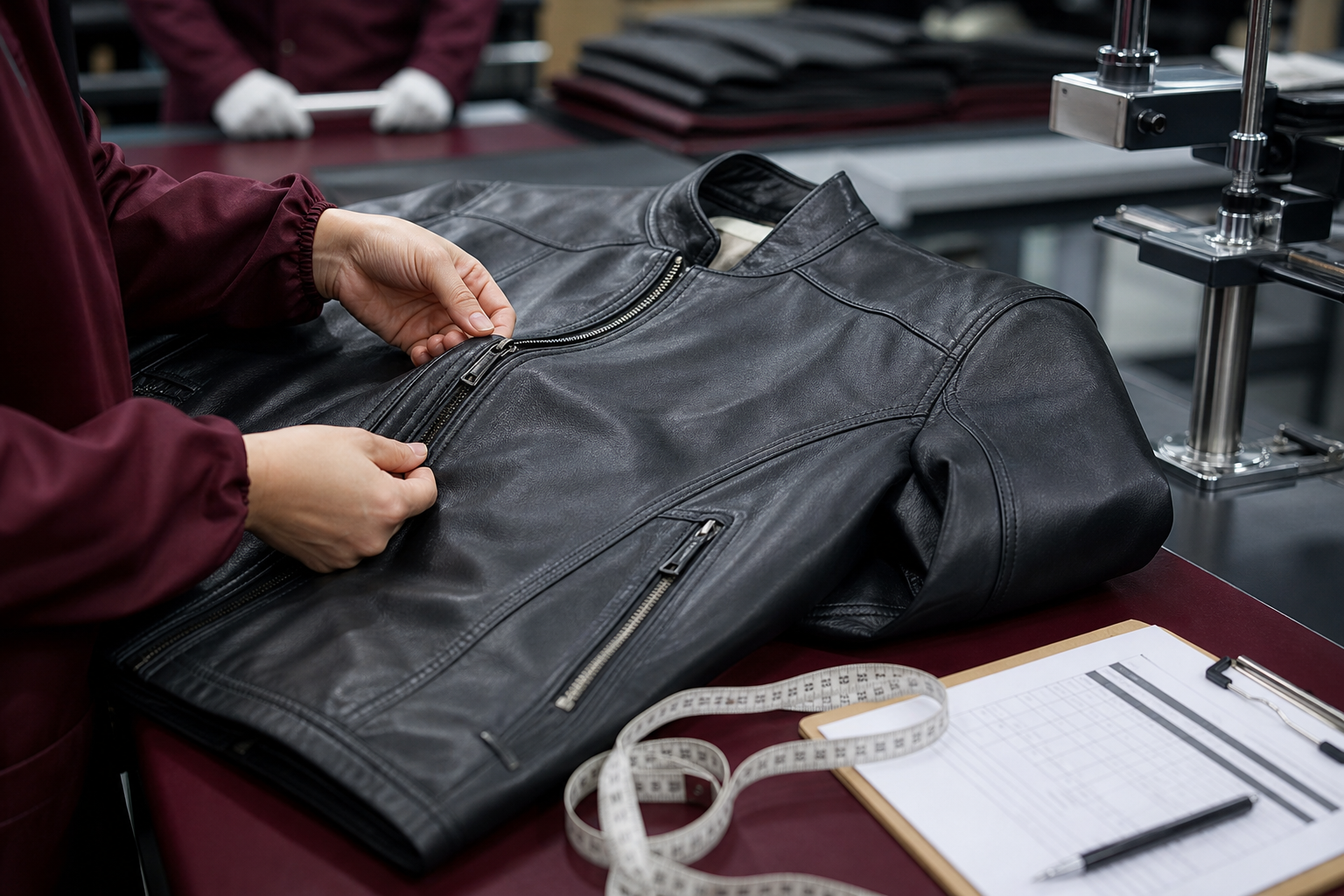
Why Leather QC Needs a Trained Eye
A hide's natural grain variation is not a defect — but a scar, an off-color patch in a visible panel, or an inconsistent thickness across a garment is. The distinction requires a QC team trained specifically on leather, not a generalist inspector applying fabric-based standards. Hashbloom International's QC process is built around the four checklist groups below, run at both the sample-approval stage and again on the bulk shipment before dispatch.
The Four-Point Pre-Shipment Checklist
Hide & Surface
- Grain consistency and color match across all panels of a single garment
- No visible scars, insect bites, or brand marks in primary visible zones
- Correct hide thickness against the approved spec (measured, not estimated)
Construction & Stitching
- Stitch density (SPI) matches the sealed sample on all main seams
- No skipped stitches, loose threads, or uneven tension along seam lines
- Reinforcement (bar-tacks, double stitching) present at all stress points
Hardware & Trims
- Zippers run smoothly full length with no snagging or misalignment
- Snaps, buckles, and D-rings are securely set with no movement or gaps
- Branding (embossed, debossed, or hardware-stamped) is centered and legible
Fit & Finish
- Measurements match the point-of-measure chart within agreed tolerance
- Lining lies flat with no puckering at hems, cuffs, or pocket bags
- Overall symmetry — collar, cuffs, pockets — matches left to right
Sampling on an AQL Basis
On bulk orders, Hashbloom International inspects against an AQL 2.5 sampling plan, pulling a statistically representative sample from the shipment rather than checking every single unit — the standard approach used across the apparel and leather goods industry for pre-shipment inspection. Buyers who want a third-party inspection on top of internal QC are welcome to schedule one before dispatch; we coordinate directly with independent inspection agencies on request.
What Happens If an Issue Is Found
If a batch fails against the sealed sample on any checklist point, the affected units are pulled and reworked or replaced before the shipment is released — bulk orders are not dispatched with known defects. This is why the sealed "golden sample" from the approval stage matters: it is the physical reference every inspector checks against, not a written spec sheet alone.