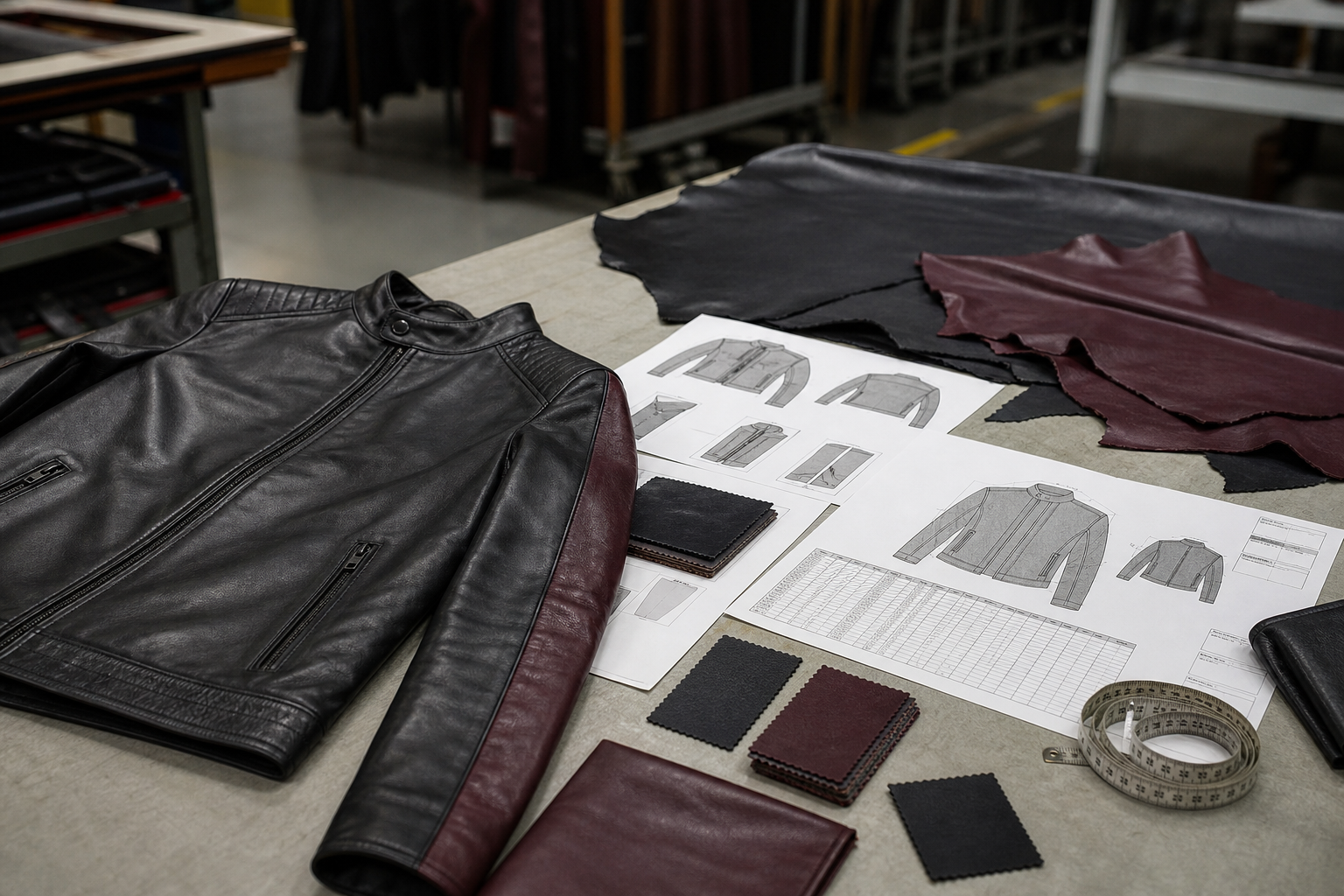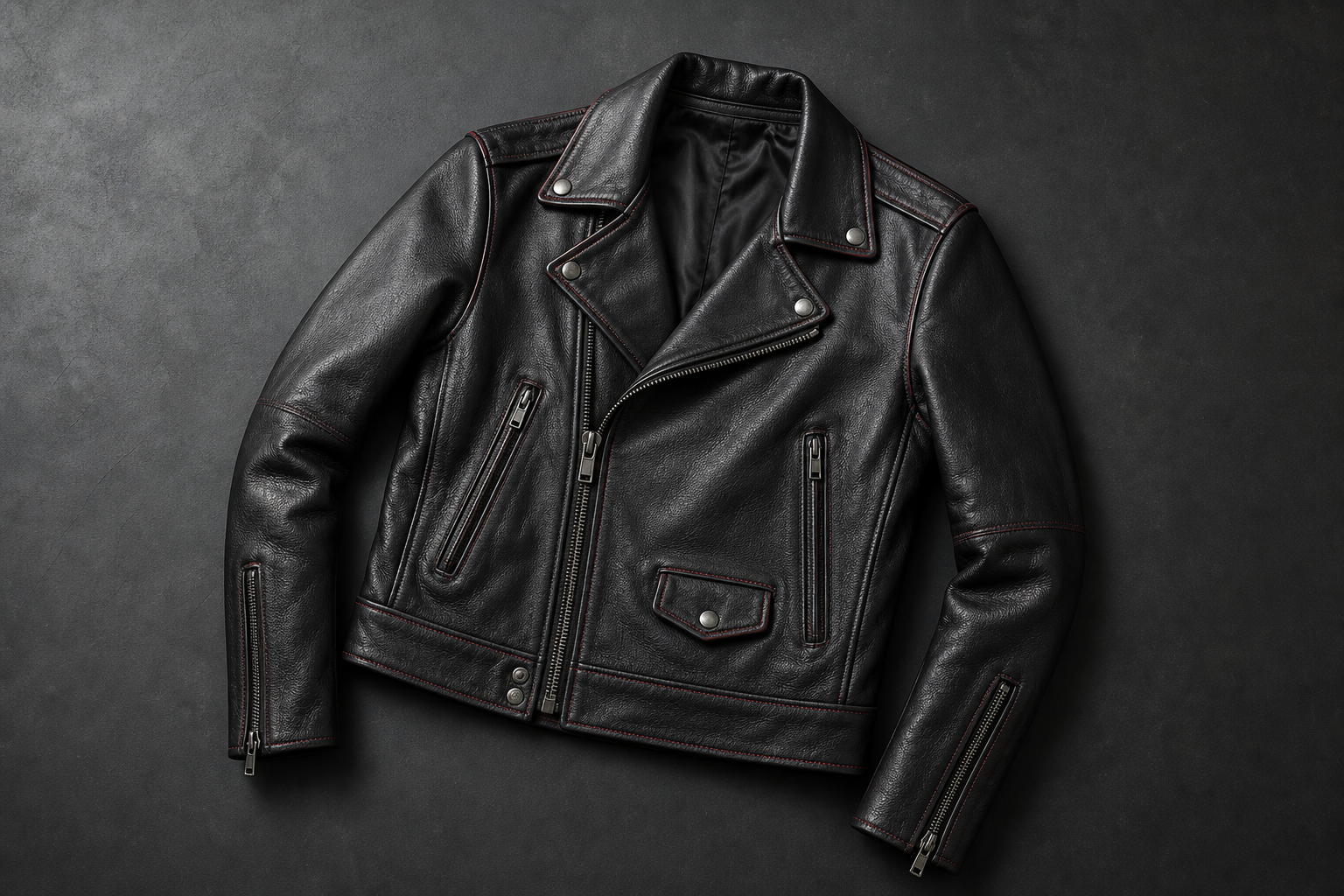
What Is a Leather Jacket Tech Pack?
A tech pack is the controlled specification used to quote, sample and manufacture a garment. It identifies the design, measurements, materials, components, construction, branding, packaging and approval status. The objective is not to make a beautiful presentation; it is to remove assumptions.
Leather garments need more detail than a basic fabric style because hide thickness, finish, stretch, natural marks and cutting yield influence both appearance and construction. A reference image can communicate a silhouette, but it cannot define pocket dimensions, zipper grade, leather tolerance or how a logo should be applied.
Start With Style Identification and Version Control
Every page should display the brand, style name, style number, season, sample size, colorway, author, date and revision number. Use one current file as the source of truth. When a fit or material decision changes, update the document and record the change instead of leaving critical instructions across email and chat threads.
A compact revision log should state what changed, who approved it and when. This protects both buyer and factory when the first prototype, fit sample, pre-production sample and bulk standard contain different decisions.
Technical Drawings and Construction Callouts
Include clean front and back flats, plus side and interior views when needed. Show every seam, panel, pocket, closure, vent, cuff, waistband, lining feature and detachable part. Enlarged detail drawings are useful for lapels, collar snaps, zipper guards, quilting, belt loops, inside pockets and branded hardware.
Callouts should describe how a feature is built, not merely name it. Specify seam type, stitch rows, edge distance, topstitch gauge, reinforcement, pocket bag construction and seam allowance where these affect the result. Mark whether edges are turned, bound, raw-cut, painted or piped.
Measurement Chart, POMs and Tolerances
The measurement page must define each point of measure (POM) with a code, written method and diagram. Typical jacket POMs include half chest, shoulder width, back length, sleeve length, bicep, cuff opening, bottom opening, collar height and pocket placement. State whether measurements are taken flat, zipped, relaxed or stretched.
Add the base-size measurements, permitted production tolerance and grading rules for every offered size. Fit descriptions such as slim, relaxed or oversized are useful context, but they cannot replace numbers. Compare the chart with a physical fit model or approved reference garment before grading.
Specify the Leather Precisely
“Black genuine leather” is not a production specification. Name the species, grade or selection standard, thickness range, tannage when relevant, surface finish, color reference, sheen and target hand feel. State whether grain, scars and shade variation should be minimized, accepted as natural character or deliberately matched.
Sheep or lamb nappa may suit a soft fashion jacket, while cowhide can provide more structure and abrasion resistance. Goatskin offers a distinctive grain and useful strength-to-weight balance. Suede, nubuck, pull-up, distressed and embossed finishes require their own rub, shade and consistency standards. Review our leather grade guide before finalizing the material brief.
Build a Complete Bill of Materials
The bill of materials (BOM) lists every component with its description, supplier or approved equivalent, reference code, size, finish, color, placement and consumption. Include shell leather, lining, pocketing, fusible or reinforcement, zipper tape and teeth, snaps, buckles, thread, elastic, labels, patches, hangtags and packaging.
For zippers, define length, gauge, metal finish, puller, locking behavior and open-end or closed-end construction. For lining, specify fiber content, weight, weave, color and performance needs. Use our lining selection guide to compare satin, viscose, cupro, cotton, quilted and mesh options.
Branding and Private-Label Instructions
Attach vector artwork and define the exact width, height, color, placement and application method for each brand element. Embroidery, embossing, debossing, screen print, metal badges and woven labels behave differently on leather. Identify whether a logo is tonal, high contrast, foil-stamped or blind embossed and provide an approval reference.
Map the main label, size label, care label and country-of-origin label. Add hangtag string, barcode sticker, tissue, polybag, dust bag and carton requirements. Early packaging decisions prevent the garment from being ready while labels or boxes are still awaiting approval.
Sample Stages and Approval Standards
Define what each sample must prove. A prototype validates proportion and construction; a fit sample confirms measurements and movement; a sales sample may prioritize presentation; and a pre-production sample should represent the approved bulk standard. Record comments with annotated photographs and measurable instructions.
Approve leather, hardware, lining, color, branding and workmanship separately when necessary. Keep a sealed sample and signed material references. Bulk production should not start while major fit, component or finish decisions remain open. Our MOQ and sampling guide explains the development sequence.
Quality Requirements for Bulk Production
Add tolerances for measurements, stitch appearance, panel symmetry, zipper alignment, hardware attachment, shade matching and logo placement. State the required inspection method and any market-specific testing. Motorcycle garments may also require armor compatibility, seam-strength targets and product-specific compliance beyond ordinary fashion wear.
Leather is a natural material, so standards should distinguish acceptable character from avoidable defects. Photographic approval references are especially useful for grain, distressing, pull-up effect and permissible marks. See the leather apparel QC checklist for shipment controls.
Common Tech-Pack Mistakes That Increase Cost
- Using inspiration photographs without measurable construction details
- Requesting a quotation before confirming leather and hardware quality
- Providing measurements without explaining how each point is taken
- Mixing conflicting instructions across several file versions
- Adding custom branding after the sample price has been agreed
- Approving appearance without checking movement, closure and pocket function
These gaps lead to assumptions, repeated samples and quotations that cannot be compared. A lean but precise pack is more valuable than a long document filled with generic language.
Can a Factory Help Without a Finished Tech Pack?
Yes. A capable development team can begin from a reference garment, clear sketches or detailed photographs, but the missing decisions still need to be converted into a controlled specification before bulk production. Send the intended fit, target market, size range, leather preference, quantity, branding needs, target price and deadline. The factory can then identify open questions and develop the pattern and BOM with you.
Factory-Ready Submission Checklist
- Style name, style number, season, sample size and revision date
- Front, back, side and interior drawings with construction callouts
- Point-of-measure chart, tolerances and size-grading rules
- Leather species, grade, thickness, finish, color and hand feel
- Bill of materials for lining, zippers, snaps, thread and reinforcement
- Branding artwork, placement dimensions, labels and packaging details
- Order quantity by color and size, target date and delivery country
Request Tech-Pack Support or a Manufacturing Quote
Hashbloom International develops OEM and private-label leather jackets for fashion, streetwear and motorcycle brands. Send your existing tech pack, reference garment or design images with the expected quantity and destination. Our Sialkot development team can review specification gaps, prepare a sample plan and provide a costed manufacturing quotation.