For a factory quotation, review our Pakistan leather garment manufacturing capabilities, including available materials, private-label options and MOQ from 50 pieces per style. Send the same specification and delivery requirements to each supplier so you can compare like-for-like quotations.
What Determines Leather Jacket Manufacturing Cost?
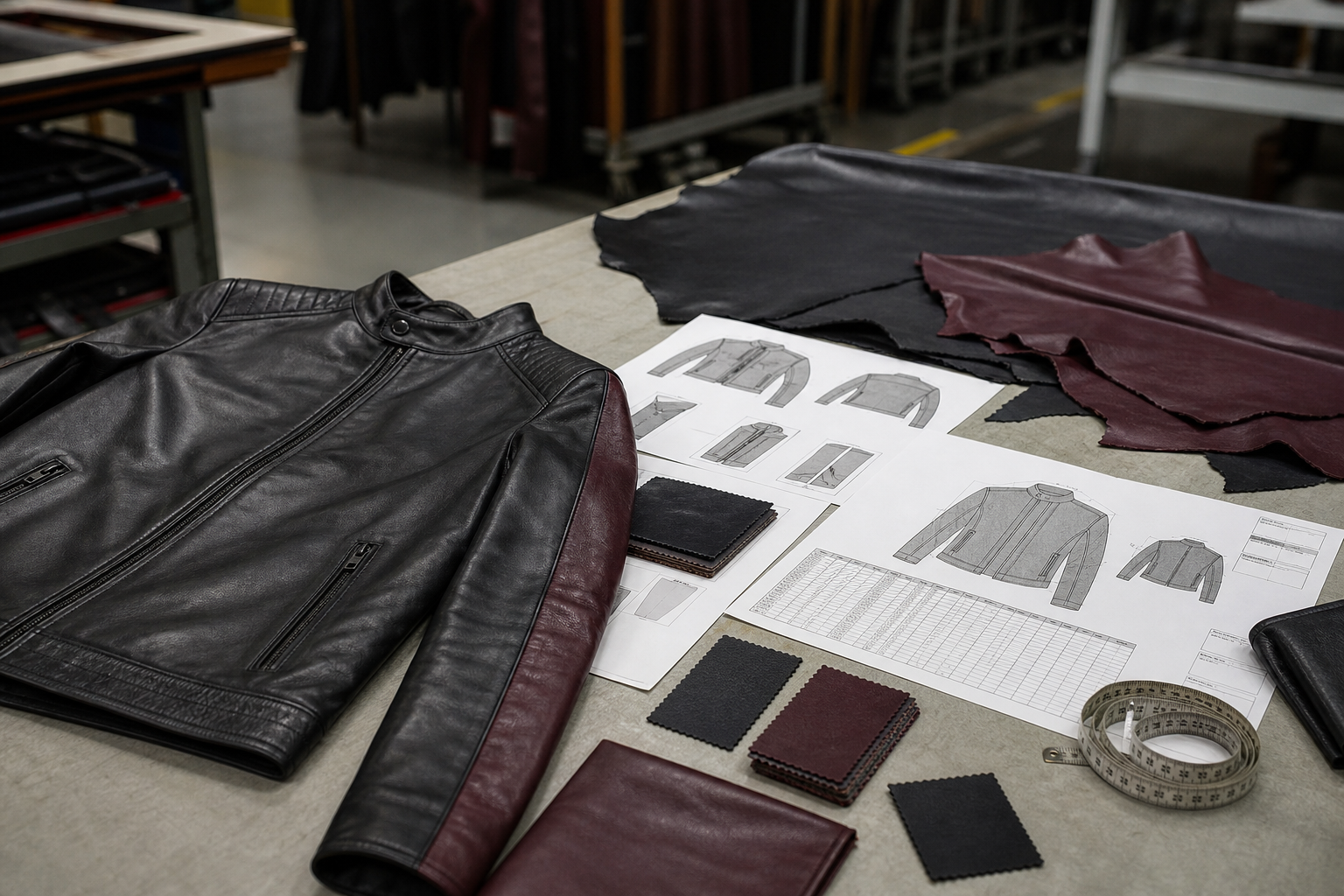
Two jackets that look similar can have very different production costs. A clean lambskin fashion jacket, full-grain cowhide biker jacket and armored motorcycle jacket require different hides, components and sewing operations. A serious quotation therefore starts with a technical specification, reference sample or detailed tech pack.
The main cost groups are leather, construction labor, lining and hardware, pattern and sample development, branding and packaging, quality requirements, order quantity and logistics. A supplier offering a firm price without these details is estimating—not costing the actual product.
Leather Types and How They Affect Price
Leather is normally the largest material cost. Species alone does not define quality: grade, tannage, finish, thickness, color consistency and usable cutting yield all matter. Sheep and lamb nappa provide the soft drape expected in premium fashion jackets, but clean panel matching can demand selective cutting. Cowhide offers greater structure and abrasion resistance for biker and motorcycle products. Goatskin combines visible grain with relatively low weight. Suede, nubuck, pull-up, distressed and specialty finishes add separate grading and consistency requirements.
Specify the required hand feel, thickness range, finish, color tolerance and acceptable natural character. “Genuine leather” is too broad for comparable quotations. Our full-grain versus top-grain guide explains how grade affects performance and appearance.
Leather Consumption per Jacket
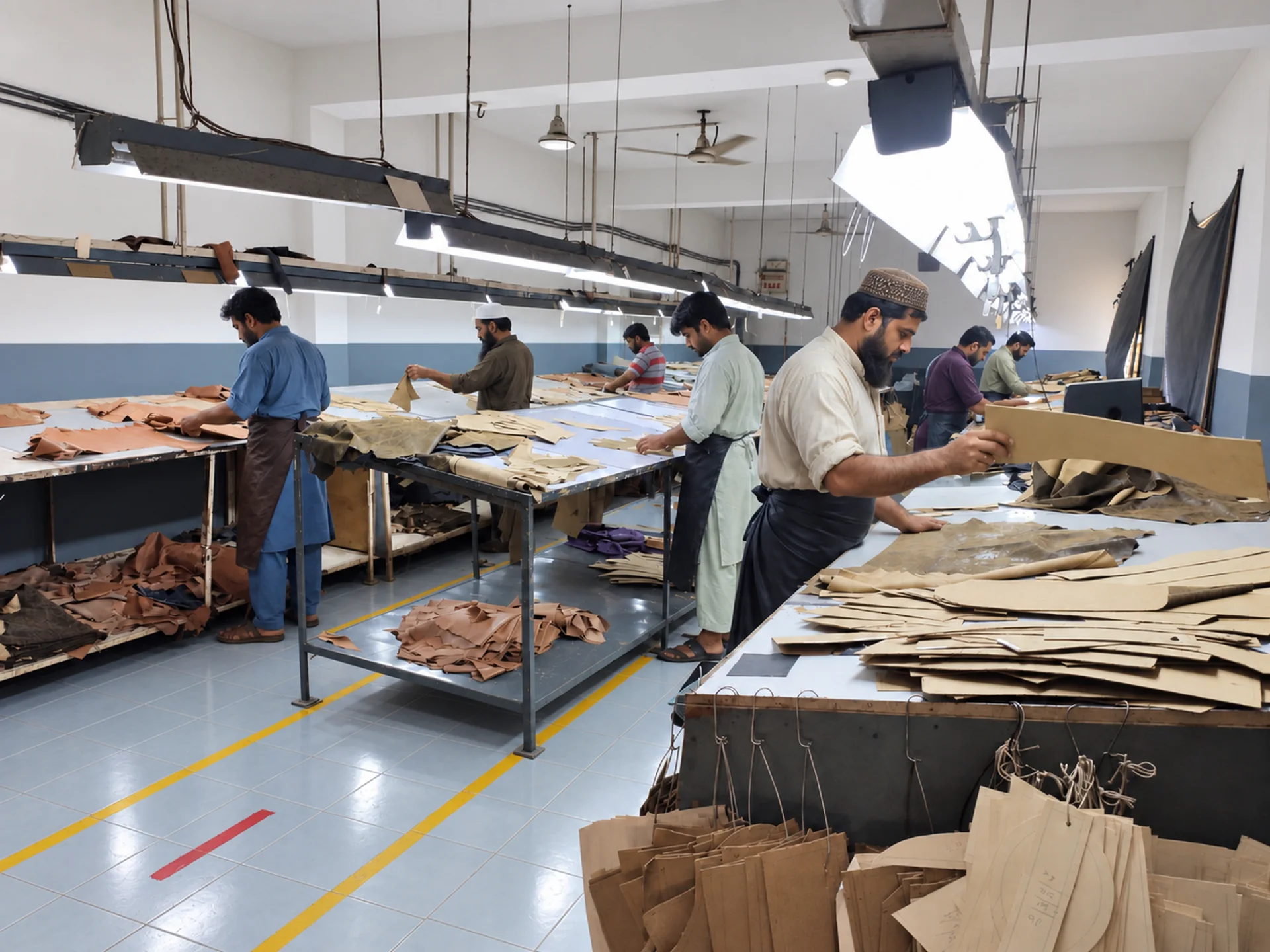
Factories purchase leather by area, but not every part of a hide is usable. Natural marks, holes, weak edges, shade variation and grain differences must be avoided or positioned deliberately. Consumption is calculated from the pattern pieces plus a yield allowance based on hide size and the selected quality standard.
Jacket size, body length, sleeve volume, panel layout and matching requirements all change consumption. A cropped paneled jacket usually consumes less than a long coat or oversized bomber. Large uninterrupted front and back panels require cleaner hide areas and can reduce cutting efficiency. Reliable consumption is confirmed after pattern development rather than assumed from a generic jacket average.
Hardware, Lining and Trim Costs
Branded metal zippers, two-way closures, custom pulls, molded snaps, buckles and decorative studs cost more than stock hardware and may carry separate supplier minimums. Antique brass, nickel-free, matte black and custom-plated finishes also have different sourcing and testing requirements.
Lining options range from polyester satin to viscose, cupro, cotton, quilted insulation and technical mesh. Printed lining adds artwork setup and printing minimums. Woven labels, care labels, size labels, hangtags, patches, thread and reinforcement tape should all appear in the bill of materials. Compare options in our leather garment lining guide.
Simple Versus Complicated Designs
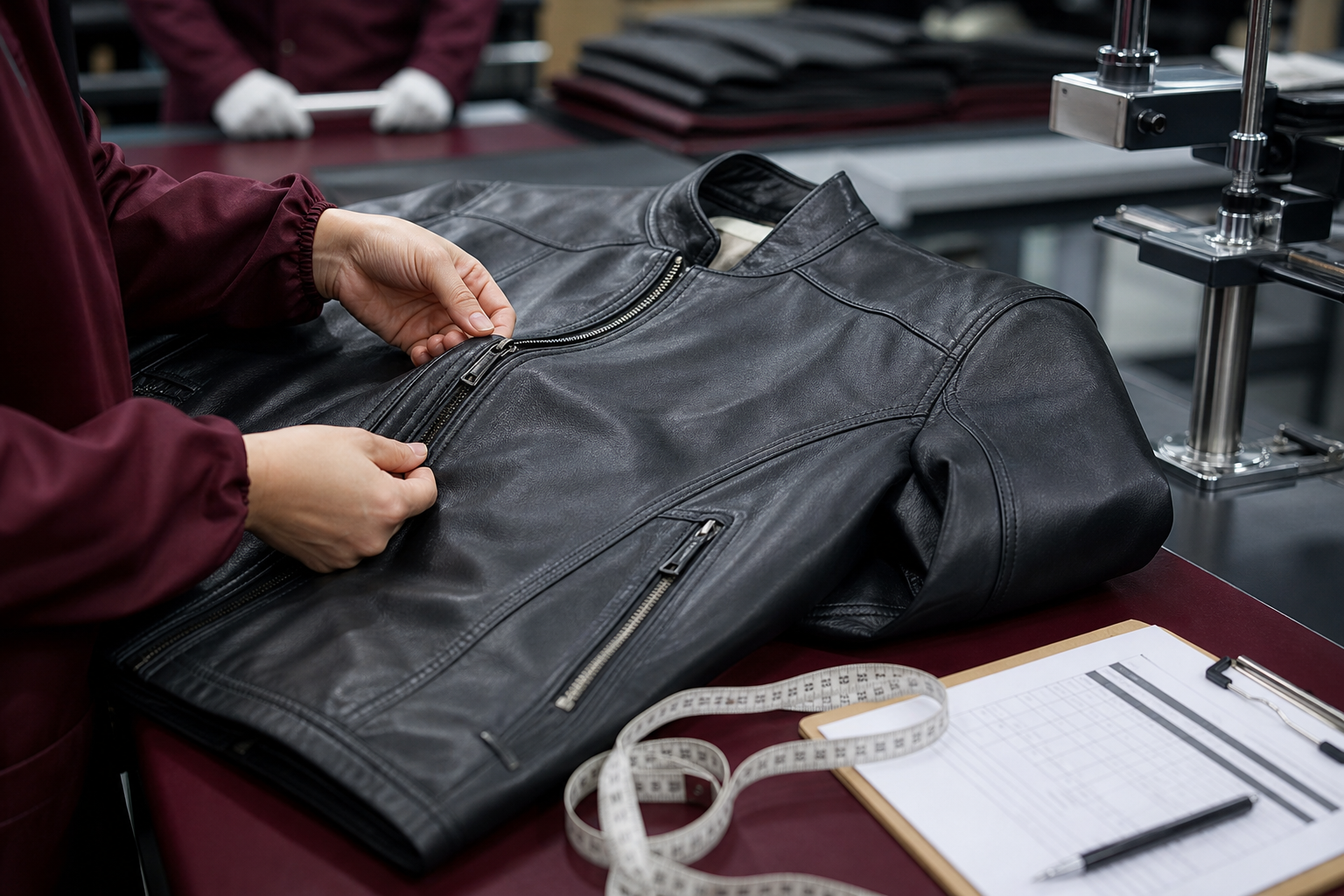
A clean cafe racer or shirt-collar jacket requires fewer operations than an asymmetric biker jacket with lapels, a waist belt, epaulettes, zipped pockets and quilted panels. Complexity affects pattern time, cutting, sewing, reinforcement, inspection and repair risk—not only material usage.
Cost rises with extra panels, color blocking, quilting, perforation, piping, multiple pockets, detachable parts, rib trims, armor pockets, stretch zones, hand distressing and strict shade matching. Ask the factory to identify which features materially affect price so the design can be value-engineered without losing its identity.
Sample and Pattern-Development Charges
Development may include pattern creation, prototype cutting, component sourcing, logo trials, fit review, corrections and grading. A first sample costs more per piece because material and labor are scheduled for a one-off build. Later revisions can be charged when the buyer changes the approved brief.
Confirm whether the sample fee includes a pattern, one revision, branding trials and courier delivery, and whether any portion is credited against a bulk order. A sealed approval sample should define measurements, workmanship, leather, components and finish before production begins.
How MOQ Affects Unit Price
Minimum order quantity affects unit price because fixed work is spread across the production run. Pattern preparation, sourcing, cutting setup, color control, inspection planning and packing administration still occur whether the order contains 20 jackets or 200. Larger runs normally improve efficiency, but volume alone cannot offset an expensive leather or highly complex design.
Confirm whether MOQ applies per style, color or total order. Splitting a small order across many colors increases material waste and handling. Hashbloom International evaluates programs from a standard 50-piece minimum per style, subject to leather, component and customization requirements. See our MOQ and sampling guide.
Private-Label Packaging Costs
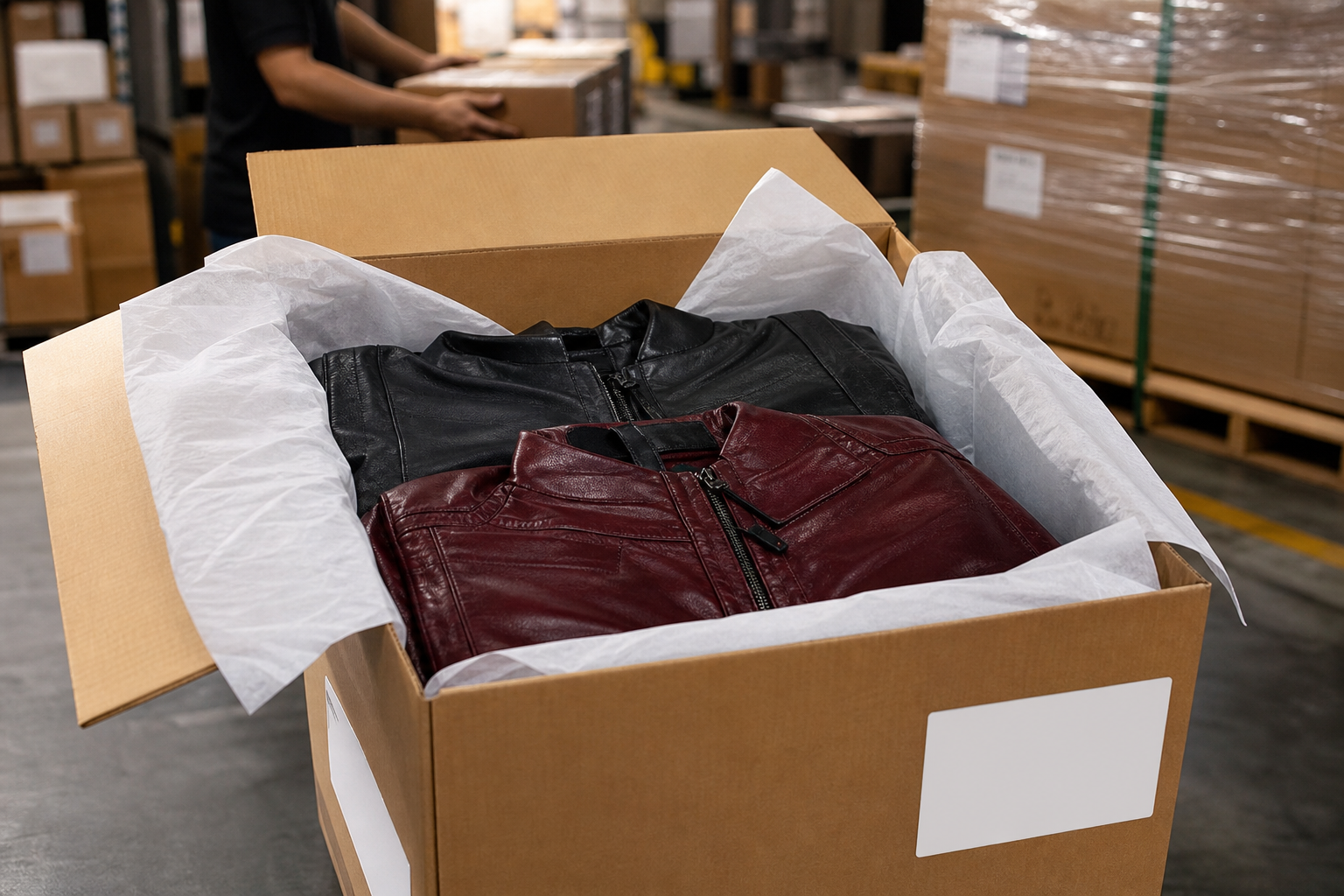
Private-label presentation should be costed before sampling. Typical items include woven neck labels, size and care labels, branded hangtags, barcode stickers, tissue, polybags, dust bags and export cartons. Custom boxes, metal badges and specialty packaging can have minimums higher than the jacket order. Supplying final artwork and specifications early prevents packaging delays.
Shipping and Landed Cost
The factory price is not the final inventory cost. Landed cost includes the garment, export packing, inland handling, freight, insurance, import duty, taxes, brokerage and destination delivery. Courier works for samples and urgent small batches but costs more per kilogram; freight becomes more economical as volume increases.
Ask which Incoterm—such as EXW, FOB, CIF or DDP—applies and what it includes. Duty depends on classification, composition and destination, so confirm it with a customs broker. Our export and shipping guide explains the delivery terms.
Protecting Retail Margin
Work backward from the expected net selling price after discounts and returns. Subtract channel fees, marketing, fulfillment, duties, freight and the required gross profit. What remains is the maximum landed product cost. This prevents approval of a beautiful sample that cannot support the brand’s commercial model.
Planning formula: net selling price − channel and operating costs − target gross profit = maximum landed product cost.
Information Required for an Accurate Quotation
Give every potential manufacturer the same brief so quotations are comparable:
- Tech pack, reference sample, or clear front, back and detail images
- Leather species, grade, thickness, color, finish and target hand feel
- Measurement chart, size range and proposed order size ratio
- Lining, zipper, snap, buckle and other component specifications
- Logo, labels, hangtags and private-label packaging requirements
- Quantity per style and color, delivery destination and required date
- Testing, inspection, compliance and preferred shipping terms
If specifications are incomplete, request clearly labeled alternatives—for example sheep nappa versus goatskin, or stock versus branded hardware. This reveals the decisions creating the largest cost movement.
Request a Leather Jacket Manufacturing Quote
Hashbloom International develops OEM and private-label leather jackets in Sialkot for fashion, streetwear and motorcycle brands. Send your tech pack, reference images, quantity, target leather, destination and required delivery date. Our team will review consumption, construction, components, development and shipping requirements before preparing a costed quotation.