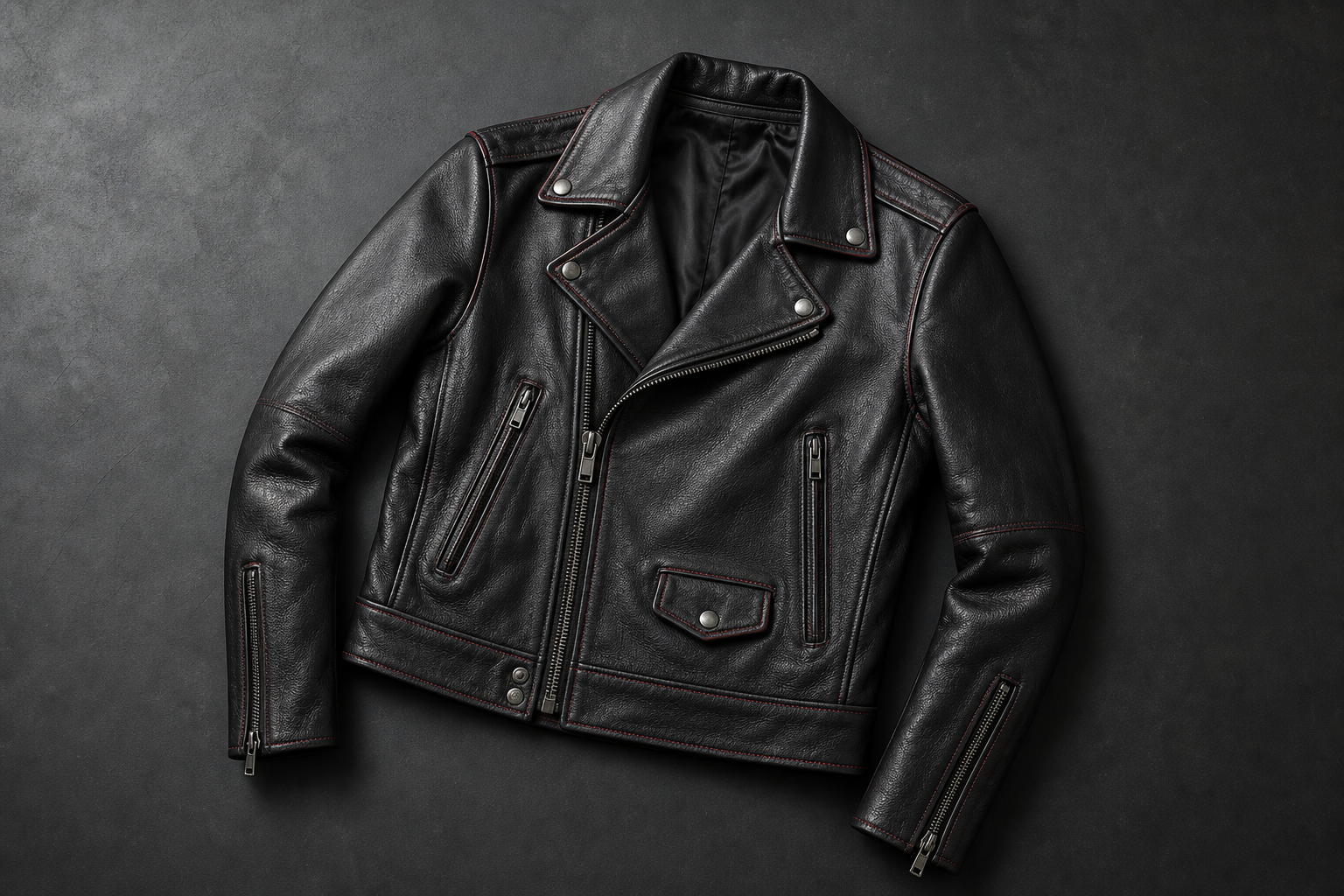
Buyer takeaway: choose a factory for leather specialization, pattern capability, transparent sampling and repeatable quality control—not the lowest quotation alone. A detailed tech pack and sealed sample protect both parties.
What Is an OEM Leather Jacket Manufacturer?
OEM means original equipment manufacturing. The factory makes jackets to a buyer's design, measurements, materials and branding. The fashion brand owns the product direction; the manufacturer turns it into patterns, samples and repeatable bulk production.
Unlike ready-made wholesale stock, an OEM program can control the leather, color, lining, hardware, construction, fit, labels and packaging. It also differs from ODM, where a supplier offers an existing design for the buyer to adapt. Many labels combine both approaches by modifying a proven factory fit block and applying proprietary materials and details.
Why Leather Needs a Specialist Factory
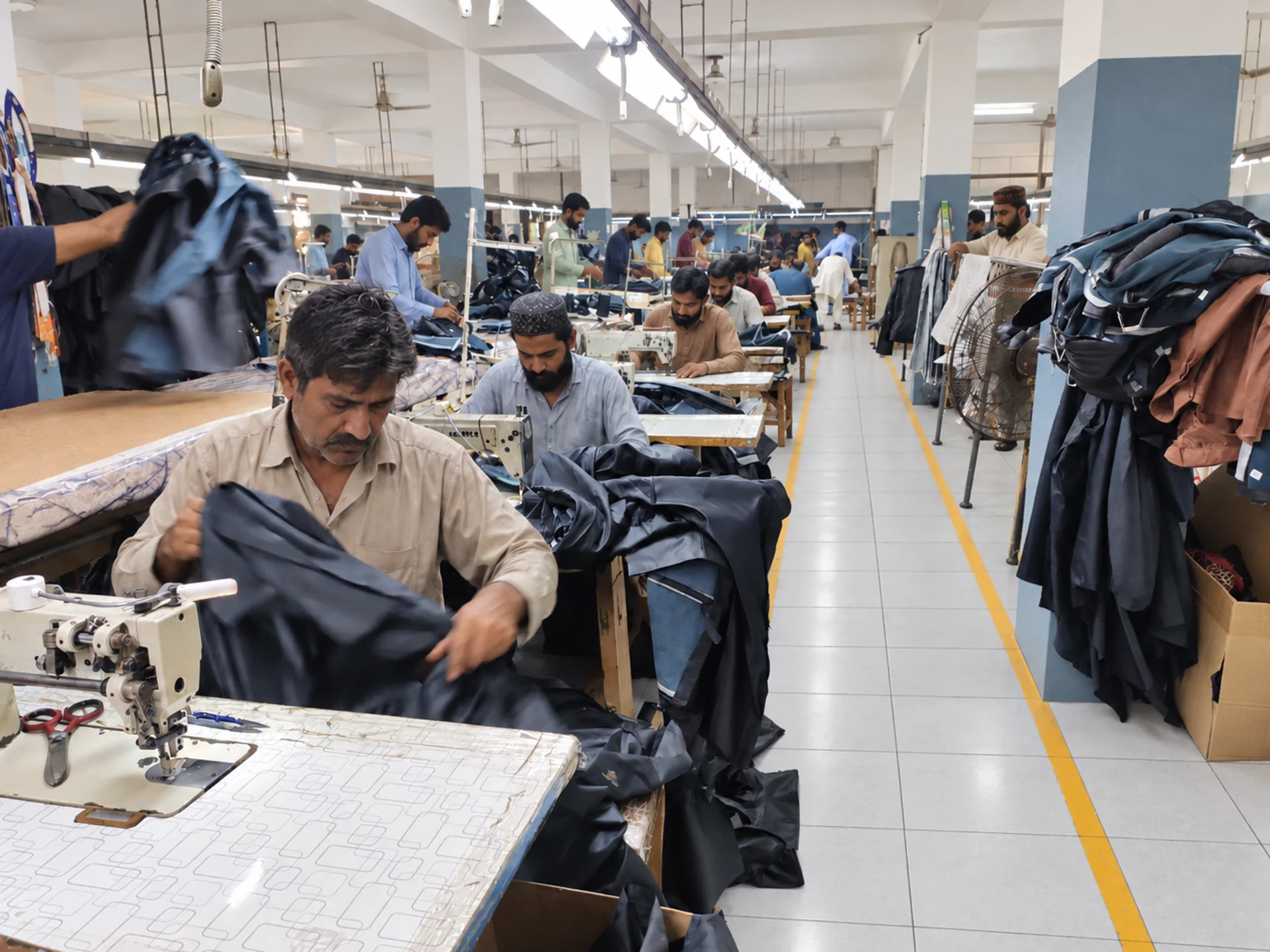
Leather is not a uniform fabric roll. Every hide varies in grain, shade, thickness, stretch and usable area, and unwanted needle holes cannot be removed. A specialist factory needs experienced hide graders, accurate cutting, leather-capable machinery and operators who can sew without stretching or marking panels.
Panel matching is equally important. Poor cutting can place heavy grain next to smooth grain or create shade differences between sleeves and body. Material inspection and cutting-room discipline prevent problems that are almost impossible to repair after assembly.
Choose the Right Leather
- Sheep Nappa: soft and lightweight for premium fashion, cropped and minimalist jackets.
- Lambskin: exceptionally soft with luxury drape for refined collections.
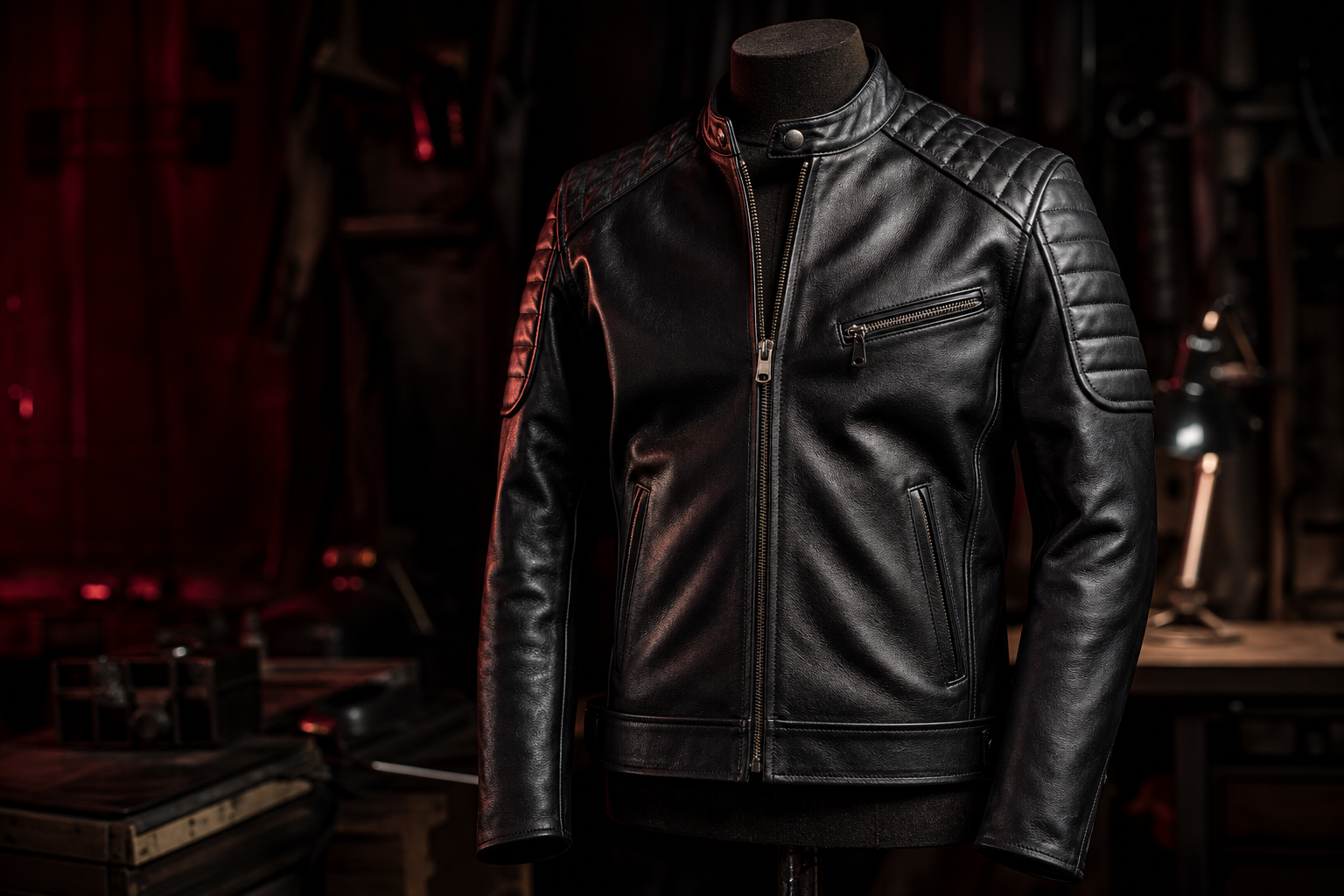
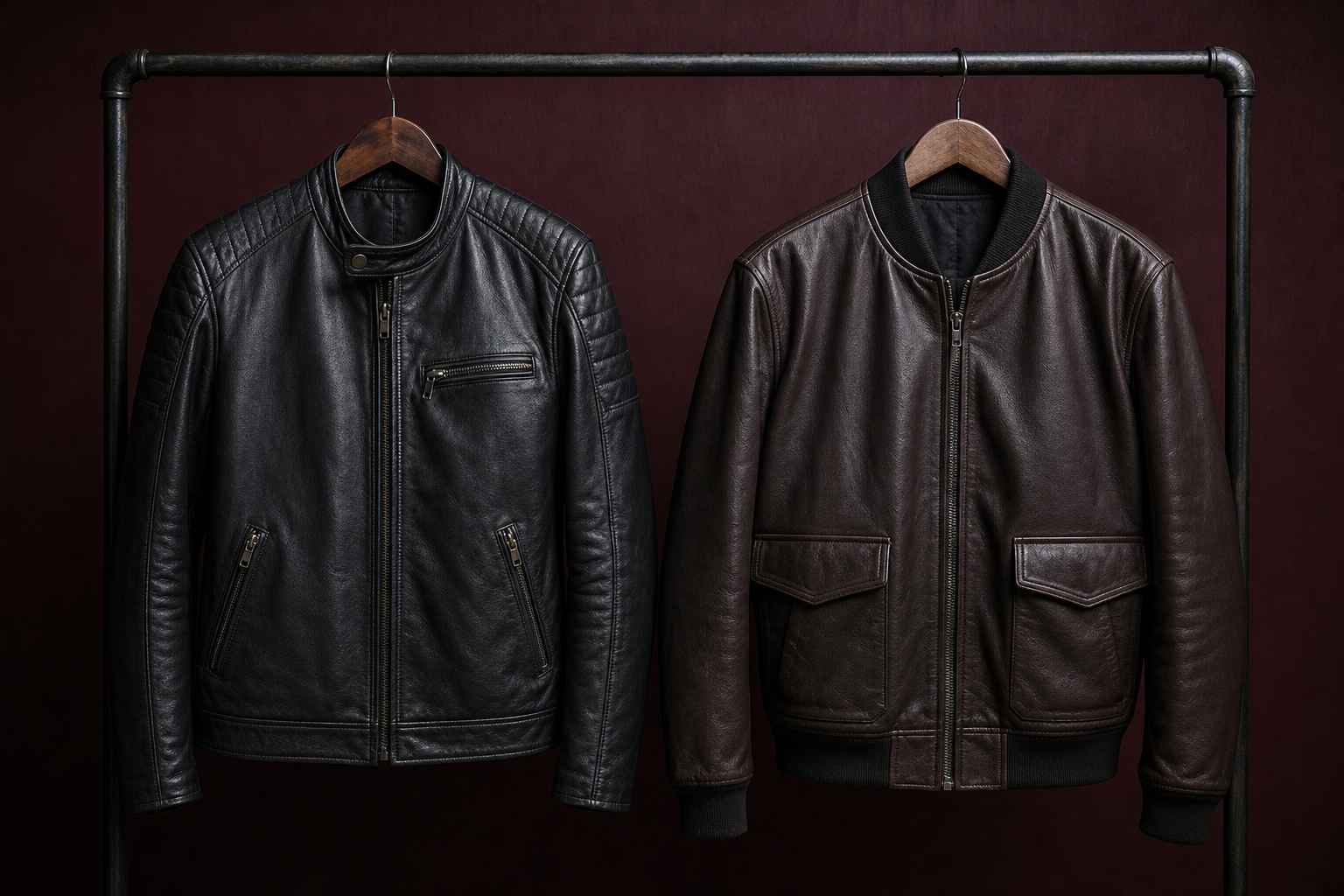
- Cowhide: firm, durable and structured for biker, workwear and utility styles.
- Goatskin: strong for its weight with distinctive grain for bombers and everyday outerwear.
- Suede or nubuck: tactile matte options requiring careful rub, shade and water-spot testing.
Specify thickness tolerance, softness, finish, color standard and grain—not only the animal type. A soft 0.8 mm cowhide behaves very differently from firm 1.3 mm cowhide. Compare leather grades in our full-grain vs top-grain guide.
Prepare a Production-Ready Tech Pack
A complete tech pack makes quotations comparable and reduces interpretation. Include flat sketches, graded measurements, construction callouts, seam allowances, leather specification, lining, labels, trims, colors and packaging. State whether dimensions are garment or body measurements.
Call out functional details such as two-way zippers, gussets, belts, ventilation, armor pockets, rib cuffs and internal pockets. If you provide a reference sample, clearly identify what should be retained and what must change.
The OEM Production Process
1. Product brief
Define the silhouette, customer, retail target, leather, colors, quantity and delivery market.
2. Tech-pack review
Confirm measurements, construction, branding, hardware, lining and commercial feasibility.
3. Material approval
Approve leather thickness, hand feel, shade, zippers, lining and branded trims.
4. Prototype and fitting
Check appearance, balance, mobility and workmanship; record every correction.
5. Sealed sample
Approve the final reference that bulk materials, fit and workmanship must match.
6. Bulk production and QC
Inspect hides, cutting, sewing, measurements, finishing and packing at defined checkpoints.
7. Export delivery
Confirm carton marks, documents, freight terms and handover date before dispatch.
Sampling: Where Quality Is Won
Never approve a jacket from photographs alone. Wear and measure the sample. Check shoulder balance, neck comfort, chest ease, sleeve pitch, arm movement, front zipper behavior and hem position. Compare leather and hardware against approved swatches in consistent light.
Send one consolidated fit sheet with photos and revised measurements. The final pre-production sample should contain every approved component and be signed as the sealed standard for bulk inspection.
MOQ, Pricing and Lead Time
MOQ depends on leather colors, tannery lots, hardware, lining prints and size breakdown. Hashbloom International supports qualifying programs from 50 pieces per style, subject to the final specification. Too many colors in a small order increase waste and sourcing cost.
Price depends on leather grade and consumption, panel count, construction, hardware, lining, branding, testing, packaging and volume. Confirm whether development, labels, cartons and freight are included. A sample commonly takes 7–10 working days after materials are confirmed; bulk production typically takes 25–35 working days after approval and deposit. Special leather or custom metal hardware may extend the schedule.
Private-Label Branding
Options include woven neck labels, size and care labels, embossed patches, blind debossing, foil stamping, custom zipper pulls, engraved snaps, printed lining, hangtags and retail packaging. Supply vector artwork with dimensions, color references and placement. Approve a physical strike-off because leather softness, heat and pressure affect logo appearance. Our private-label branding guide covers these methods in detail.
Leather Jacket QC Checklist
Inspect incoming materials, cutting, sewing, finishing and final packing—not only finished cartons. Define the inspection level and acceptance criteria in the purchase order. Use our complete leather apparel QC checklist when preparing a shipment inspection.
How to Evaluate an OEM Factory
- Ask for comparable jacket construction and relevant machinery.
- Confirm pattern-room and size-grading capability.
- Require written material specifications in the quotation.
- Ask how hides are graded and panels are matched.
- Confirm sample revisions, inspections and claims procedures.
- Document pattern ownership, payment and freight terms.
Red flags include quotations issued before the design is reviewed, unidentified leather thickness, unrealistic delivery promises, unapproved material substitutions, vague hardware descriptions and pressure to cut bulk before a sealed sample. A capable partner may challenge impractical details and explain a safer construction.
Why Brands Source Leather Jackets from Sialkot
Sialkot, Pakistan has an established export base for leather garments, motorcycle apparel, sports goods and accessories. Buyers can access specialist labor and supply networks familiar with private-label exports. Results still depend on the individual factory's communication, systems and quality controls, so apply the same due diligence used in any sourcing market.
Hashbloom International develops OEM and private-label leather jackets in Sialkot, including pattern development, leather and trim sourcing, branded details, grading, sampling, bulk production, inspection and export packing.
Frequently Asked Questions
What is a typical MOQ for custom leather jackets?
MOQ varies by specification. Hashbloom International supports qualifying programs from 50 pieces per style, subject to leather, colors and hardware.
Which leather is best for fashion jackets?
Sheep Nappa and lambskin suit soft, lightweight fashion jackets. Cowhide supports structured biker and workwear styles, while goatskin balances grain, strength and weight.
Can an OEM factory add private labels?
Yes. Woven labels, embossed logos, custom hardware, printed linings, hangtags and retail packaging can be approved during sampling.
Final Recommendation
The right OEM leather jacket manufacturer translates a design into a documented, repeatable product. Start with a precise brief, approve materials before sampling, fit the physical prototype, seal a pre-production sample and agree on inspection standards before bulk cutting. This gives fashion brands clearer costs, fewer surprises and more consistent retail-ready jackets.
Before releasing your order, use our leather jacket sample approval checklist to document fit, materials, corrections and the final production reference.