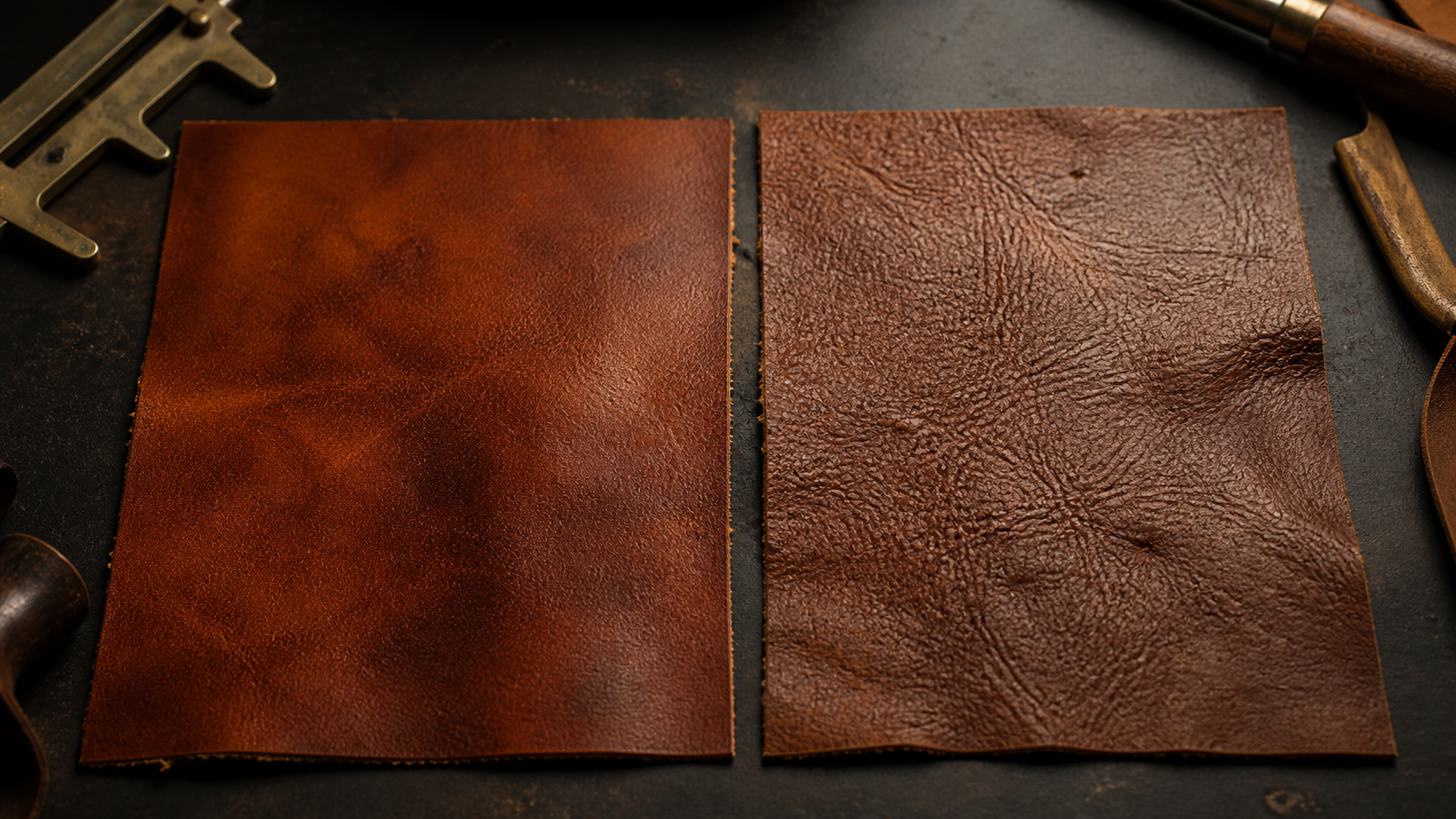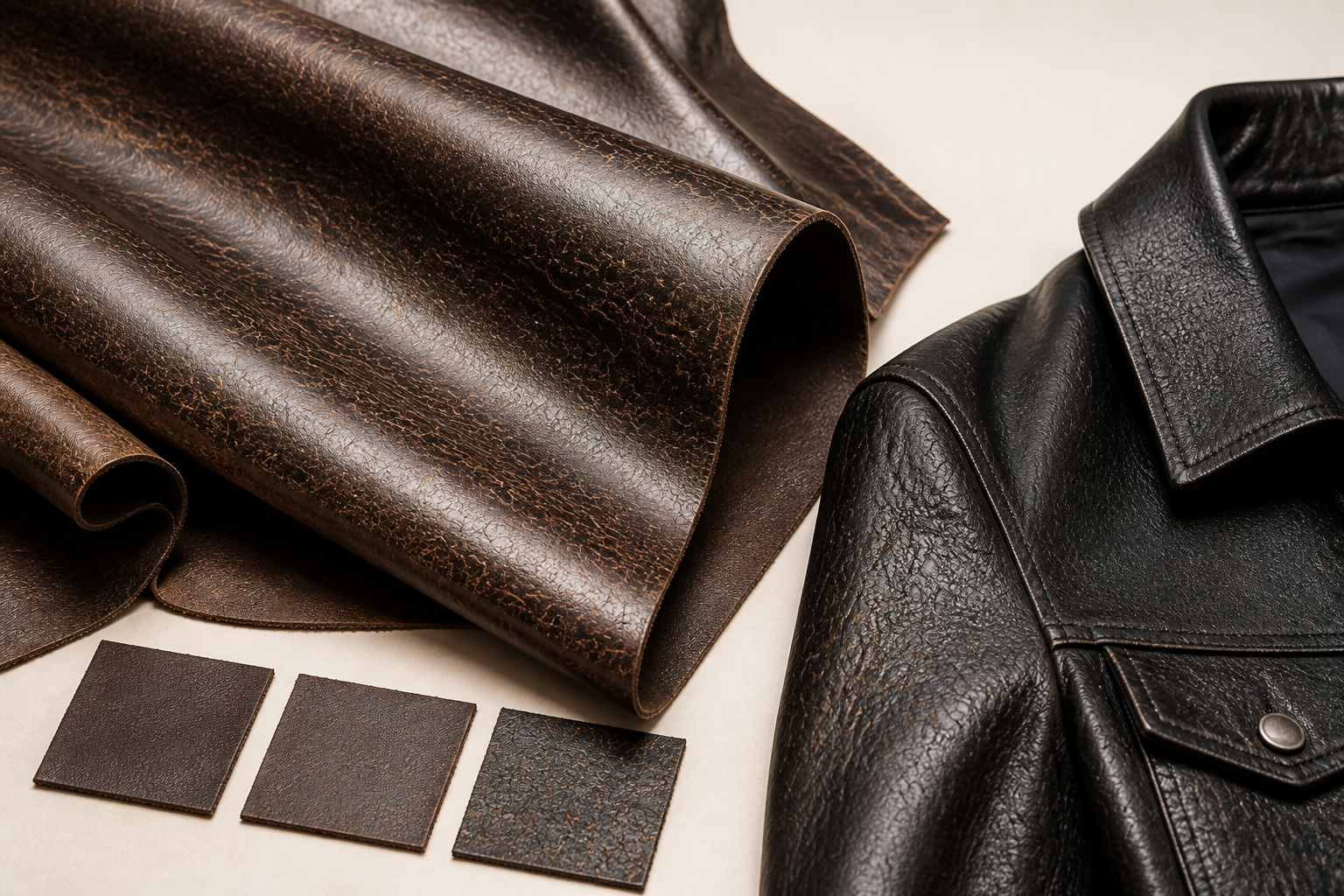
Short answer: crackle leather is leather with a deliberately engineered top finish that separates into a network of fine lines when dried, flexed or mechanically activated. A contrasting base color often shows through the cracks. The effect should remain bonded and structurally sound; uncontrolled peeling or deep grain splitting is damage.
Is It “Crackle,” “Cracked” or “Cracker” Leather?
Crackle leather and crackled leather are the standard trade descriptions for this decorative finish. “Cracked leather” is ambiguous because it may describe either the intended effect or genuine deterioration. “Cracker leather” is not a standard leather term and is usually a spelling variation of crackle leather.
How the Crackle Effect Is Made
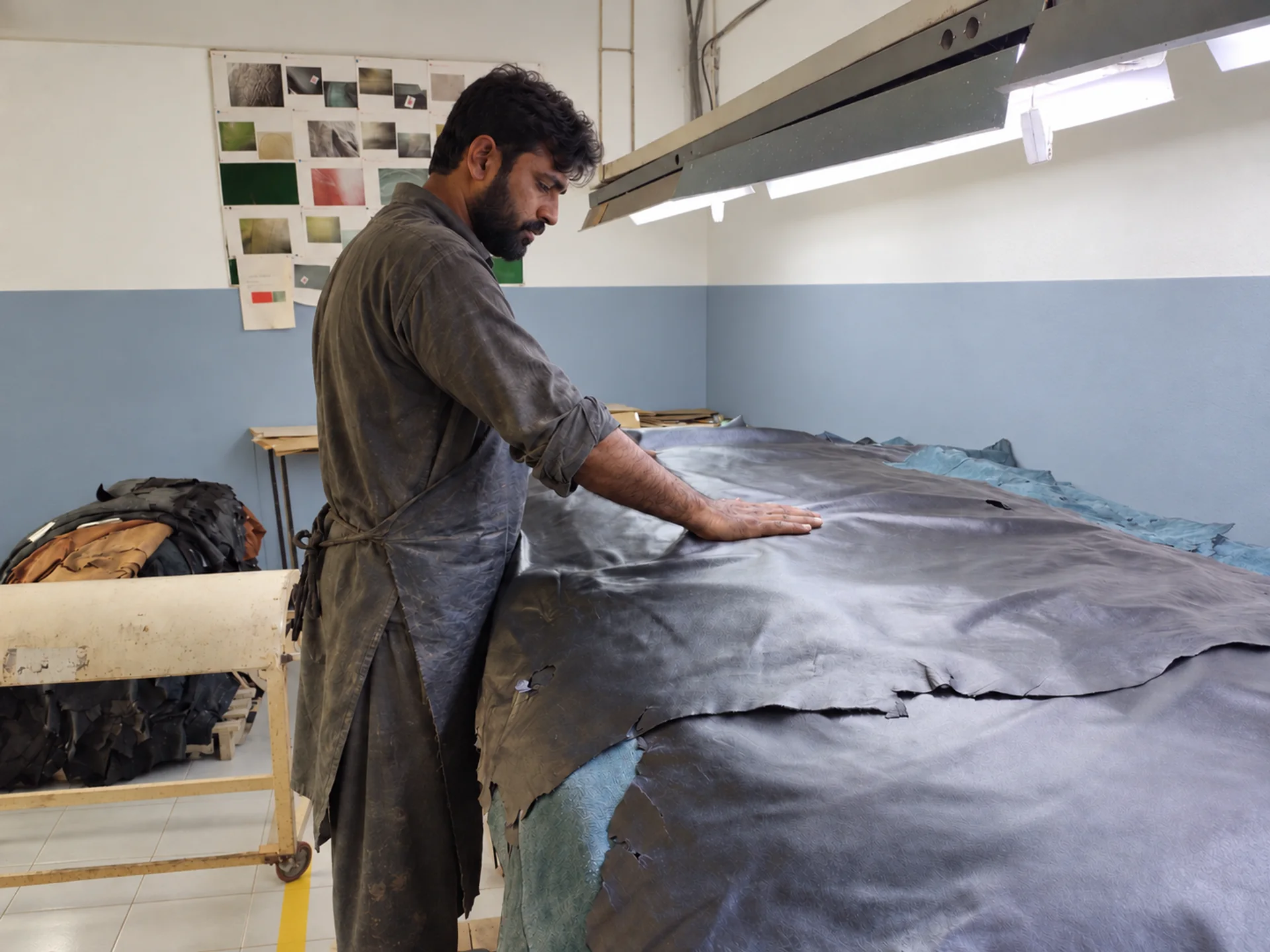
The tannery first prepares a stable leather base, commonly cowhide, sheep Nappa, goat or a corrected-grain article. A contrasting base coat may be applied, followed by a specialized crackle layer whose flexibility, film thickness and drying behavior are carefully controlled. Heat, drying, flexing, tumbling or controlled stretching then develops the fissure pattern.
A transparent or lightly pigmented protective topcoat can improve rub resistance and stabilize the appearance. The recipe must balance visual separation with adhesion: if the film is too flexible, it will not crack; if it is too brittle or poorly anchored, it can flake away.
Crackle Leather vs Other Vintage Finishes
| Finish | Visual behavior | Purpose |
|---|---|---|
| Crackle leather | Fine, intentional surface fissures that reveal a contrasting base | Decorative vintage or fashion effect |
| Distressed leather | Wear, fading and abrasion concentrated at natural contact zones | Broken-in, aged appearance |
| Pull-up leather | Color lightens when oils and waxes move under pressure | Responsive tonal depth and patina |
| Damaged leather | Uncontrolled peeling, flaking, deep splits or weak grain | A defect, not a premium finish |
For broader comparisons, see our guides to distressed leather, pull-up leather and vintage leather types.
How to Recognize Premium Crackle Leather
- The pattern looks intentional and falls within an approved visual range.
- The top effect remains bonded after repeated flexing.
- Dry rubbing does not release excessive pigment or flakes.
- The leather beneath the effect remains strong, supple and free from deep splits.
- Panels belong to the same color and crack-density family.
- Seams, folds and edges do not show uncontrolled delamination.
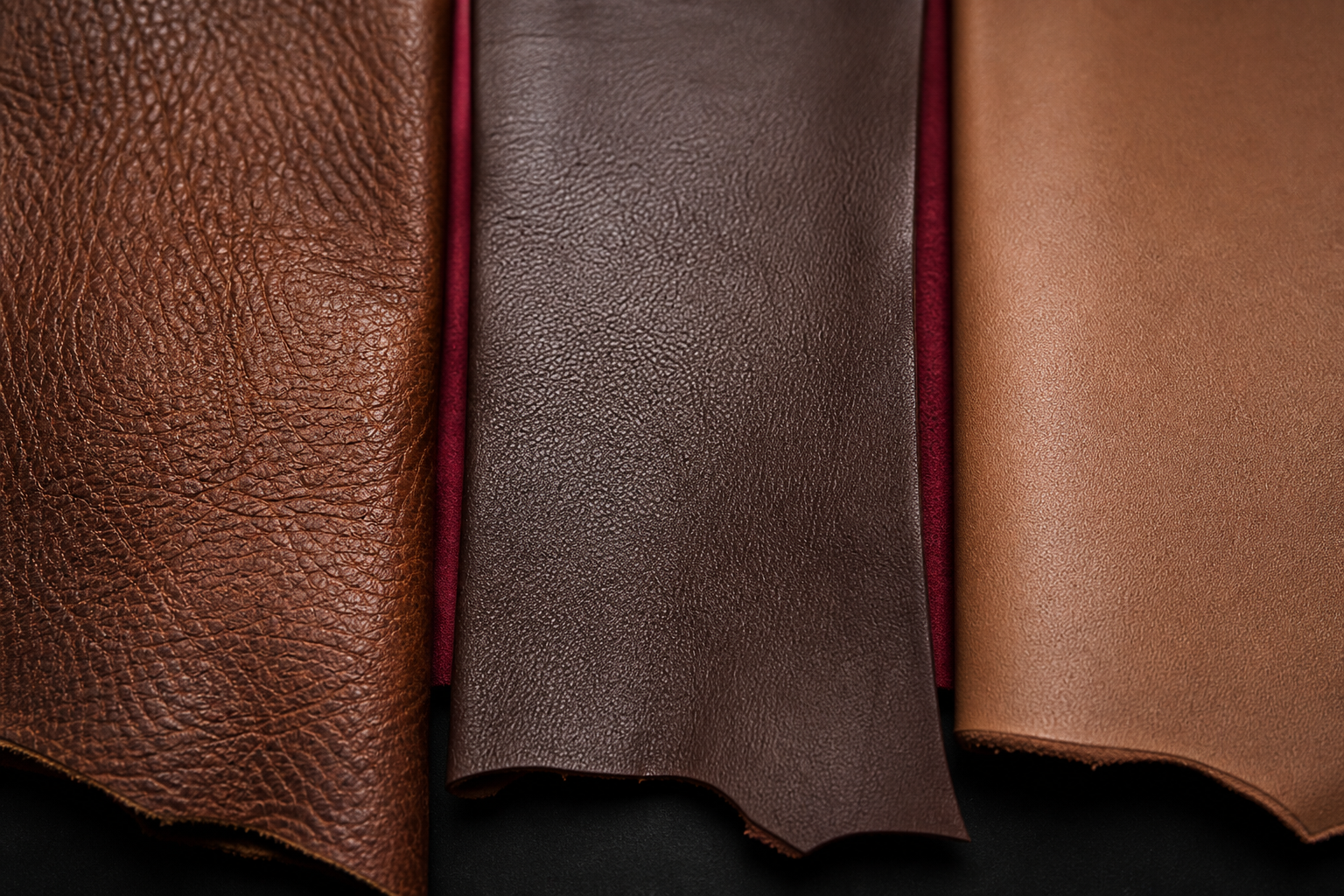
A fine crackle can create subtle antique depth, while a larger pattern produces a more graphic fashion statement. Neither scale is inherently better; consistency with the design brief matters most.
Best Base Leathers
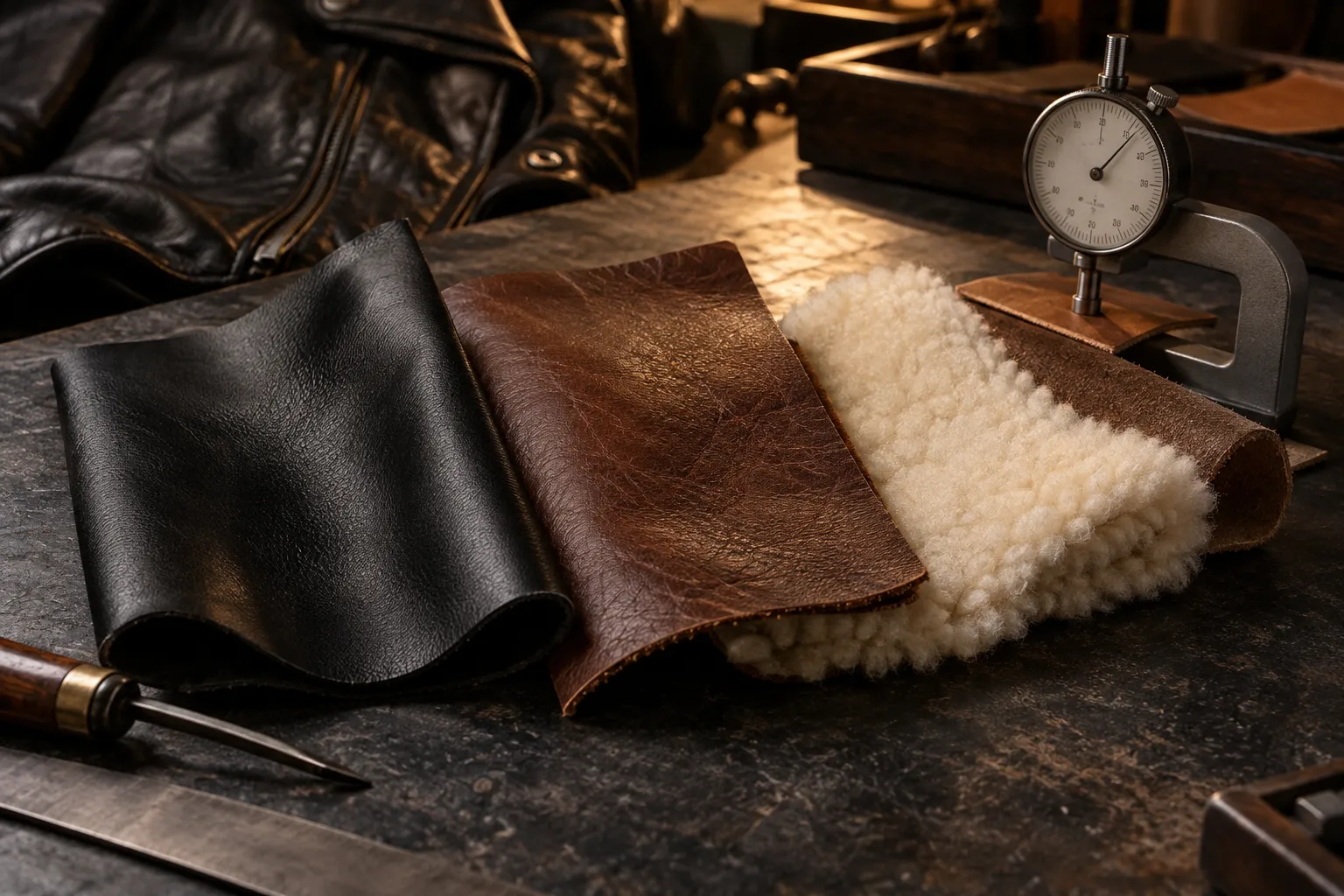
Cowhide provides body and abrasion resistance for biker jackets, bags, belts and footwear. Sheep Nappa creates a softer, lighter garment with a more fluid drape, although the finish must tolerate greater flex. Goat leather combines strength with a recognizable grain. Corrected-grain leather offers a uniform canvas for highly repeatable crackle patterns.
The product description should name both the leather and the finish—for example, “genuine sheep Nappa leather with a two-tone crackle finish”—rather than presenting crackle as a species or grade.
Products and Design Applications
- Fashion, biker, cafe-racer and heritage leather jackets
- Handbags, satchels, backpacks and small leather goods
- Boots, fashion footwear and selected trims
- Belts, panels, patches and decorative branding details
- Upholstery accents where the finish has suitable flex and rub performance
Crackle works especially well when the base and surface colors create deliberate contrast—black over brown, burgundy over tan, or a metallic layer over a dark base. Pattern scale should match the size of the product and its viewing distance.
Quality Tests and Bulk Inspection
The development team should seal a target swatch and a finished prototype. Because some variation is part of the design, bulk approval is clearer when the buyer also accepts light and heavy visual limits. Testing requirements should reflect the product’s end use rather than appearance alone.
Common Defects
- Flaking: pieces of top finish detach during normal handling.
- Deep cracking: fissures extend into and weaken the leather grain.
- Poor adhesion: the decorative layer lifts at folds, stitching or edges.
- Excess transfer: pigment marks hands, lining or other garments.
- Panel mismatch: crack size, density, gloss or color changes sharply across a product.
- Plastic appearance: a thick, uniform film hides the natural leather character.
Buyer Specification Checklist
State the animal species, grain construction, thickness, temper, base shade, surface shade, gloss, crack size, crack density and acceptable variation. Add performance requirements for adhesion, flexing, rubbing, abrasion and cold conditions where relevant. The tech pack should identify clean zones for logos or labels and any areas where heavier crackle is permitted.
Production approval should include leather swatches, a complete sample, controlled photographs and test results. For garments, confirm measurements after any tumbling or heat activation because finishing can change shrinkage and handle.
Care
Dust gently with a soft dry cloth and blot spills without aggressive rubbing. Avoid alcohol, household cleaners, direct heat and heavy wax polishing, which can alter the contrast or loosen the effect. Test any conditioner in a hidden area because it may darken the exposed base shade. Store garments on a supportive hanger in a cool, ventilated place and use a professional leather cleaner for deep cleaning.
Final Takeaway
Crackle leather is a purposeful finish, not automatically a sign of poor quality. Premium production keeps the crack pattern visually controlled while the finish stays bonded and the leather remains strong. Buyers should define the appearance range, approve the effect on a finished sample and test it for the product’s real performance needs.