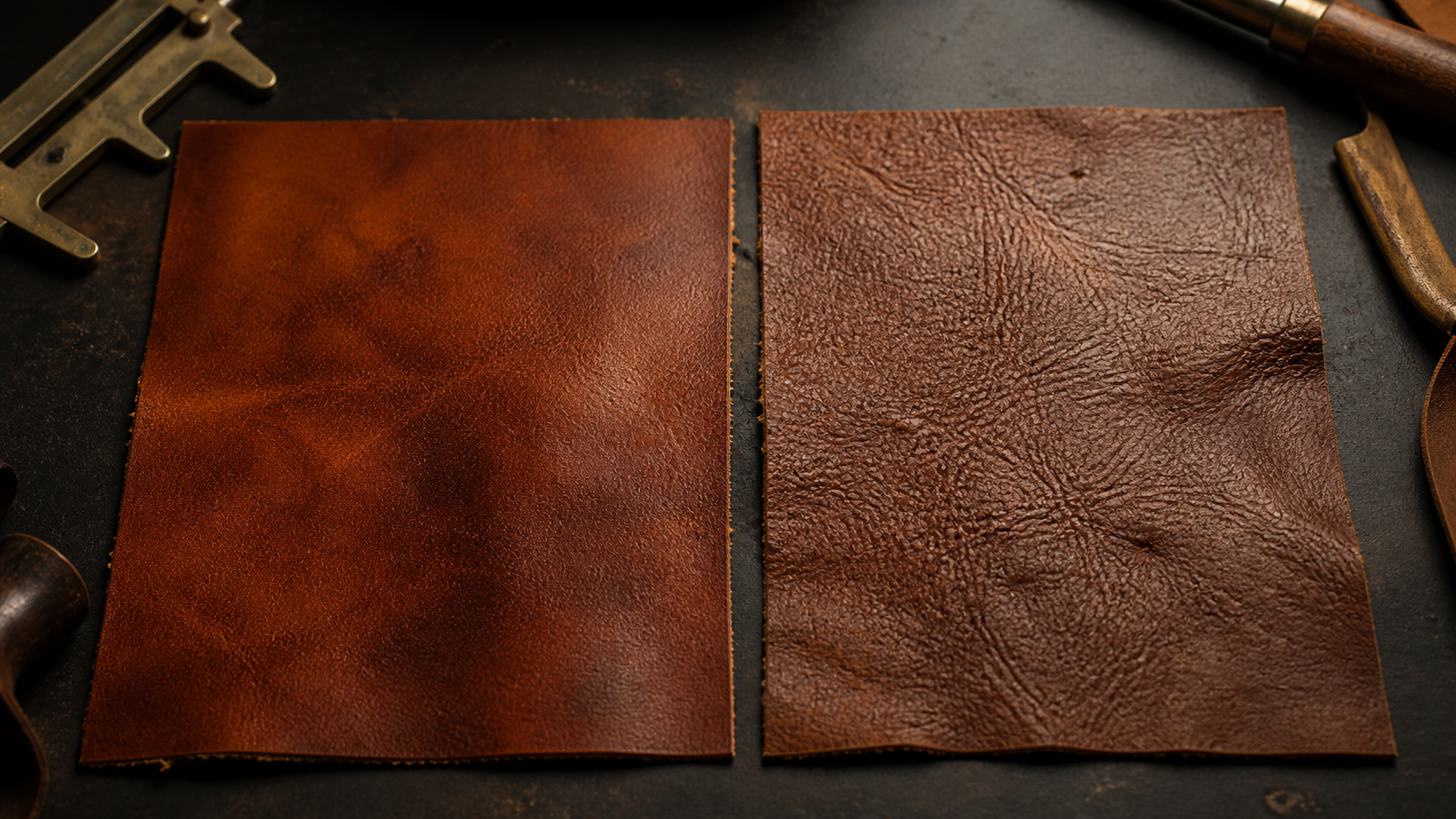
Short answer: aniline is a transparent dye/finish classification. Natural grain means the hide's original pore and grain structure remains visible rather than being replaced by a corrected or embossed pattern. Always specify both the grain condition and the finish.
What Is Cow Aniline Leather?
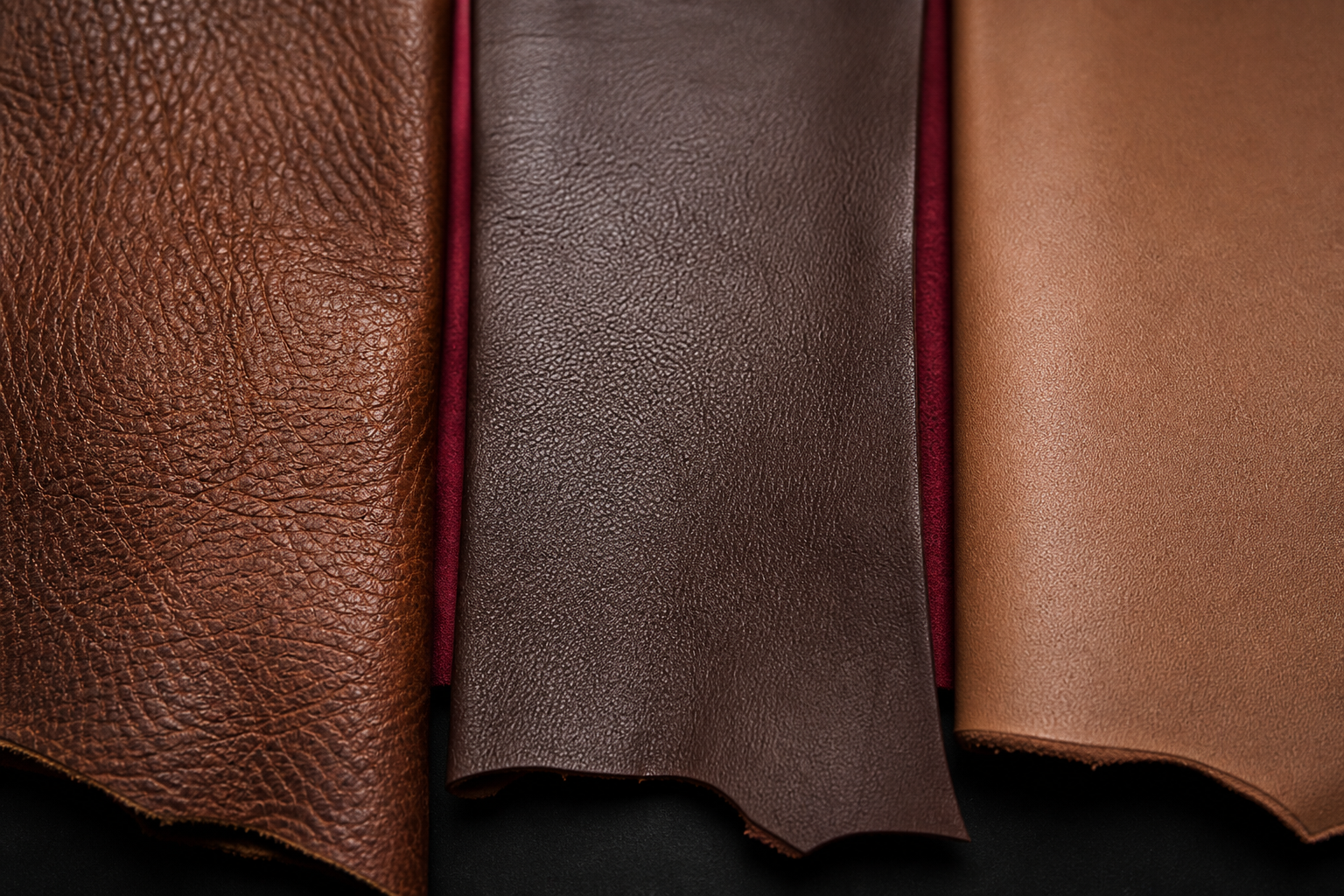
Cow aniline leather is dyed through with soluble dyes that allow the original surface to remain visible. It does not use an opaque pigment layer to conceal pores or natural variation. The result is rich color depth, a responsive hand, visible grain and a surface that develops patina through handling and wear.
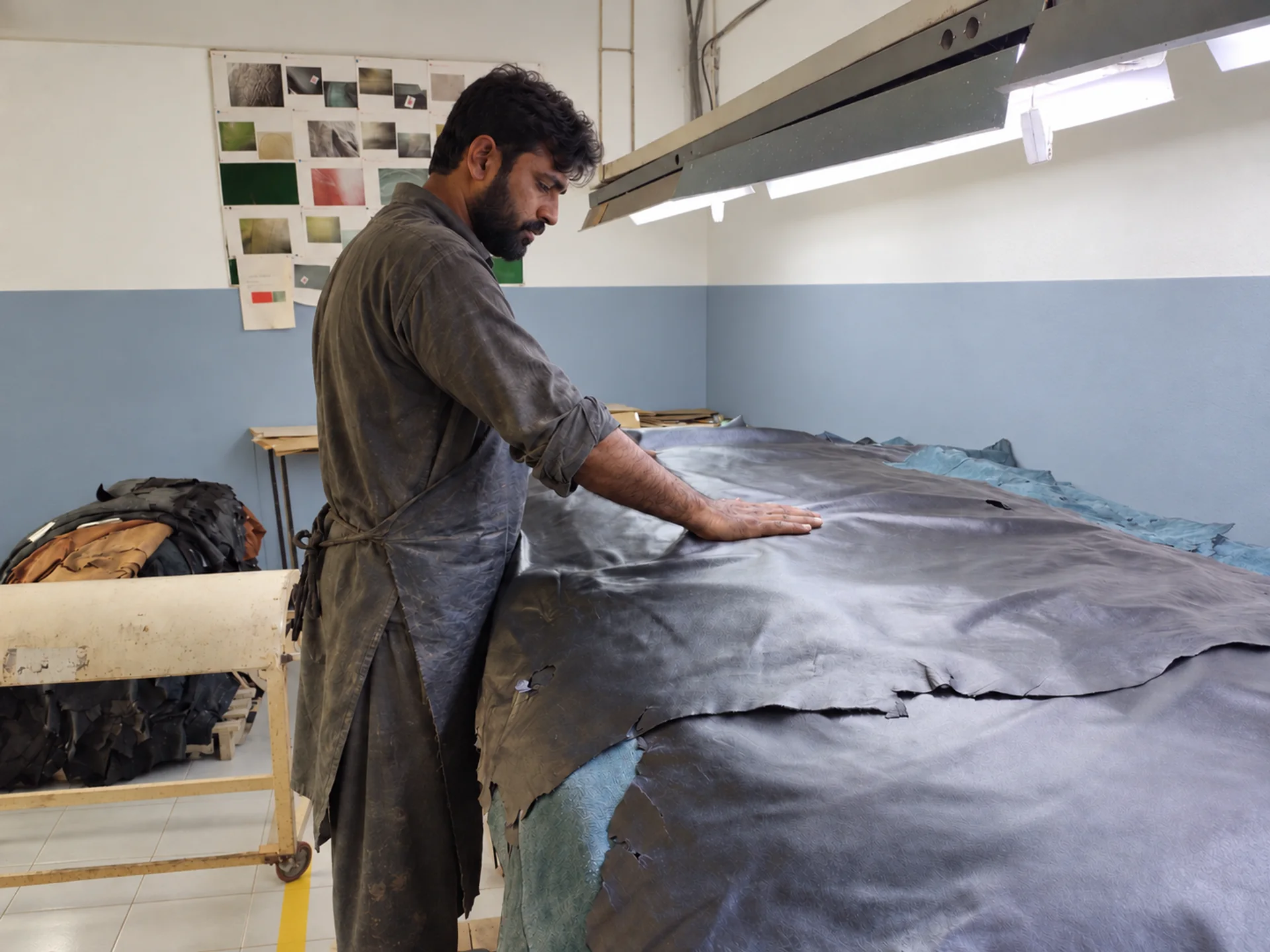
Because the finish is transparent, hide selection must be strict. Scars, wrinkles, shade variation and differences in dye absorption remain visible. Clean aniline-quality cowhide generally costs more, and cutting yield can be lower when a buyer wants close matching across large jacket or bag panels.
What Is Cow Natural-Grain Leather?
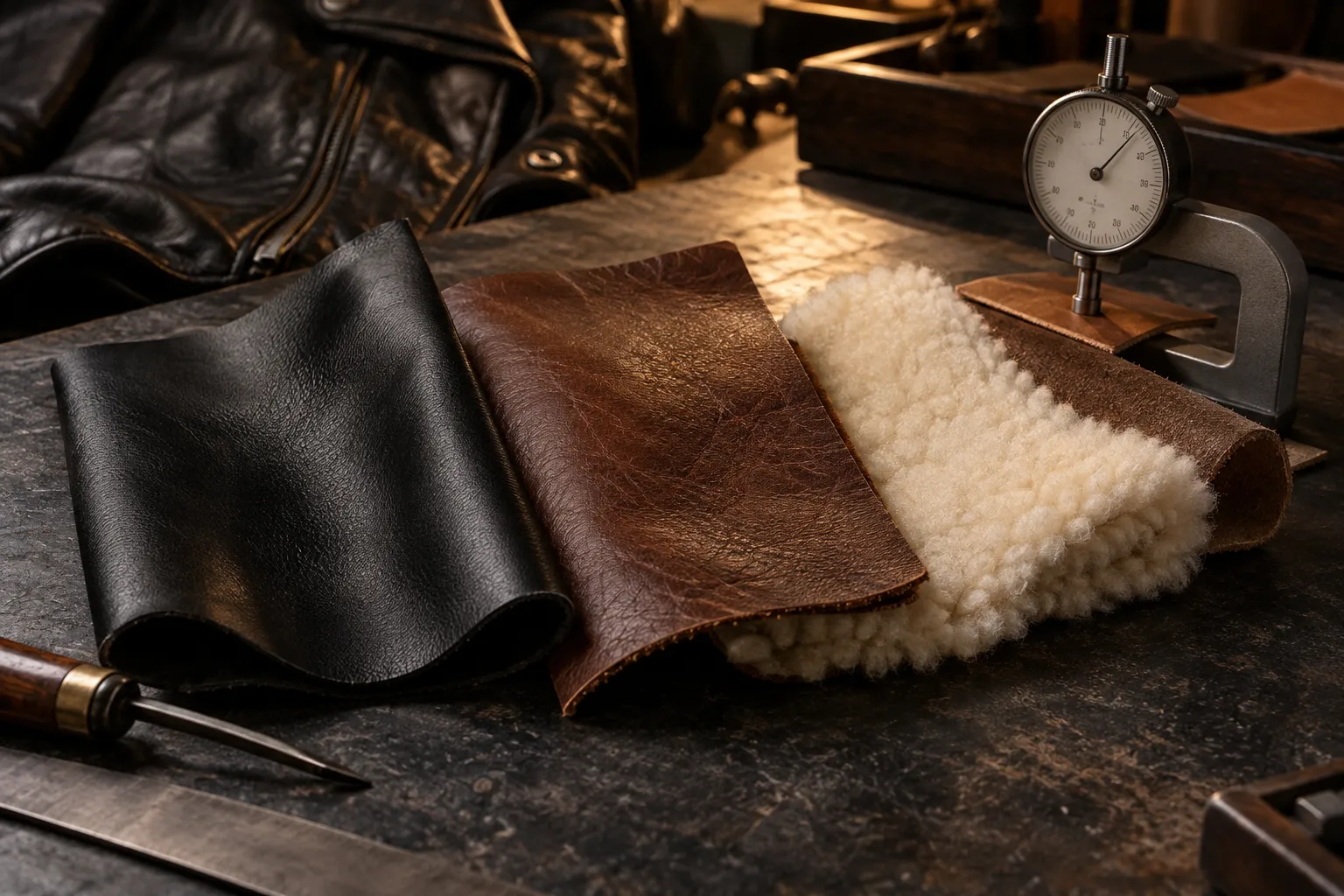
Natural-grain cow leather keeps the hide's own pore pattern, wrinkles and grain break. The term describes appearance and surface authenticity; it does not, by itself, identify the dye system, topcoat, tanning chemistry or leather grade. Natural-grain cowhide might be full-grain or minimally corrected top-grain, and it may carry an aniline, semi-aniline, waxed or other light protective finish.
This distinction matters in sourcing. A buyer who requests only “natural grain” has not yet defined stain resistance, color uniformity or finish transparency. Those outcomes depend on the full leather recipe and must be written into the specification.
Why the Terms Commonly Overlap
Premium cow aniline leather normally displays natural grain because an opaque coating would defeat the purpose of the transparent aniline effect. Yet natural grain does not automatically mean pure aniline. A semi-aniline finish can retain the authentic pores while adding a light protective topcoat and small amount of pigment to improve consistency and resistance to everyday handling.
Think of the specification as two separate questions: what happened to the physical grain surface? and how was that surface colored and protected? Answering both prevents disagreement between the buyer, tannery and garment factory.
Side-by-Side Comparison
| Factor | Cow Aniline Leather | Cow Natural-Grain Leather |
|---|---|---|
| What it describes | A transparent dye and finishing system | The hide's original surface texture and markings |
| Can they overlap? | Yes—aniline cowhide often retains natural grain | Yes—natural grain may be aniline, semi-aniline, waxed or lightly pigmented |
| Surface coating | Minimal; no opaque pigment hiding the grain | Varies according to the specified finish |
| Visual character | Deep color, tonal movement and strong transparency | Visible pores, wrinkles, grain break and healed marks |
| Uniformity | Low to moderate; shade and absorption vary | Low to moderate unless a balancing finish is added |
| Stain resistance | Lower because the surface is more open | Depends on topcoat—not on natural grain alone |
| Typical positioning | Luxury jackets, heritage bags and premium upholstery | Premium apparel, moto wear, belts, bags and footwear |
Appearance, Touch and Patina
Aniline cowhide has visual depth because light passes through the transparent color rather than reflecting from an opaque paint-like layer. Bending or stretching the leather can reveal tonal movement, and oils from handling gradually darken high-contact areas. These changes are part of the material's luxury character, not necessarily defects.
Natural grain contributes pores, wrinkles and an irregular grain break. Its feel can range from supple garment leather to dense belt leather because temper and thickness are independent variables. A natural surface with a protective semi-aniline topcoat may age more evenly than pure aniline while still looking authentic.
Water, Stains, Sunlight and Colorfastness
Pure aniline leather is more absorbent and can darken when wet. Water spotting, oil transfer and fading from strong sunlight are more visible because there is little surface coating. This does not make the leather poor quality; it means the product requires appropriate care and honest customer communication.
Natural-grain leather's resistance depends on its finish. A light semi-aniline protection can improve wet rub, stain resistance and shade consistency without completely hiding the grain. For commercial programs, test dry and wet crocking, water spotting, perspiration, lightfastness and finish adhesion against the intended end use.
Best Uses by Product Type
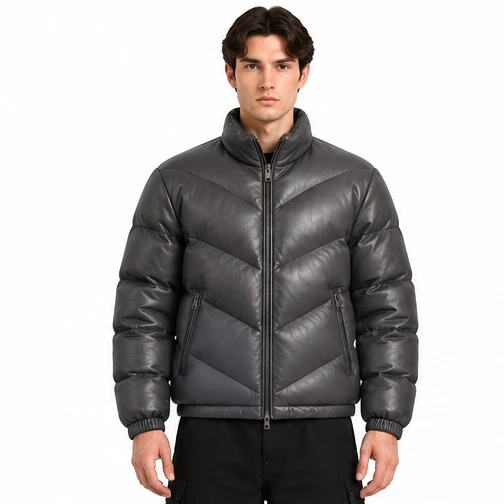
- Luxury fashion jackets: soft aniline or lightly protected semi-aniline cowhide for depth and drape
- Heritage and cafe-racer jackets: natural full-grain with aniline, waxed or pull-up character
- Motorcycle garments: natural grain can work, but abrasion, thickness, seam and colorfastness requirements take priority
- Premium bags and briefcases: aniline leather for patina; semi-aniline when daily stain resistance matters
- Belts and small goods: dense natural-grain cowhide selected for fiber strength and edge finishing
- Uniform or high-repeat programs: a more protected natural-grain finish for easier lot matching and maintenance
Cost, Cutting Yield and Bulk Consistency
Transparent aniline finishing exposes the quality of the original hide, so cleaner selections command a premium. The factory may reject or reposition panels around prominent damage, reducing usable yield. Natural-grain programs also require deliberate panel matching for shade, grain size and looseness.
Buyers should approve a realistic range rather than demand identical pieces. Bulk standards should include a master swatch, acceptable light-to-dark shade boundaries, marking limits by panel location, and matching rules for paired components. A sealed sample alone cannot represent every natural variation found in a production lot.
Buyer Quality-Control Checklist
- Confirm species, cut, grade and whether the grain layer is intact
- Specify aniline, semi-aniline or another finish separately from grain type
- Approve thickness, temper, color, gloss and acceptable shade range
- Define acceptable scars, wrinkles, insect marks and grain looseness
- Test dry and wet rub, water spotting, finish adhesion and color migration
- Approve a physical leather swatch and sealed garment sample before bulk cutting
- Inspect matching across fronts, sleeves, collars and other paired panels
- Record care-label wording and any restricted-substance requirements
How to Write the Leather Specification
Replace vague wording such as “premium natural cow leather” with a measurable description. Example: “Cowhide, natural full-grain, drum-dyed aniline cognac, soft temper, 0.9–1.0 mm, low gloss; natural wrinkles and minor healed marks acceptable within approved boundary swatches.”
For more protection, specify: “Cowhide, natural top-grain, semi-aniline dark brown, soft-medium temper, 1.0–1.1 mm, light protective topcoat; wet and dry rub performance to approved test standard.” Add physical test methods, color tolerances and restricted-substance requirements where the market or product demands them.
Which One Should Your Brand Choose?
Choose a pure aniline system when transparent color, tactile richness and evolving patina are central to the product story—and the customer accepts natural variation and careful maintenance. Choose a protected natural-grain or semi-aniline system when you want authentic cowhide character with stronger consistency and practical resistance for daily use.
Hashbloom International develops natural-grain, aniline and semi-aniline cow leather programs for private-label jackets, trousers, skirts, vests, bags, belts and motorcycle apparel. Send your target appearance, thickness, color, quantity and performance requirements so our Sialkot team can review appropriate swatches before sampling.