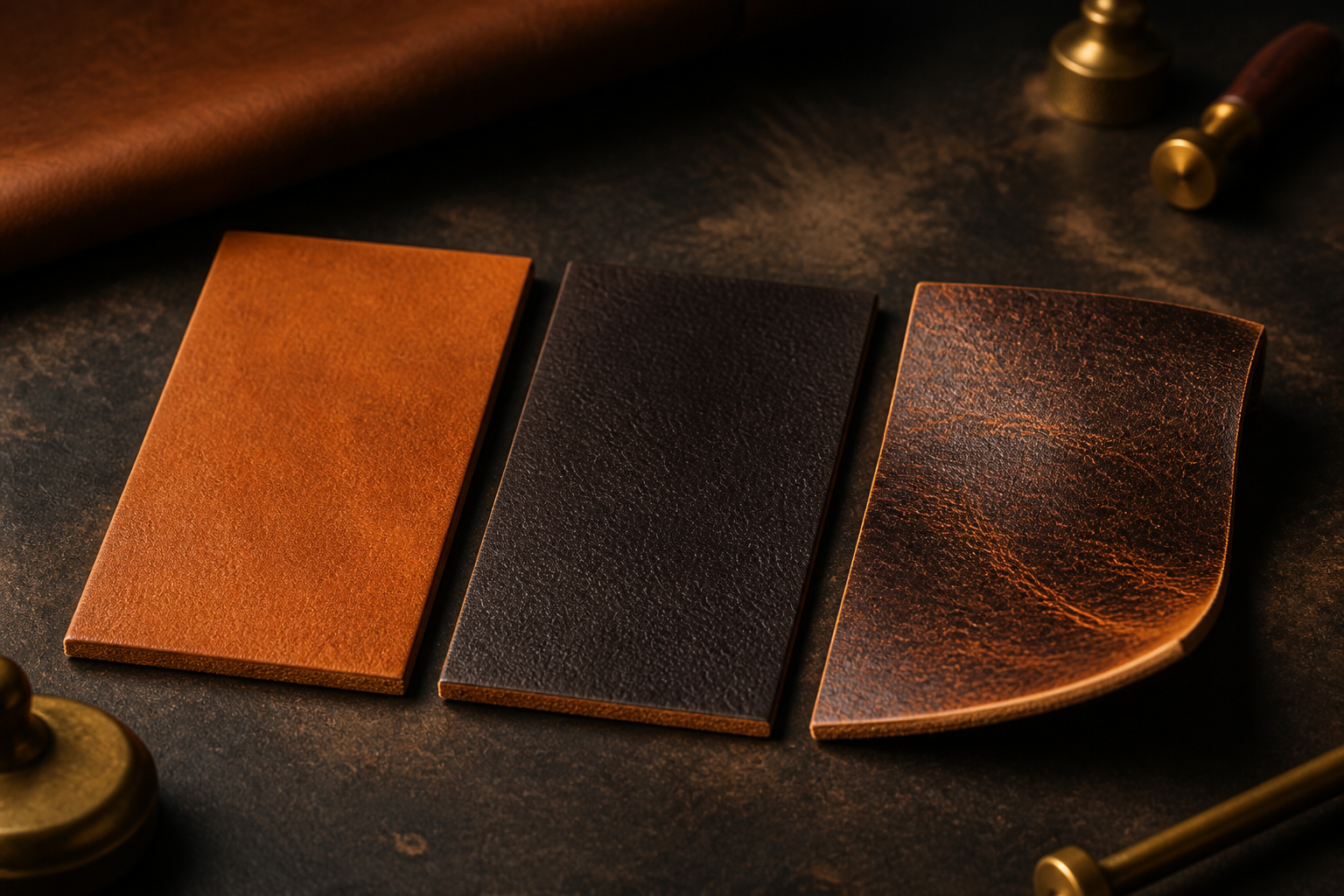
Short answer: two-tone leather uses at least two visible color effects within one leather surface. A base dye or pigment establishes the first shade, while a transparent, semi-transparent or rub-responsive top layer creates the second. Flexing, wiping, polishing, abrasion or grain geometry determines where each color appears.
What Is Two-Tone Leather?
Two-tone describes a finishing appearance, not a species or leather grade. Cowhide, sheep, goat, full grain, top grain, corrected grain, nubuck and split leather may all receive two-tone finishes. The buyer must specify the underlying leather separately.
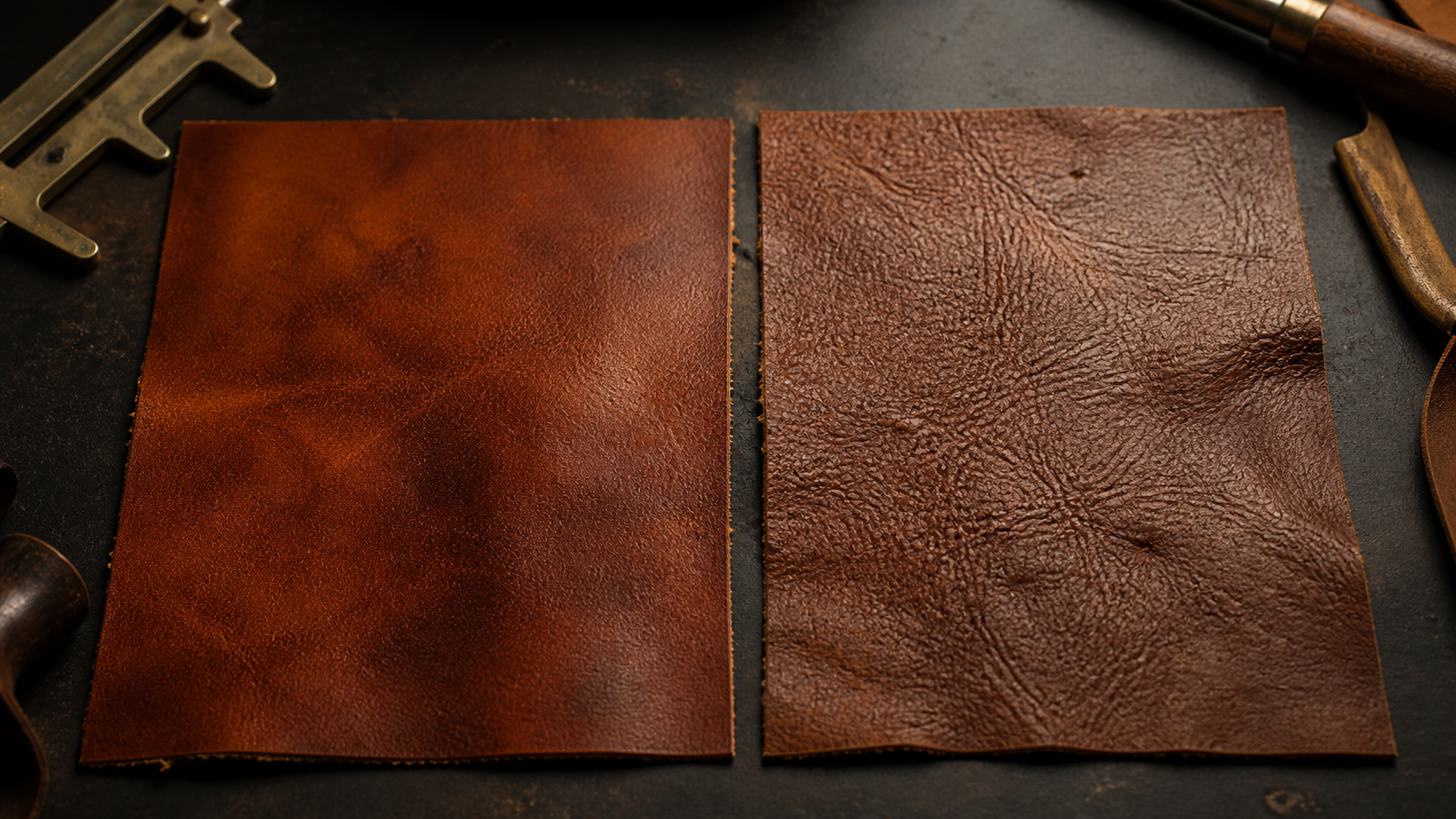
The two colors do not always form hard blocks. Often they blend optically: dark glaze remains in grain valleys while raised areas show a lighter base, or a dark top coat becomes lighter at flex points. The visual result is depth, movement and less uniformity than a solid-color finish.
Main Two-Tone Systems
| System | Construction | Behavior |
|---|---|---|
| Rub-off / wipe-off | Contrasting top color over a fixed base shade | Top color is selectively removed to reveal the base |
| Two-tone spray | Transparent or semi-transparent shadow color over selected areas | Creates shaded edges, valleys or panel depth |
| Pull-up two-tone | Oil- or wax-rich dark surface over a lighter base | Flexing produces lighter tonal movement |
| Antique glaze | Dark glaze settles in grain recesses over a lighter ground | Highlights natural or embossed grain definition |
| Hand-padded / sponge | Secondary color is applied irregularly by hand | Produces controlled mottling and artisan variation |
| Abrasion reveal | Durable base layer beneath an abradeable effect coat | Wear zones expose contrast without peeling |
Rub-Off and Wipe-Off Leather
A fixed base shade is covered by a contrasting effect coat designed for controlled removal. Operators wipe, brush or polish selected zones to reveal the base beneath. Dark brown over cognac is common, but burgundy over red, black over grey and other combinations are possible.
The top layer must be removable during finishing yet stable during normal use. If it is too strong, the desired reveal cannot be developed; if too weak, color transfers or wears away prematurely.
Sprayed and Shaded Two-Tone Effects
A secondary shade may be sprayed across the whole skin, along edges, around panels or into selected zones. Transparent spray preserves grain visibility, while pigmented spray gives stronger coverage. Automated spray improves repeatability; hand spraying supports artisan variation but needs strict visual standards.
Antique Glaze and Grain Contrast
A dark glaze is applied over a lighter base and wiped from raised grain while remaining in recesses. The method emphasizes natural pebble grain or an embossed pattern. Plate pressure, grain depth, viscosity, wiping time and drying determine the contrast.
Pull-Up Two-Tone Leather
Oil- and wax-rich finishes can create a second shade without removing a coating. When leather bends, mobile finishing materials shift and the stretched area becomes lighter. The effect recovers partly through resting, rubbing or warmth. Read our pull-up leather guide for the complete mechanism and tests.
How Two-Tone Leather Is Manufactured
- Base selection: leather is chosen for grain, absorbency, substance and the transparency required.
- Base dyeing: drum dye or a fixed pigment layer establishes the ground color.
- Sealing: a binder or intermediate coat controls penetration and keeps layers distinct.
- Effect application: glaze, spray, pigment, oil or wax adds the contrasting shade.
- Reveal development: wiping, flexing, polishing, abrasion, plating or hand work exposes the intended contrast.
- Fixing and protection: drying, heat and a compatible topcoat stabilize the surface without flattening the effect.
- Final grading: skins are grouped by base shade, top shade, contrast and reveal strength.
Choosing Color Combinations
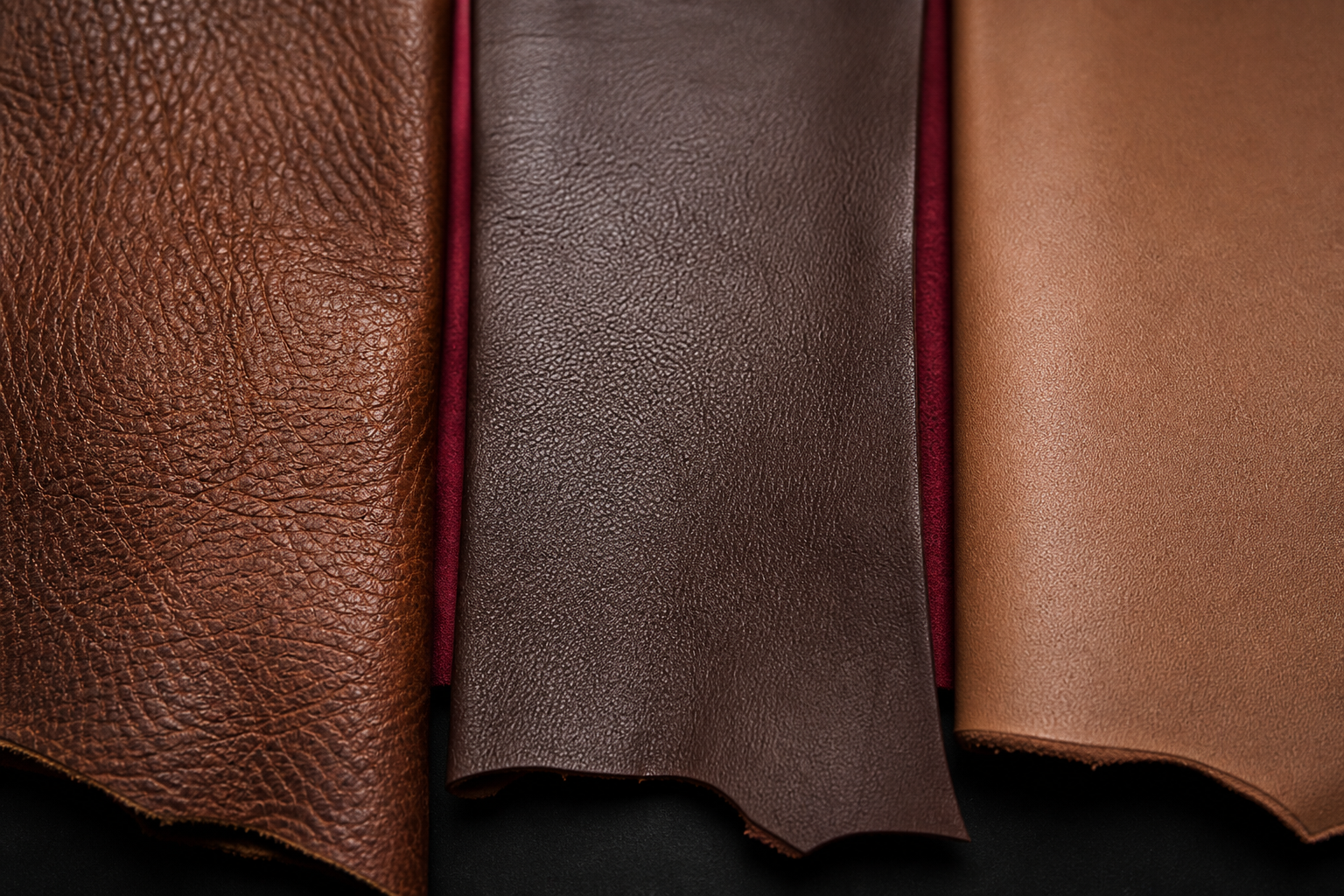
Related colors—dark brown over cognac, burgundy over red or navy over blue—produce commercial depth and age naturally. High-contrast combinations create statement pieces but show cutting, rubbing and repair differences more clearly. Both colors should be evaluated under the same standard light source to prevent metamerism.
Best Base Leathers and Applications
Cowhide provides strong grain definition for jackets, footwear, bags, belts and upholstery. Sheep and goat support lightweight two-tone garments when the top effect remains flexible. Embossed corrected grain provides consistent valleys for antique glazing. Nubuck and suede can carry shaded or waxed two-tone effects, though nap direction makes matching more complex.
Advantages
- Adds depth to simple silhouettes and panels.
- Highlights natural or embossed grain.
- Creates vintage character from the first wear.
- Allows controlled patina and personalized flex marks.
- Differentiates premium jackets, bags, footwear and accessories.
- Can make minor future scuffs blend with the intended appearance.
Production Risks and Common Defects
- Weak adhesion: the top color peels instead of wearing gradually.
- Excess rub-off: color transfers to lining, clothing or packaging.
- Insufficient reveal: the two shades look nearly solid after production.
- Panel mismatch: sleeves, collar and body differ in contrast or top shade.
- Patchy wiping: random marks replace controlled wear zones.
- Topcoat flattening: heavy protection hides the intended tonal movement.
- Edge inconsistency: cutting exposes a pale core or unrelated cross-section.
- Repair difficulty: touch-ups reproduce only one layer and remain visible.
How to Test Two-Tone Leather
How to Specify It in a Tech Pack
State the species, grain construction, thickness, temper, base color, top color, gloss, effect system, reveal method, contrast strength and approved placement. Define rub fastness, adhesion, flex, abrasion, heat aging, water spotting and shade tolerances. Include photographs of the material flat, flexed and rubbed.
Seal a physical light-limit, target and dark-limit leather swatch plus a finished sample. Two pieces may be acceptably individual, but every bulk garment must stay within the same approved color family and contrast range.
Two-Tone vs Distressed and Burnished Leather
Two-tone describes the presence of two visible color effects. Distressed leather describes intentional wear and may use a two-tone layer to create it. Burnishing darkens or polishes selected zones and may also create a second shade. One leather can therefore be two-tone, distressed and burnished at the same time, but the terms describe different aspects.
Care
Dust with a soft cloth and blot spills without vigorous rubbing. Avoid alcohol, detergent, aggressive polish and untested conditioners because they may remove the top color or collapse the contrast. Test any care product in a hidden area and use a specialist cleaner for garments.
Final Takeaway
High-quality two-tone leather is layered deliberately, reveals color predictably and remains secure during normal wear. Buyers should specify both colors and the mechanism that exposes them, then approve contrast, placement and performance on the finished product—not only on a flat swatch.