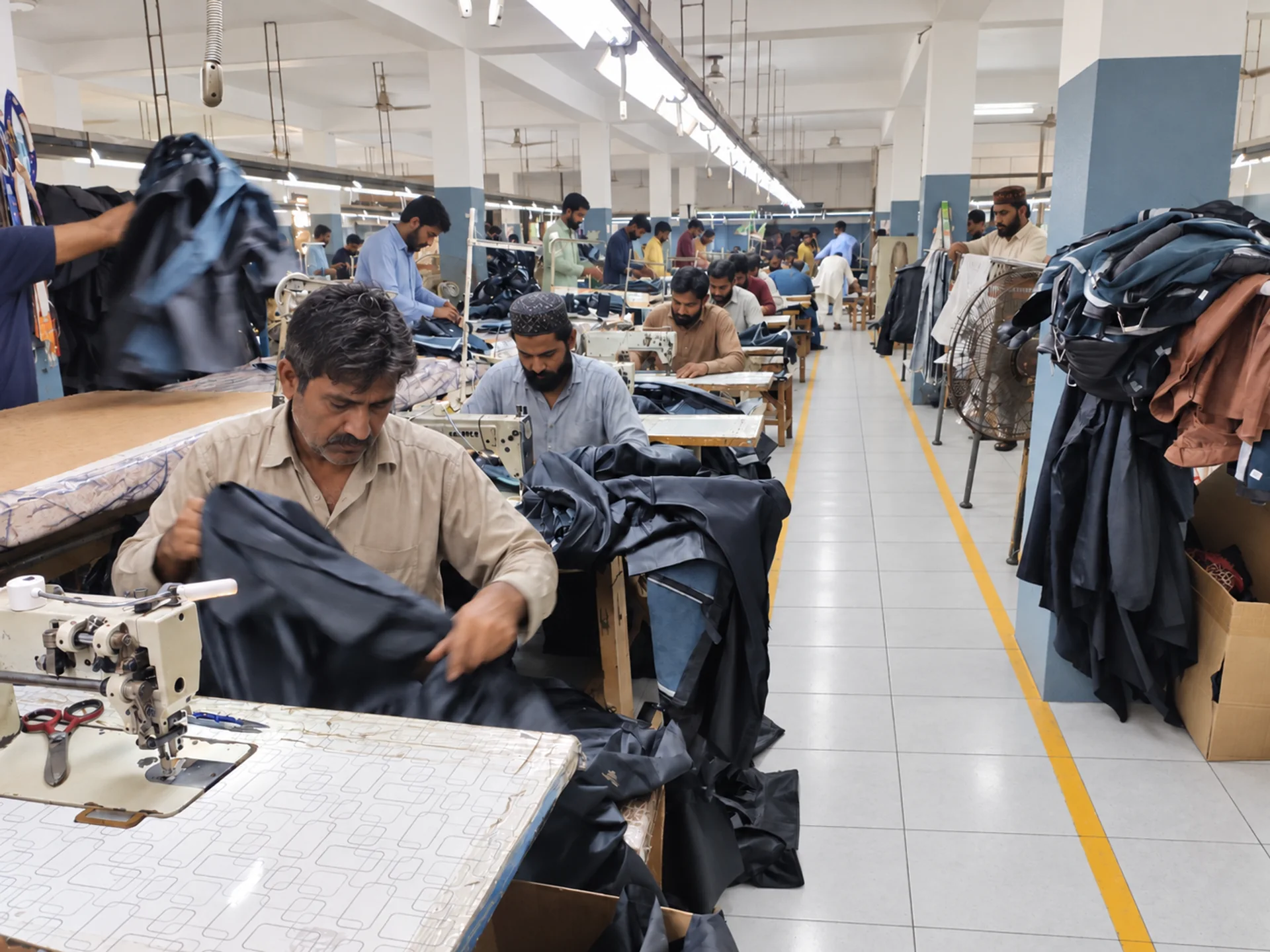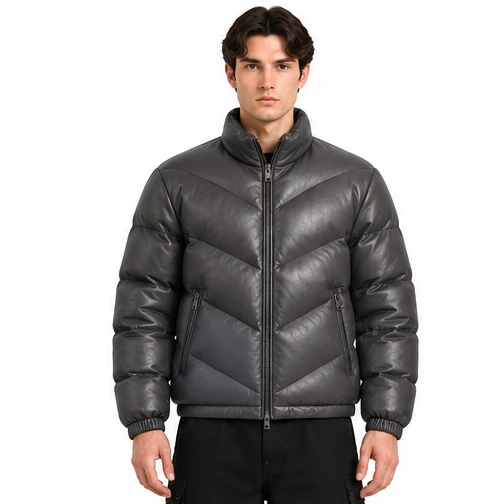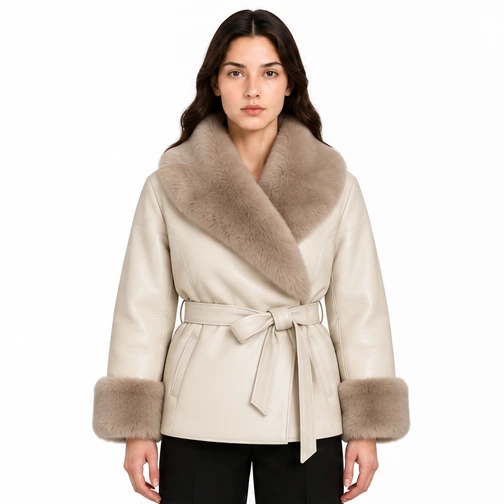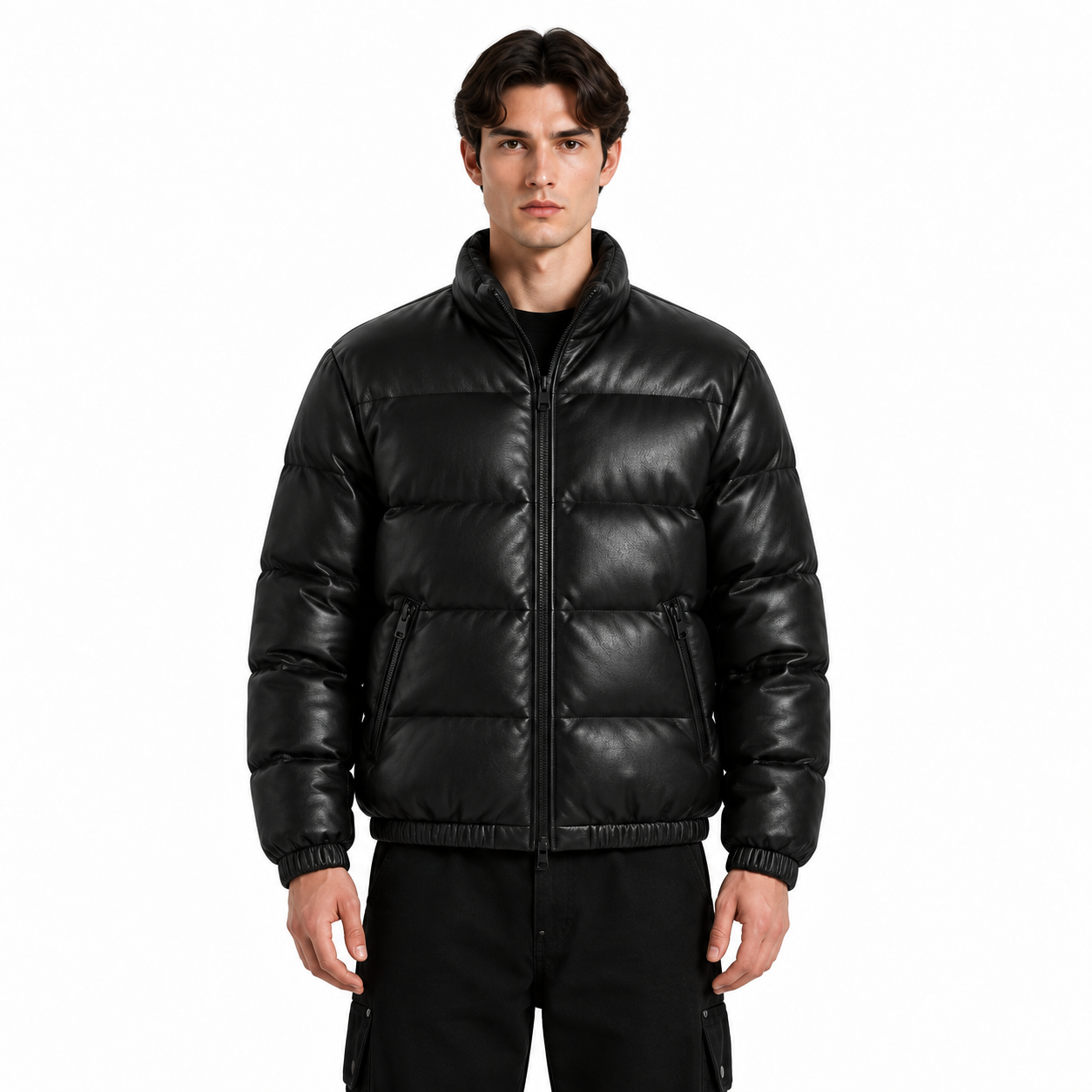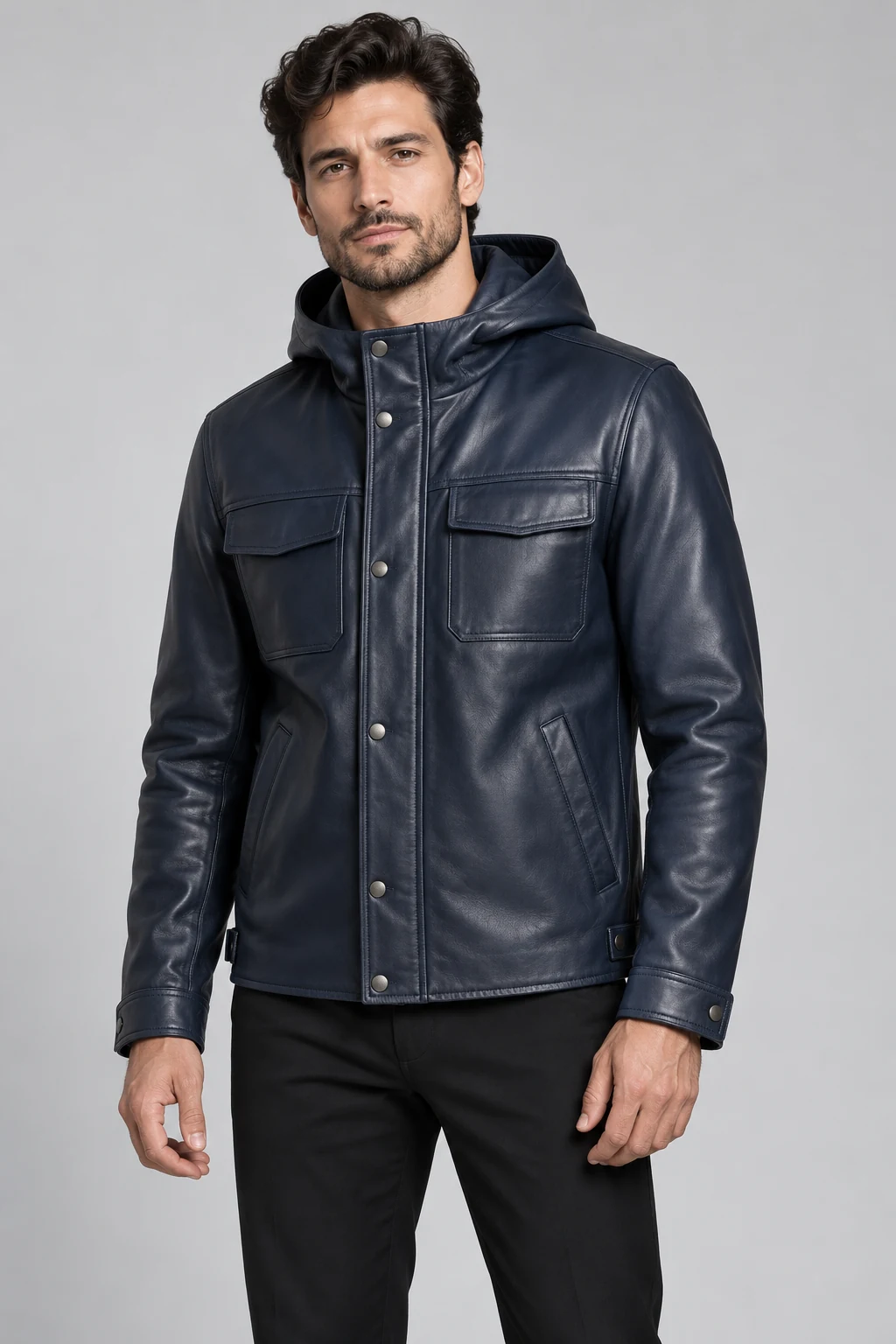
A men’s leather collection works best when each style has a clear purpose. A hooded field jacket offers a utility silhouette, a double-breasted peacoat introduces a tailored direction, and a panelled bomber gives a shorter, relaxed option. Choosing those roles before development helps buyers prepare a more focused sampling brief.
This guide compares five Hashbloom International design concepts for a 2026–2027 private-label range. Use it to shortlist silhouettes, define materials and fit, and prepare the information needed for an OEM quotation. These are collection proposals, rather than a forecast of sales or a claim that a style is a bestseller.
Compare five men’s leather jacket designs
The product images are AI-generated design concepts. Materials, measurements, lining and construction remain subject to physical sample approval. The concepts do not establish ready-made stock, tested warmth or waterproof performance.
| Design | Collection direction | Priority during sampling |
|---|---|---|
| Midnight navy hooded field jacket | Lower-hip utility silhouette, fixed leather hood and four-pocket layout | Hood balance, layering ease, placket overlap and pocket access |
| Espresso double-breasted peacoat | Tailored outerwear direction with notched lapels and a six-button front | Front overlap, lapel shape, shoulder balance and button reinforcement |
| Petrol blue curved-panel bomber | Boxy hip-length silhouette with curved seams and elasticated leather edges | Seam matching, hem position, pocket stretch and elastic recovery |
| Saddle tan action-back trucker | Straight heritage-inspired silhouette with flap chest pockets | Rear pleat development, forward reach, snap attachment and shade variation |
| Black offset funnel-neck longline jacket | Upper-thigh silhouette with an offset concealed front closure | Collar clearance, zipper access, front stability and seated movement |
Build a collection around your customer
Start with your customer’s intended use, preferred fit, target retail position and climate. Decide whether the collection needs a utility piece, a tailored option, a casual short jacket or a longer fashion silhouette. There is no requirement to launch every design together.
For a compact opening range, consider developing one lead silhouette and one complementary option before expanding colours and sizes. Review your own enquiries, retailer feedback and previous sales when setting the assortment. More styles also mean more material decisions, sample approvals and quantity splits.
Utility: the navy hooded field jacket
The fixed hood and pocket layout create a practical design direction. Fit it over the intended midlayer and check the hood both raised and lowered. Confirm that the storm placket sits flat and that snaps and pockets remain easy to use. A leather hood alone does not make the garment rainproof.
Tailored: the espresso leather peacoat
The double-breasted front depends on balanced overlap and a clean lapel shape. Check the jacket fastened and open, with attention to chest ease and button placement. Agree leather support and reinforcement with the pattern team so the selected hide gives the intended drape.
Relaxed: the petrol-blue panelled bomber
Curved seams and elasticated leather cuffs and hem distinguish this bomber. Approve the panel layout on the sample, rather than relying on the front image alone. Review how the hem sits when the wearer raises their arms and how the lining accommodates movement.
Heritage-inspired: the saddle-tan trucker
The proposed action-back pleats need a rear-view drawing and a physical sample. The front concept image cannot verify their construction or movement benefit. Review reach, pocket symmetry and snap reinforcement, then agree the acceptable range of burnishing and colour variation.
Longline: the black funnel-neck jacket
The tall collar and offset closure need enough neck clearance and a stable front overlap. Check comfort while seated, zipper access and the opening at the upper thigh. Approve the length against your target wearer rather than treating the concept proportions as finished measurements.
Specify sheep leather with physical swatches
These concepts propose sheep nappa leather. Confirm species, surface finish, thickness, softness, colour and acceptable natural markings in the material specification. The words “sheep leather” do not define a grain grade, a fixed thickness or tested durability.
Ask for a physical swatch in the proposed finish and review it alongside the lining and hardware. Softer leather may suit one silhouette, while a more supported panel may be needed elsewhere. Discuss the required drape and reinforcement with the factory. Our leather jacket hide thickness guide can help organize those decisions.
Plan winter lining and layering separately
A seasonal collection name does not establish insulation or a temperature rating. The listings propose polyester lining, with composition and weight to be agreed. If you need insulated construction, specify the fill, weight, attachment and coverage, then review the complete garment on a physical sample.
Added lining or insulation can change fit, sleeve movement, pocket access and collar bulk. Fit the jacket over the intended shirt or knit layer and record the approved combination. Make warmth, water-resistance or other performance claims only when you have suitable evidence for the finished product.
Approve measurements, grading and construction
Provide a base size, measurement diagram, size range and tolerances. State whether chest values mean body measurements, flat garment widths or full garment circumferences. The proposed XS–3XL charts on these concepts are development targets, rather than measurements taken from fitted production samples.
- Check shoulder position, forward reach, elbow movement and seated ease.
- Review hem and sleeve lengths with the intended underlayer.
- Operate zippers, snaps and buttons on the complete sample.
- Inspect seams, pocket reinforcement, lining allowance and edge finishing.
- Record revisions and approve the final reference before bulk production.
Use the leather jacket sample approval checklist to document the agreed result. Review size grading against the approved base sample before confirming the production size breakdown.
Customize labels, colours and hardware
Share branding artwork, label dimensions and placement measurements. Confirm zipper and snap finishes, leather colour references, packaging and any embossing requirements. Check the actual branding method on the intended leather, since a digital mockup cannot establish its finished appearance.
Choose care instructions for the agreed leather, finish, lining and trims. Approve descriptions and labels for your destination market, and confirm packing that protects the shape and hardware during shipment.
Prepare your factory quotation brief
Send the preferred style link, target fit, leather reference, lining or insulation requirement, quantity per style and colour, size breakdown, branding files, packaging needs, destination and requested delivery date. Include front and back drawings for any construction that the concept image does not show.
Hashbloom’s listed MOQ starts at 50 pieces per style. Confirm colour splits, material and custom-trim minimums, sample charges and bulk pricing in the written offer. Typical listed development schedules are 7–10 working days for samples and 25–35 working days for bulk after approval, subject to materials, revisions, capacity and the confirmed project schedule. Shipping and customs time are separate.
Discuss your brief with our leather clothing manufacturing team in Pakistan. Ask the quotation to identify revision allowances, payment terms and shipping responsibilities so offers can be compared against the same specification.
Frequently asked questions
Can I order one of these designs with my own label?
Request the style with your branding brief, quantities and material preferences. The factory will confirm development, sampling and order requirements before production approval.
Are these jackets already tested for cold weather?
No tested warmth rating is specified for these concepts. Agree insulation separately and validate any performance claims for the finished garment.
Can I change leather colour, lining and fit?
These are private-label development options, subject to material availability, minimum quantities and sample approval. Include the requested changes in your quotation brief.
Do I need to order all five styles?
No. Shortlist the styles that suit your customer and budget, then confirm the MOQ and quantity split for each selected style.
Start your men’s private-label jacket collection
Choose your preferred design and share your quantity, target fit, leather colour, lining needs and branding. Our team can review the brief and confirm the sampling requirements and factory quotation.