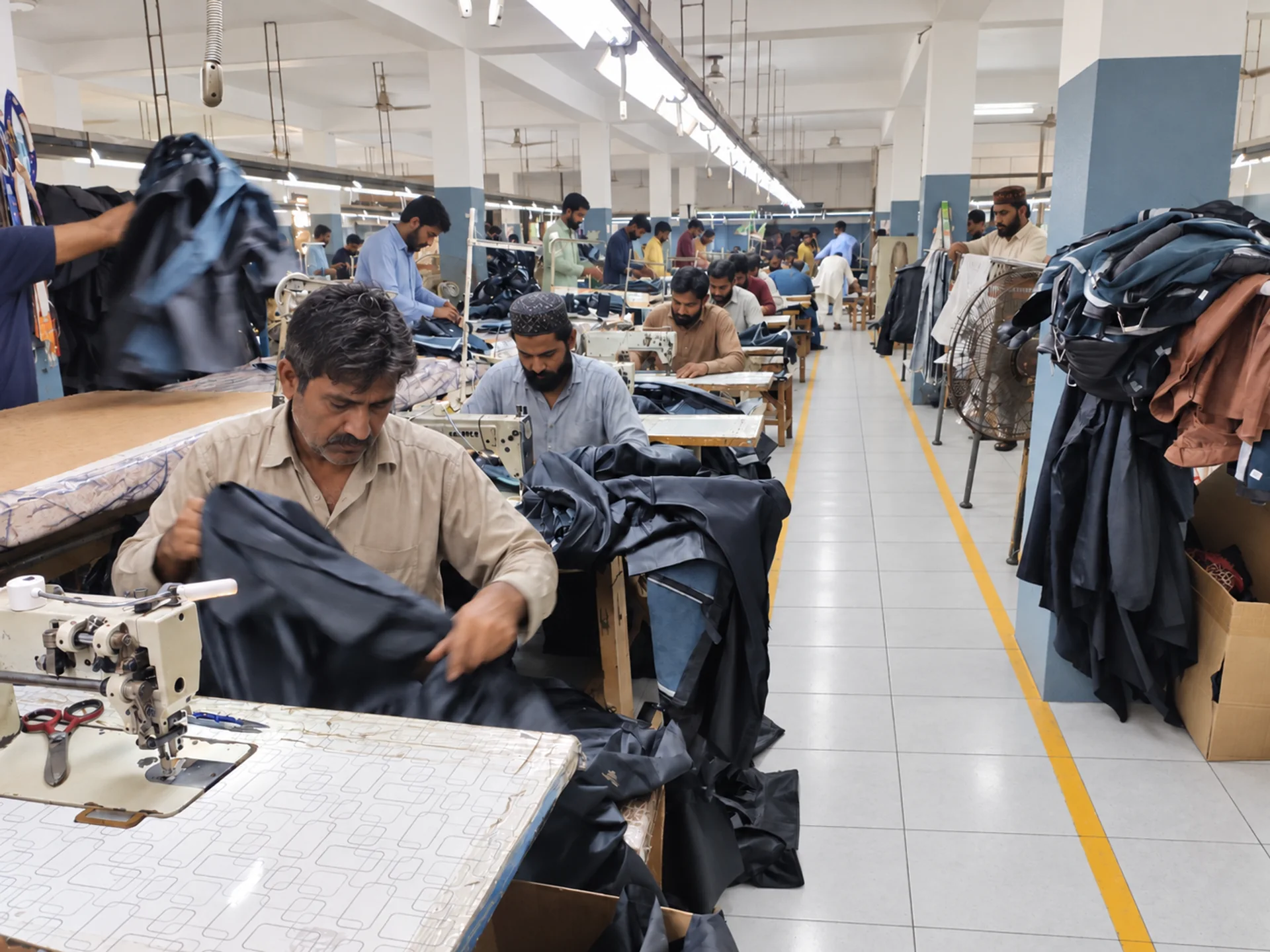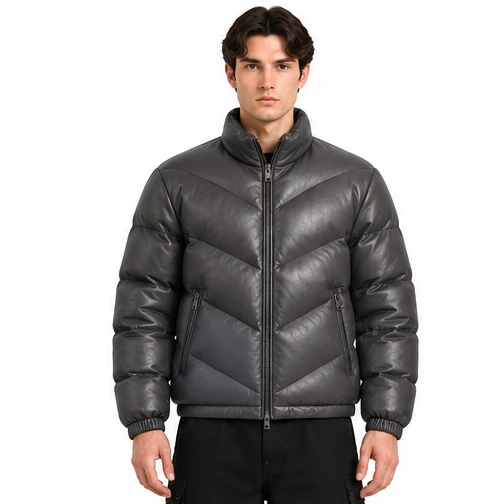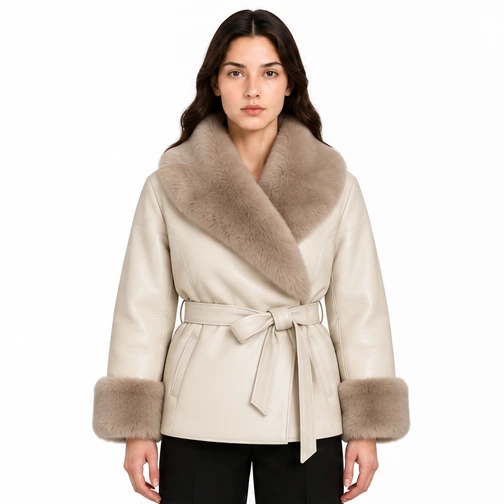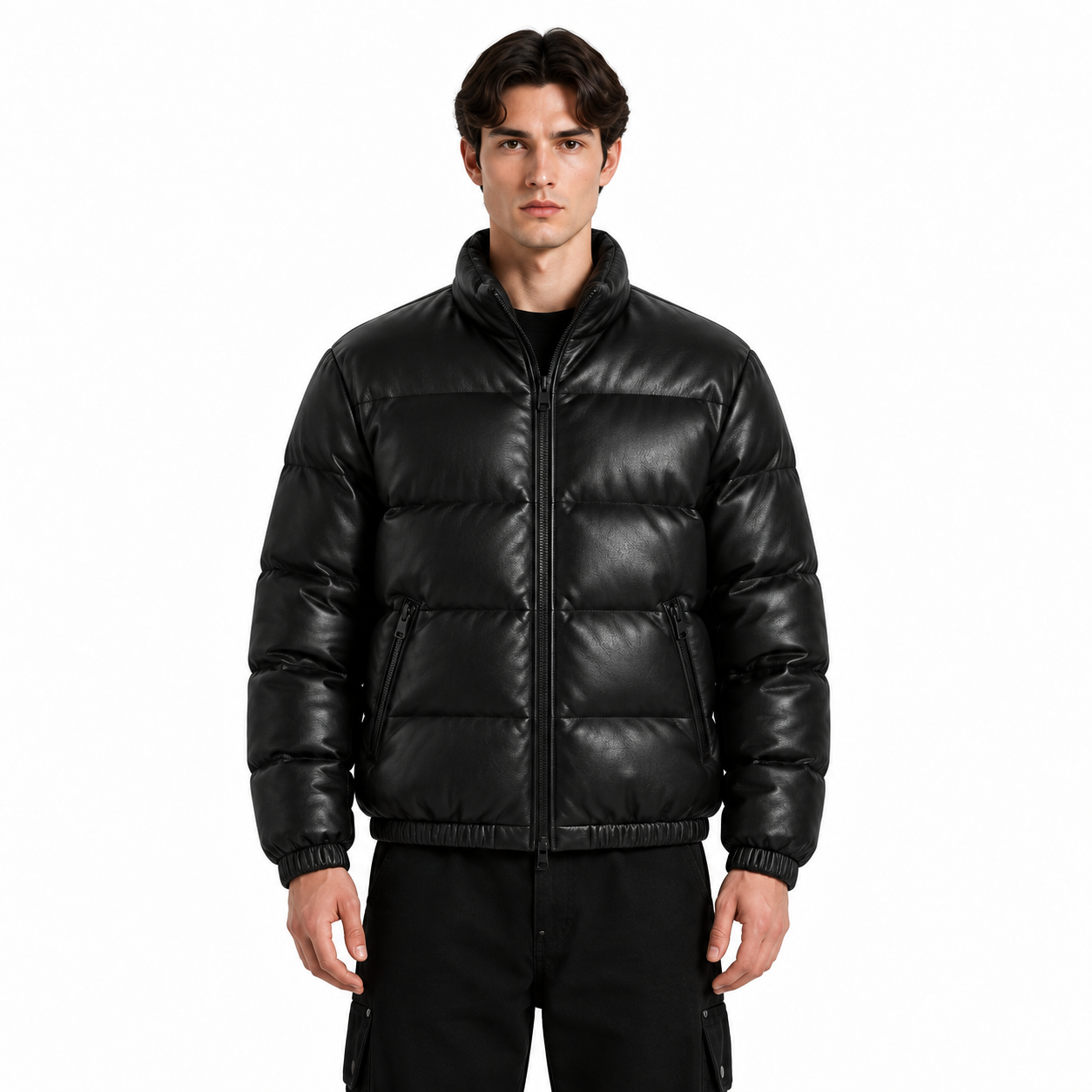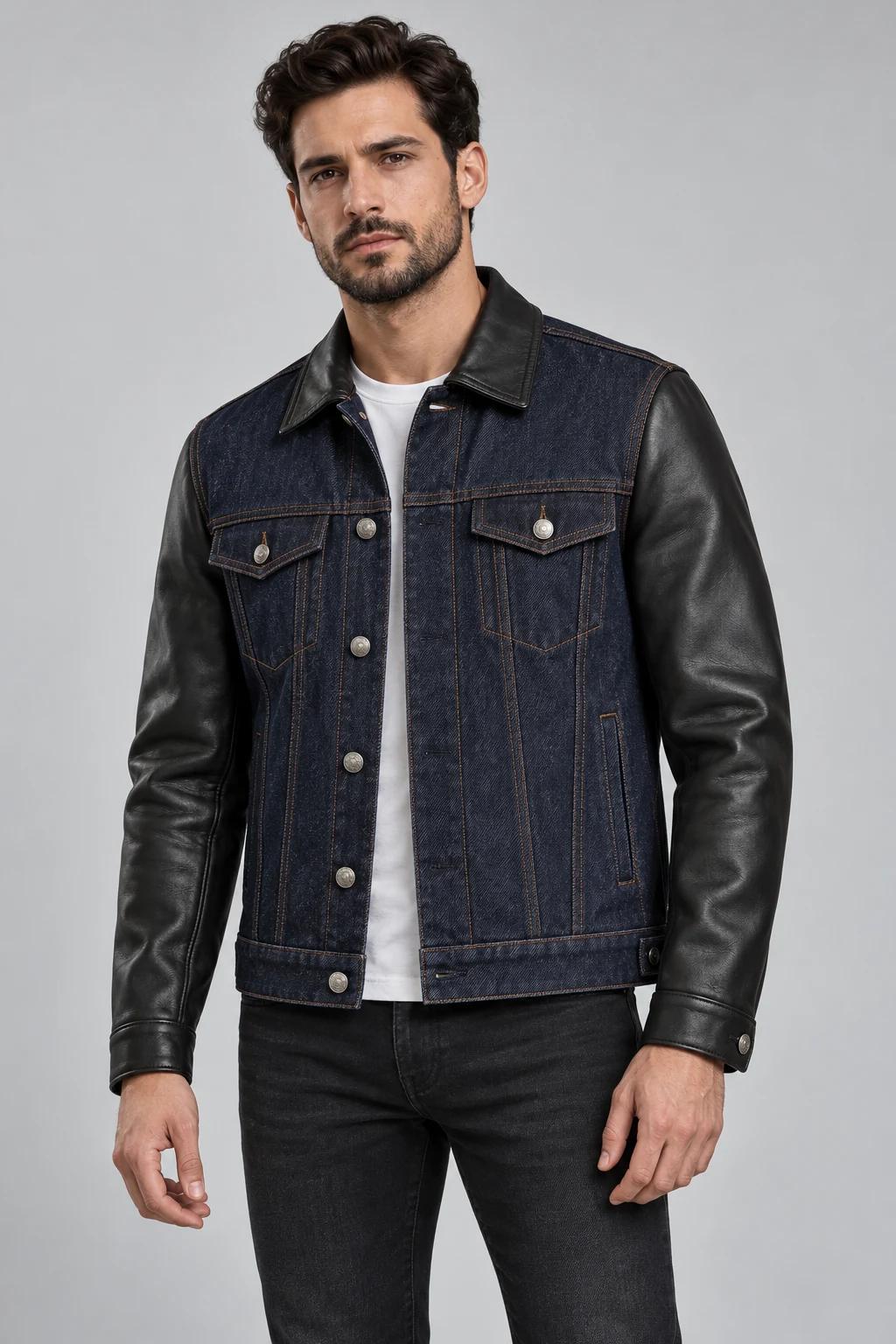
Combining denim with sheep leather gives brands more ways to develop a jacket collection. A denim body can be framed by leather sleeves, a shoulder yoke, pocket details or lapels. Each placement changes the appearance and the development work needed to turn the design into an approved sample.
For buyers, the key is to specify the two materials together. Denim wash, leather finish, seam construction and care requirements affect the complete garment. This guide compares five design directions and explains what to include in a private-label sampling and quotation brief.
What is a denim and sheep-leather jacket?
It is a mixed-material garment using denim fabric and sheep leather in defined sections. The denim may form most of the body and sleeves, while leather provides contrasting sleeves, yokes or smaller panels. The description does not mean the whole jacket is leather, nor does it establish a fixed leather percentage.
Specify the denim fibre composition, weight, construction, colour and wash separately from the leather species, finish, thickness and hand feel. “Denim” is not a guarantee of 100% cotton, and “sheep leather” does not define the grain grade or finished performance. Confirm these details on physical swatches and in the agreed bill of materials.
Compare five private-label design directions
The following styles are AI-generated development concepts from our collection. They help communicate panel placement and silhouette. Final materials, fit, measurements and construction require physical sample approval; the images do not establish ready-made stock or tested performance.
| Design direction | Material placement | Sample priority |
|---|---|---|
| Indigo trucker | Dark indigo denim body; black sheep-leather sleeves and collar | Shoulder mobility, sleeve attachment and indigo transfer |
| Washed blue yoke jacket | Blue denim body and sleeves; cognac leather yoke, collar and pocket flaps | Yoke balance, seam bulk and consistent wash appearance |
| Charcoal zip bomber | Charcoal denim body and sleeves; black leather chest panels and pocket welts | Panel alignment, zipper balance and rib recovery |
| Ecru cropped jacket | Ecru denim body and sleeves; chocolate leather collar, placket and pocket flaps | Dark-to-light colour transfer, snap anchoring and cropped fit |
| Blue fashion moto | Blue denim body and sleeves; burgundy leather lapels, shoulders and cuff bands | Lapel support, diagonal zipper strain and movement |
Choose styles around your customer and collection plan. The trucker and yoke designs offer different ways to use familiar denim proportions. The bomber introduces rib finishes and a zip front. The cropped jacket and fashion moto place more emphasis on neckline, waist and hem balance. Decide which role each style should play before splitting an opening order across several colours.
Specify denim weight and wash before approving the silhouette
Ask for the actual denim weight and fibre composition rather than relying on a general label such as lightweight or heavyweight. Record the unit used for weight and agree the reference with the supplier. Drape, stiffness and bulk at folded seams should be assessed on the material proposed for your order.
Approve a physical wash reference and an acceptable shade range. Washed medium blue, dark indigo and charcoal can vary between batches or panels. Agree where tonal variation is acceptable and whether a particular contrast at seams is intended.
Review how the factory will sequence washing and leather assembly. Where denim is washed before combining it with leather, check the dimensions and appearance of the prepared panels. Do not assume a complete mixed-material jacket can safely undergo the same wash as an all-denim garment. Any alternative process needs sample validation for the selected materials.
Match sheep leather to the panel’s job
A full sleeve needs suitable flexibility and movement allowance. A collar or lapel needs the right balance of drape and support. Pocket welts and snap plackets need construction that controls stretching and supports the hardware.
Approve leather colour, thickness, softness, surface finish and acceptable natural markings on swatches. Ask the factory to show how it will stabilize each panel and handle mixed-material seam allowances. The leather jacket thickness guide can help structure that discussion, but the final choice belongs in the product specification.
A small leather panel does not automatically make a design cheaper to produce. Cutting, panel alignment, reinforcement and assembly complexity can affect the quotation. Compare prices against the same material and construction brief.
Make colour transfer and shrinkage part of sampling
The point where dark denim meets pale fabric or contrasting leather deserves deliberate review. So does the ecru design, where chocolate leather is placed directly beside a light-coloured denim body. Assess colour transfer using methods and acceptance criteria agreed for the product and destination market.
- Review the denim’s transfer onto leather, lining and representative light clothing.
- Check whether the leather finish marks adjacent fabric during handling or use.
- Assess dimensional change under the intended care procedure.
- Inspect puckering, seam twisting and tension where the materials meet.
- Record approved results, methods and limits with the sample.
Do not describe a jacket as colourfast, washable, waterproof or shrink-proof solely because the sample looks clean. Claims need evidence matching the finished material combination and construction.
Check fit and hardware on the complete garment
Develop the fit over the intended shirt or knit layer. Check forward reach, elbow movement, seated comfort and the position of the hem. For leather-sleeve truckers, focus on the shoulder and armhole. For the cropped women’s styles, review bust ease and coverage with the front fastened.
State whether chest measurements are body measurements, flat garment widths or full garment circumferences. Define measuring points and tolerances, approve a base size and then review the grading. A proposed XS–3XL chart is a development starting point rather than proof that every size has been fitted.
Inspect shank buttons, snaps and zippers on the assembled jacket. Check reinforcement, closure operation and accessibility of pockets. The fashion moto is a styling direction; it should not be presented as certified motorcycle protection without appropriate evidence.
Agree lining, branding and care information
Specify whether the jacket is lined, partly lined or developed without a lining. If lining or insulation is required, agree composition, weight, colour, attachment and the resulting fit allowance. Neither denim nor sheep-leather panels establish a tested warmth rating.
Provide branding artwork, label dimensions and placement measurements. Discuss whether labels, embroidery, patches or leather embossing are suitable for the chosen panel. Review the actual result on the development sample before approving it.
Care instructions must be compatible with the complete garment. Avoid adopting an all-denim wash instruction or a generic leather treatment without checking suitability. Confirm fibre and leather descriptions, care labelling and any market-specific requirements before production. Include protective packing for trims and the approved method of folding or hanging.
Prepare an OEM quotation brief
Send your selected style, target fit, quantity per style and colour, size breakdown, denim specification, wash reference, leather swatches, lining requirements, hardware, branding, packaging, destination and requested delivery date. Include drawings showing exactly where the denim ends and leather begins.
Hashbloom’s listed MOQ starts at 50 pieces per style, subject to the confirmed offer. Denim wash minimums, leather colours, custom trims and quantity splits may affect the order. Typical stated schedules are 7–10 working days for samples and 25–35 working days for bulk after approval, subject to materials, revisions and capacity. Confirm your project schedule in writing; shipping and customs time are separate.
Ask the offer to identify sample fees, tooling charges, revision allowances, payment terms and shipping responsibilities. Discuss your brief with our leather clothing manufacturing team in Pakistan and use our sample approval checklist to record the agreed production reference.
Frequently asked questions
Can denim and sheep leather be combined in the same jacket?
Yes, they can be developed into a mixed-material design. Panel placement, stabilization, washing sequence and care compatibility must be checked on a physical sample.
Can I customize the wash and leather colours?
Request your preferred references and quantity breakdown. The factory must confirm material availability, shade tolerances and minimum quantities before the combination is approved.
Can the finished jacket be machine washed?
Do not assume it can. Agree and validate care instructions for the actual denim, leather, lining, trims and construction.
Are the five pictured styles ready-made stock?
They are design concepts for private-label development. Confirm availability and approve a physical sample before ordering production.
Request a denim and sheep-leather jacket sample
Share your preferred design, denim wash, leather colour, target quantity, size range and branding brief. Our team can review the material combination and confirm sampling requirements and a quotation.
Request a Sample & Quote or compare jacket designs in the collection.