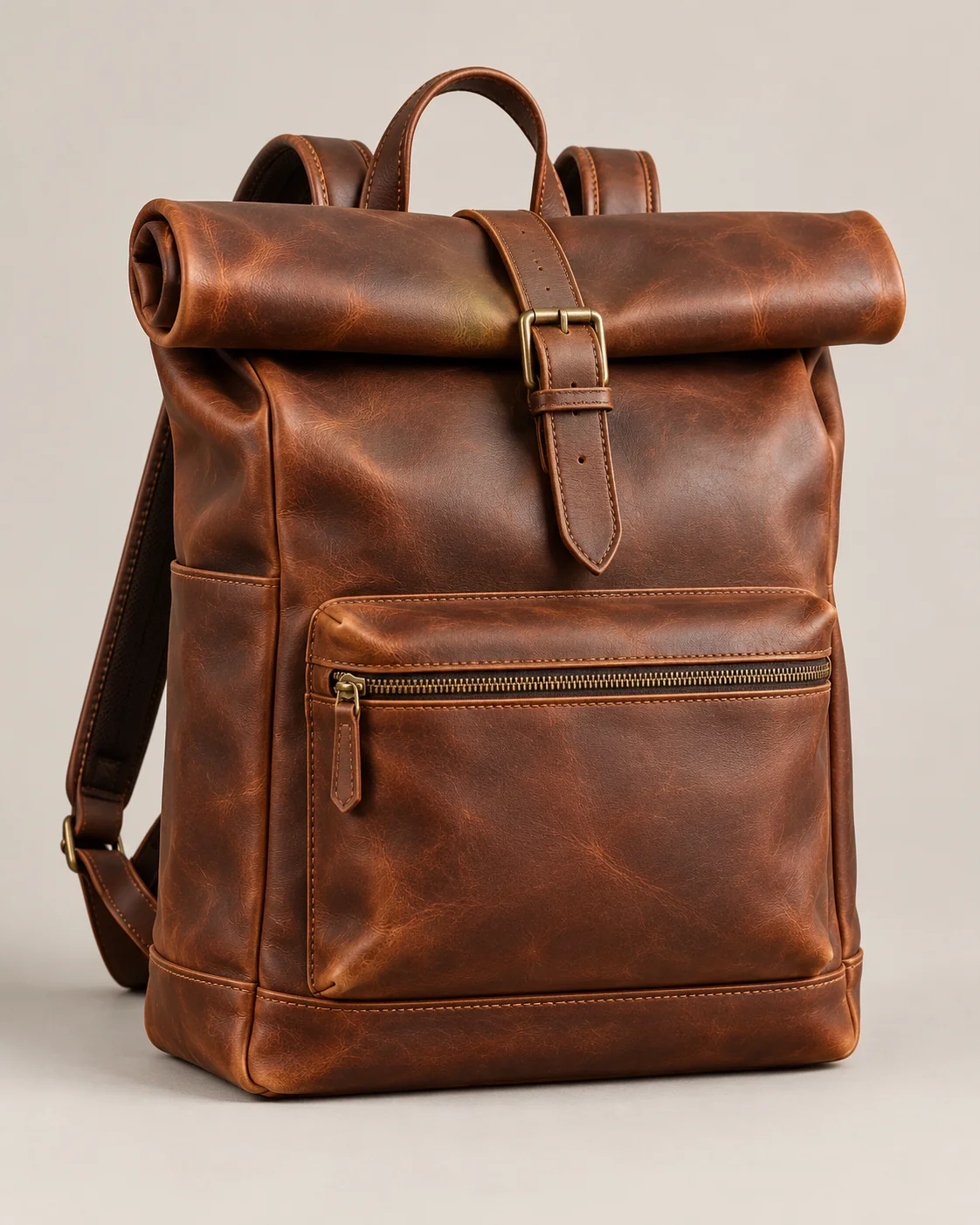
A leather backpack collection needs more than an attractive silhouette. Buyers must decide what the bag will carry, how it will feel when loaded, which leather variation is acceptable and how the finished product will represent their brand.
Oil pull-up leather offers a changing tonal appearance that can suit casual, heritage and everyday accessories collections. The finish needs clear approval standards, however: two bags may look different even when they follow the same pattern. This guide explains how to turn a backpack idea into a practical material brief, sample review and factory quotation.
Start with the intended use
Define the customer’s routine before choosing pockets or hardware. A commuter may need quick access to a device and travel documents. A weekend traveller may prefer a wide opening and a simple main compartment. A compact city bag may prioritize a smaller footprint and convenient access.
Write down the items the bag must hold, their dimensions and the intended carrying conditions. A “laptop backpack” description is incomplete without a measured sleeve and opening. Likewise, a camera-inspired design needs an approved protective interior before it can be sold with equipment-protection claims.
Use that brief to compare the custom leather bags manufacturing options, then develop the closest construction with your factory.
What does oil pull-up leather mean?
Pull-up describes a finish effect rather than a leather grade. Bending or stretching the leather can produce a lighter appearance as oils or waxes within the finish move. The strength of that effect depends on the specific material and finishing system.
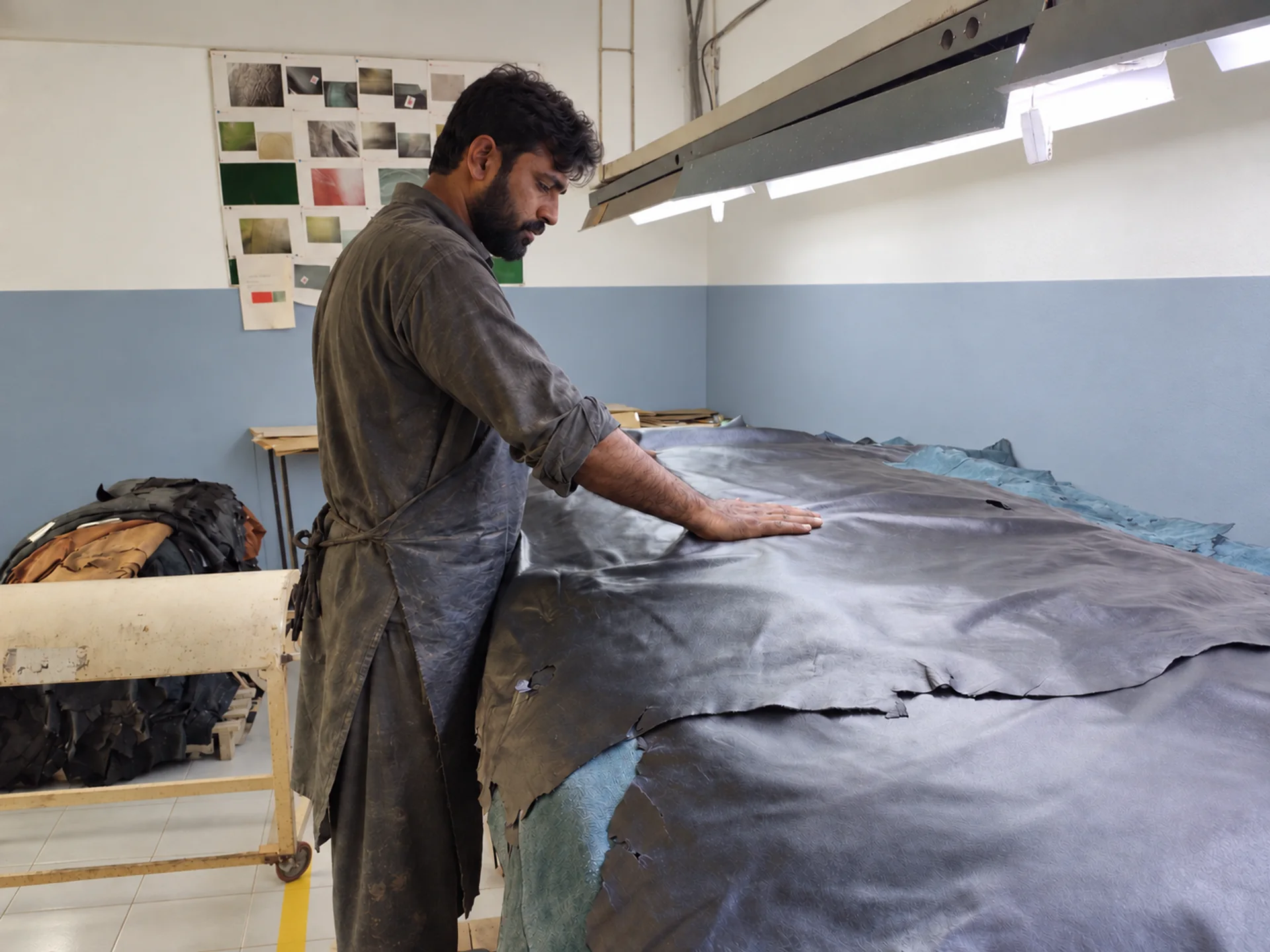
The words “oil pull-up” alone do not establish whether a hide is full-grain, its thickness, its surface treatment or its performance. Ask the supplier to identify those details separately. Natural grain, markings, colour variation and the way surface marks develop should be assessed on physical leather, not a screen image.
For the wider material background, read our pull-up leather buyer guide.
Compare five backpack development directions
These are proposed directions for a private-label range. Final dimensions, interiors and performance must be approved through sampling.
| Design direction | Intended collection role | Key sample check |
|---|---|---|
| Chestnut roll-top | Casual work-to-weekend style | Usable opening, closure adjustment and access when packed |
| Espresso twin-buckle | Heritage-inspired everyday style | Buckle operation, strap adjustment and reinforcement |
| Tobacco clamshell travel | Travel-oriented packing layout | Opening clearance, zipper operation and internal organization |
| Oxblood compact city | Smaller everyday accessory | Usable capacity, strap fit and access to essentials |
| Forest-green camera-inspired | Structured utility direction | Divider brief, padding and equipment fit before any protection claim |
Start with the styles that fit your buyers and merchandising plan. Developing all five at once can increase sampling costs and split quantities across too many materials or trims. A focused first order also makes it easier to compare customer feedback before expanding the range.
Specify the leather before approving colour
Your material approval should cover more than a colour name. Record:
- Hide species and agreed grain or surface description.
- Thickness range, softness and the structure required for each panel.
- Colour reference and acceptable variation between panels and bags.
- Expected pull-up contrast at folds and seams.
- Acceptable natural markings and placement restrictions.
- The agreed approach to surface marking, finishing and care instructions.
Approve representative swatches, including an acceptable variation range, and keep a signed reference. Assess rubbing or colour transfer using a method and acceptance criteria agreed for your product and market. A dark lining or finish should not be assumed safe against light clothing without suitable checks.
Avoid describing a bag as waterproof, scratch-proof or suitable for a specific load unless the finished construction has evidence supporting that claim.
Check construction where the load is carried
Strap attachments, the top handle and the base deserve close attention. Ask how the factory will reinforce these areas and review the construction on the sample. A neat line of stitching is useful to inspect, but appearance alone does not establish carrying strength.
Agree on a representative test load and a carrying or test procedure suitable for the intended use. Check strap comfort, adjustment slippage, seam movement, handle attachment and whether hardware presses into the wearer’s back. Inspect the bag again after the test.
Also assess zipper access when the bag is packed, lining attachment inside corners and the finish on exposed edges. Hardware colour should be approved alongside the leather: the same metal finish can look different against chestnut, espresso or green.
Make the interior measurable
Specify the lining material, colour, pocket sizes and any padding. Record usable compartment dimensions as well as external measurements. A device sleeve should be checked with the intended device dimensions, allowing for the opening, lining, padding and any case the customer may use.
For travel styles, decide whether the bag needs elastic retainers, a separate organizer or a fully opening main compartment. For camera-inspired products, provide equipment sizes and a divider plan. The sample should demonstrate the approved layout before you describe it as protective.
Plan private-label branding and packaging
Branding can include an embossed or debossed logo, a sewn label, a branded patch, hangtags or packaging. Confirm which methods are suitable for the selected leather and construction.
Provide vector artwork, finished logo size, position measurements and an approval reference. Inspect logo depth, clarity and alignment on the actual leather. A logo that looks clear on one finish may need adjustment on another.
Packaging should protect hardware and the bag’s intended shape during transport. Agree on dust bags or protective wrapping, internal support, barcode placement, carton quantities and carton markings. Include those requirements in the quote rather than adding them after pricing is approved.
Prepare an OEM quotation brief
Send the same brief to each supplier so the quotations are comparable. Include the design reference, target dimensions, leather specification, lining, hardware, branding, packaging, quantity per style and colour, destination and requested delivery date.
Ask the quotation to identify sample charges, tooling charges, revision allowances, minimum quantities, payment terms and shipping responsibilities. Distinguish factory production time from transport time and customs clearance.
Hashbloom International develops leather goods in Sialkot, Pakistan. Share your backpack specification with our Pakistan manufacturing team to confirm backpack-specific MOQ, materials, sample costs and scheduling. Custom leather, colour splits and hardware may affect the offer.
Approve a production reference sample
Before bulk production, agree on a reference sample and a written approval record. Cover the leather, colour variation, measurements, lining, closures, reinforcement, branding and packaging. Record revisions with photographs and measurement notes so the factory can distinguish an approved change from an unresolved comment.
Retain a matching reference with the buyer and factory. Confirm the inspection criteria and how deviations will be handled before production begins. This makes approval more useful than a general instruction to “match the picture.”
Frequently asked questions
Is oil pull-up leather always full-grain?
No. Pull-up refers to a finish effect. Confirm the grain description, hide species, thickness and surface treatment separately with the supplier.
Can a private-label backpack have a custom interior?
Pocket layouts, linings and sleeves can be developed to a brief, subject to factory capability and sampling. Provide measured requirements and check access with the intended contents.
Can I advertise a laptop size from the bag’s external dimensions?
External dimensions are insufficient. Check the usable sleeve, opening, padding and device dimensions on the sample before making a fit claim.
What MOQ should I plan for?
Request a backpack-specific quotation. Minimum quantities may depend on the style, leather, colour splits, hardware and branding. Confirm those quantities before committing to your range plan.
How should I approve the pull-up finish?
Use physical swatches and a representative finished sample. Agree on an acceptable range for colour, markings and tonal change, then retain those references for production checks.
Request a backpack sample and factory quote
Send your preferred style, target quantity, dimensions, intended use, leather direction, branding artwork and delivery destination. Our team can review the brief and confirm the next development steps.