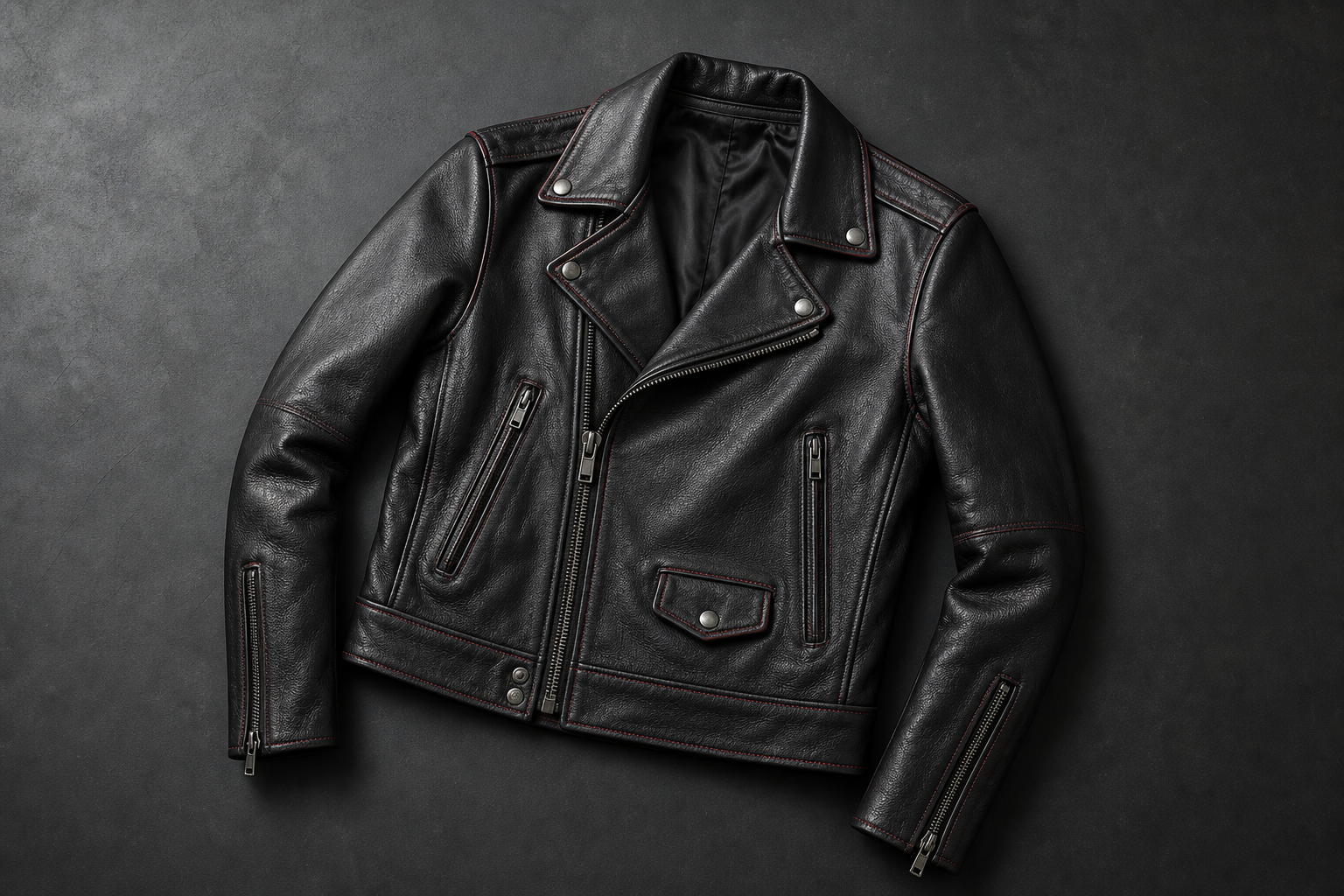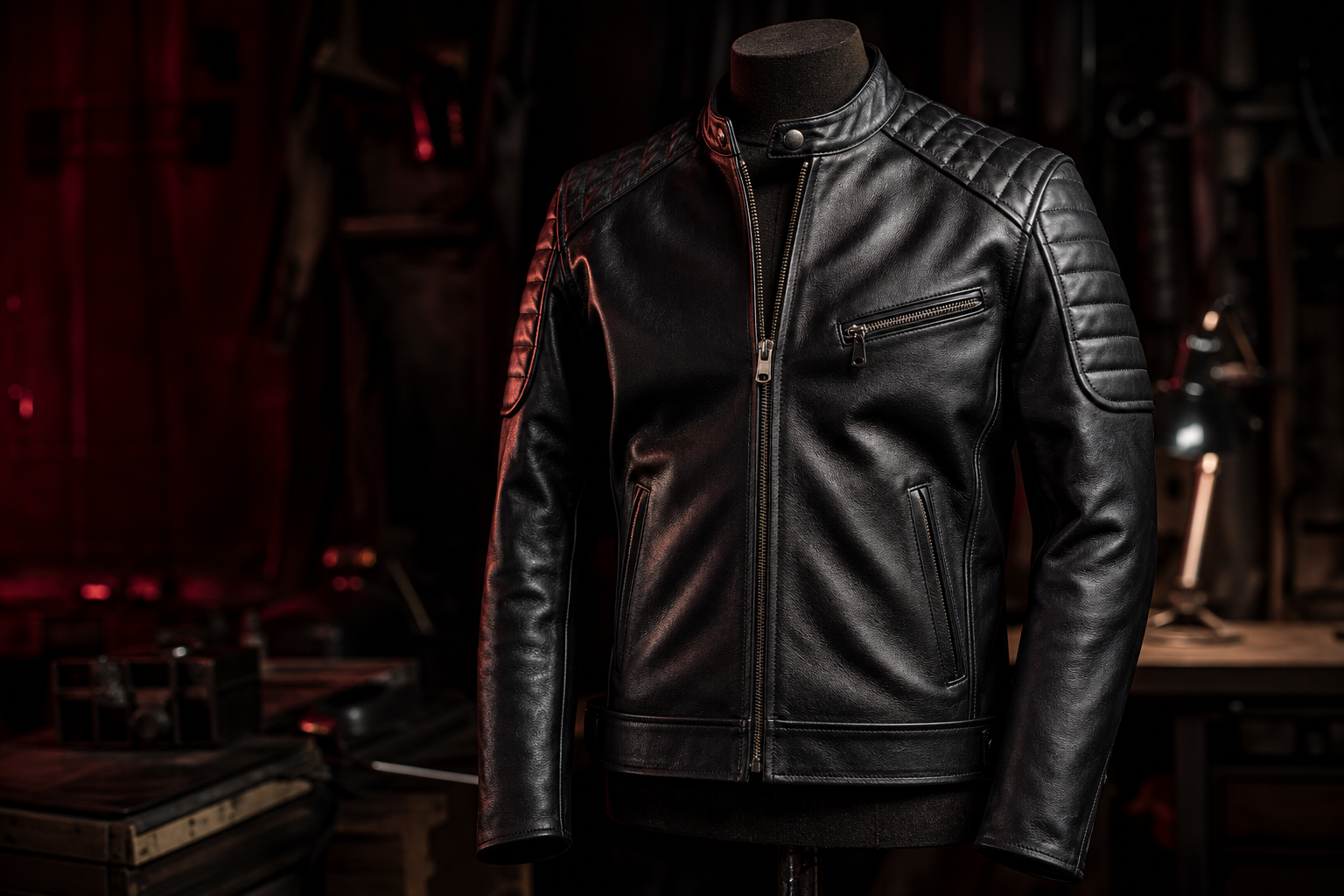
The Short Answer: OEM vs ODM
In leather apparel sourcing, OEM (Original Equipment Manufacturer) usually means a factory manufactures to the buyer’s design and agreed specifications. ODM (Original Design Manufacturer) means the manufacturer contributes the underlying design, which the buyer selects or adapts for its brand. Suppliers sometimes use these labels differently, so confirm the actual scope of work before comparing quotations.
Private label describes whose branding appears on the finished jacket. It can apply to either model. Adding your neck label does not, by itself, tell you who developed the pattern or whether another brand can buy the same silhouette.
What OEM Leather Jacket Manufacturing Involves
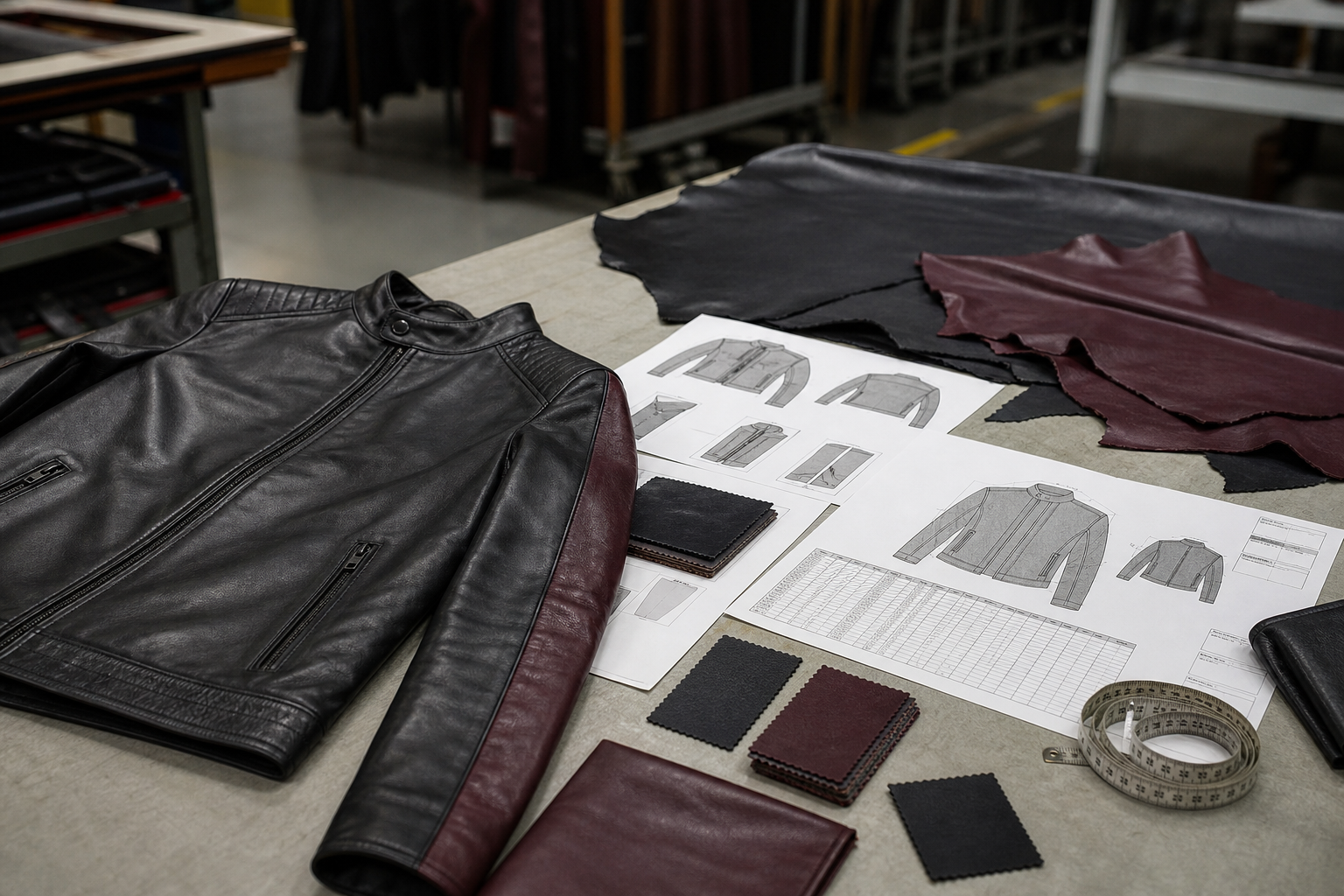
An OEM project begins with your intended product: its shape, fit, materials, construction and brand details. You might provide a complete tech pack, original sketches or a reference garment with clear change instructions. The factory reviews feasibility, develops or adjusts patterns, sources components and produces samples against that brief.
You do not necessarily need finished production patterns at the first inquiry. However, missing specifications must be resolved during development. A photograph cannot define sleeve movement, lining construction or the thickness and hand feel of the leather. Our leather jacket tech pack guide explains the information needed for a measurable production brief.
OEM is a useful fit when a distinctive silhouette, a specific size system or unusual panel construction is central to your collection. It also gives you more decisions to manage: every custom detail needs a specification, a cost and an approval.
What ODM Leather Jacket Manufacturing Involves
With ODM, the starting point is a factory-developed jacket design or pattern. You agree which elements may change, such as leather, lining, color, hardware, labels or selected measurements. The factory then samples the approved combination for your review.
An existing base can reduce development work, but extensive changes can remove that advantage. Replacing a light leather with a heavier hide, changing the shoulder shape or adding a removable hood may require new pattern work and fitting. Ask which modifications are included and which trigger additional development charges.
ODM can suit a brand testing a familiar jacket category with a clearly defined budget. Confirm that the proposed base is available for your project; a catalog image is a starting point for discussion, not evidence of stock availability or exclusive access.
OEM and ODM Compared
| Decision | OEM | ODM |
|---|---|---|
| Starting point | Your design brief and specifications | A factory-developed design or base style |
| Design development | Factory develops your brief into patterns and samples | Factory adapts its existing design to the agreed brief |
| Customization | Construction, fit and details defined for your collection | Changes depend on the base pattern and available options |
| Development cost | May include new patterns, grading and several prototypes | May reduce initial development if the base stays largely unchanged |
| Lead time | Depends on specification readiness and sample revisions | Can be shorter when materials and patterns are already suitable |
| Minimum quantity | Depends on leather, color, components and production setup | Still depends on material and component minimums |
| Exclusivity | Confirm rights and permitted reuse in writing | Do not assume a factory base design is exclusive |
Costs, MOQ and Lead Times: Compare the Same Brief
Neither model is automatically cheaper per jacket. Leather selection, cutting yield, lining, zippers, panel count and finishing can outweigh savings from an existing pattern. Ask the factory to separate one-time development charges from the bulk unit price, packaging and freight.
Compare quotes using the same quantity by style, color and size, the same material references and the same delivery terms. An inexpensive sample made with substitute leather is not a reliable basis for pricing a premium bulk order. Use the manufacturing cost guide to prepare a consistent quotation brief.
ODM also does not automatically mean a lower minimum order. A custom-dyed hide, branded zipper or special lining may carry its own supplier minimum. Hashbloom advertises programs from 50 pieces per style, typical sampling of 7–10 days and bulk production of 25–35 days after approval. Confirm the applicable quantity, material availability and schedule for your specific design before planning a launch. See our MOQ and sampling guide.
Two Illustrative Buyer Scenarios
A brand with its own cropped biker design: the buyer has original drawings, a specific sleeve shape, a custom lining and a measurement chart. An OEM brief lets the factory develop those details together. The buyer should budget for fit review and record revisions before approving production.
A brand testing a classic cafe racer: the buyer likes an available factory base and wants an approved brown leather, different zipper finish and private labels. An ODM approach may reduce initial pattern development. The buyer still needs to approve fit, leather, components and the finished sample.
These are planning examples, not claims about completed customer orders. In either case, the useful question is what work remains before a repeatable production standard exists.
Clarify Design Rights and Exclusivity Early
Ask who supplies the original design, who retains the pattern files, whether development files can be transferred, and whether the factory can offer the base style to other buyers. Record any agreed limits on reuse, territory or exclusivity in your written agreement. Do not assume that paying a sample fee resolves these questions.
Provide artwork and references you are authorized to use. If another brand’s jacket is used to explain a fit or construction preference, identify the original changes you want rather than requesting a copy of its logos or distinctive artwork.
The Approval Checklist Both Models Need
- Approved front, back and interior design details with a current revision date.
- Leather reference, thickness, finish, shade and acceptable natural variation.
- Measurements, fit comments, grading and agreed tolerances.
- Lining, zippers, snaps, thread, labels and logo placement.
- A final sample and written approval of any remaining changes.
- Quantity breakdown, inspection requirements, packaging and dispatch terms.
Changing the development model does not replace quality control. Keep the approved sample and material references available for comparison during production, and review our leather apparel QC checklist before arranging shipment.
Frequently Asked Questions
Which option is better for a new brand?
Choose according to your product brief. ODM can be practical when an existing base meets your needs. OEM is appropriate when your own design and fit are essential. Compare the complete development plan instead of choosing by the label alone.
Can I use my own brand labels with either option?
Yes, private-label branding can be part of either arrangement. Specify artwork, placement, label materials and packaging, and confirm the factory’s available methods and minimums.
Does ODM mean the jackets are ready to ship?
No. A manufacturer may have a developed design without finished inventory. Material sourcing, customization, sampling and bulk production can still be required.
Can I start with ODM and develop an OEM collection later?
Yes. Feedback on an initial style can inform a later original collection. Keep clear records of fit, materials and buyer comments, and agree the scope and rights of each new development separately.
Start With Your Design or Reference
Share your sketches, tech pack or preferred catalog jacket with Hashbloom International. Include quantity by color and size, leather preference, branding requirements, delivery country and target launch date. Our Sialkot team can review the brief and clarify the development work, sampling steps and quotation inputs for your project.