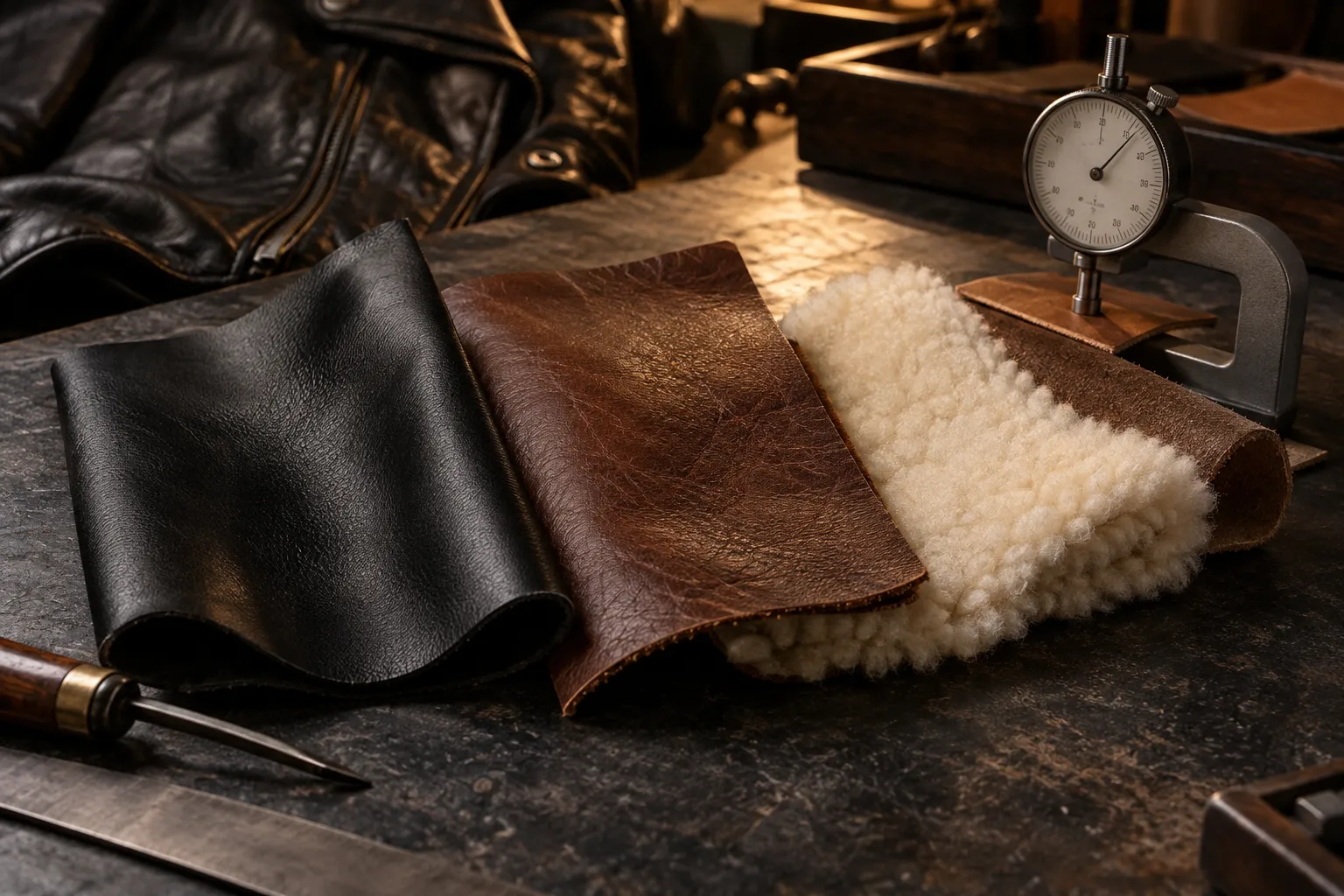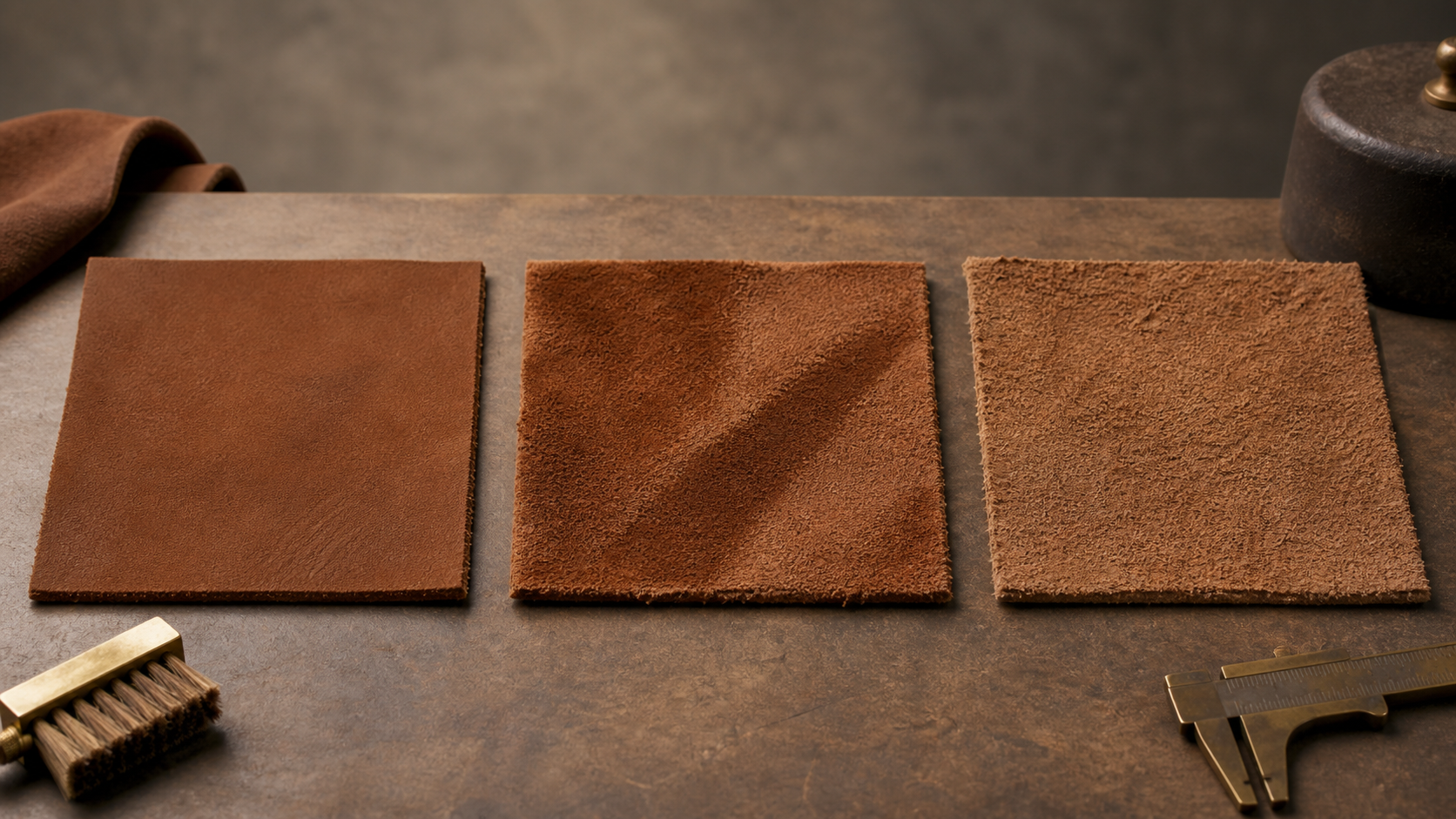
Short answer: nubuck is grain leather lightly buffed on the outer surface; suede is leather mechanically finished to create a velvet-like nap, most commonly from a flesh split; split leather is the lower or middle layer obtained when a hide is divided horizontally. A split can become suede, but not every split is suede.
Start with Hide Structure, Not Marketing Names
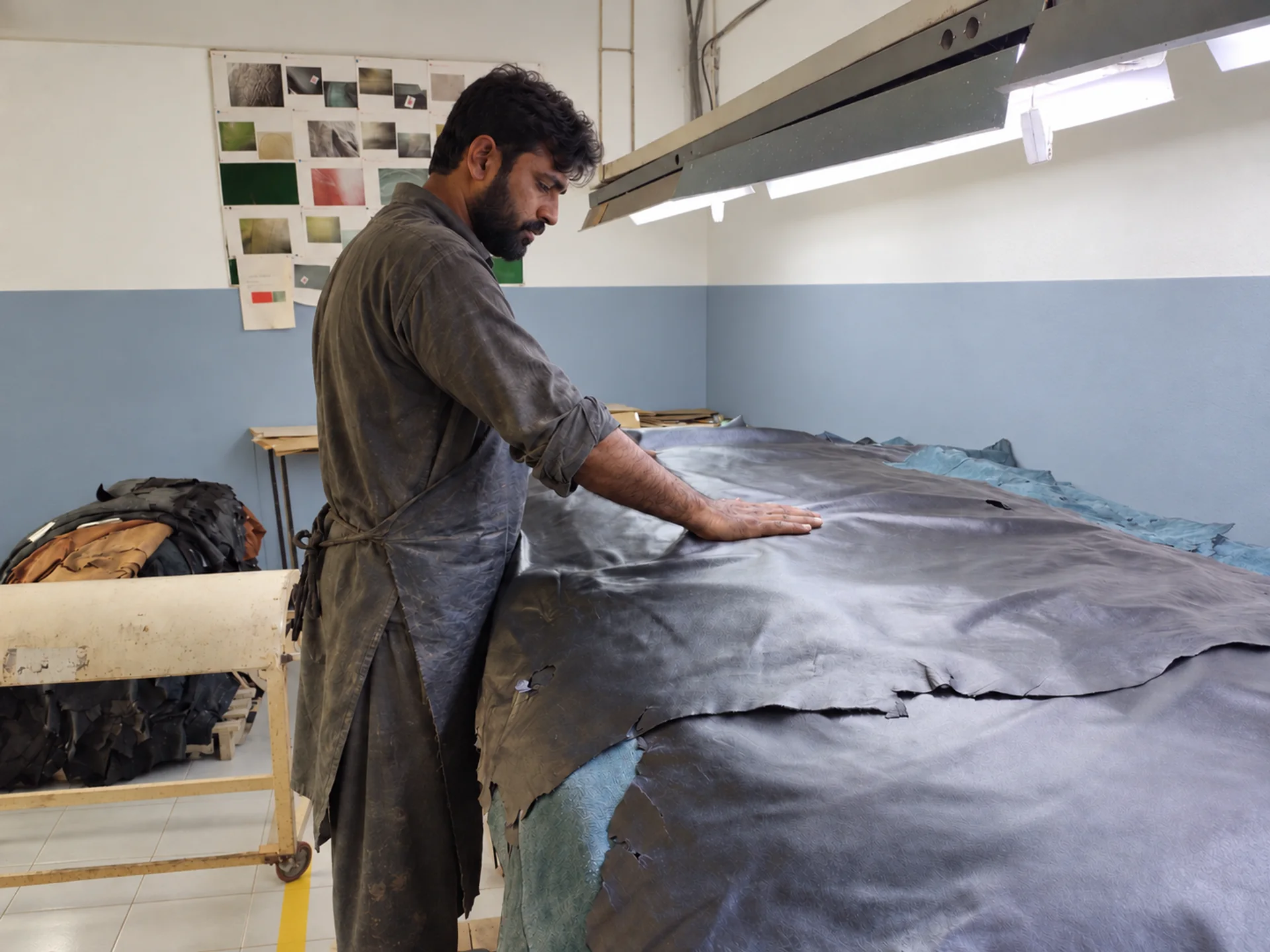
A hide has a compact grain structure near the outer surface and a progressively more open fibre network toward the flesh side. A splitting machine can divide it horizontally. The upper grain split keeps the natural grain surface, while the lower flesh split—and sometimes a middle split on thick hides—does not.
This explains the central difference: split tells the buyer where the material came from within the hide. Nubuck and suede tell the buyer how a surface was mechanically finished. None of these words alone guarantees thickness, strength, softness, colorfastness, or suitability for a product.
What Is Nubuck Leather?
Nubuck is produced by finely buffing or snuffing the grain surface. The process raises a very short, tight nap while the leather retains its grain layer. Leather Working Group terminology describes nubuck as leather buffed to give a velvety effect where the original grain pattern remains visible.
Because the dense grain layer remains, good nubuck can combine a refined hand with strong surface structure. It normally feels finer and less hairy than suede. Its subtle nap responds to touch and light, producing controlled tonal movement. The open, lightly abraded surface also absorbs oils and water more easily than a pigmented, continuously coated leather.
What Is Suede Leather?
Suede is defined by a mechanically raised velvet-like nap. Most garment and footwear suede is made from a flesh split because its open fibre surface responds well to buffing. Traditional suede may also be produced on the flesh side of an unsplit skin, so buyers should identify both the animal and the leather layer instead of relying on “suede” alone.
Compared with nubuck, suede usually has a longer, more visible nap and a stronger two-way writing effect. Quality depends on fibre compactness, retanning, fatliquoring, drying, staking, buffing grit, dust removal, dye penetration, shade matching, and nap direction.
What Is Split Leather?
Split leather is a tanned flesh or middle layer whose original fibrous structure remains substantially intact. It is real leather, but it is not full-grain leather and should not be confused with bonded, regenerated, or synthetic material.
A split may be left fibrous, sanded into suede, pigmented, embossed, oiled, waxed, or coated. This is why a material description such as “premium split” is incomplete. Buyers must also specify species, thickness, tannage, surface treatment, coating, temper, performance, and end use.
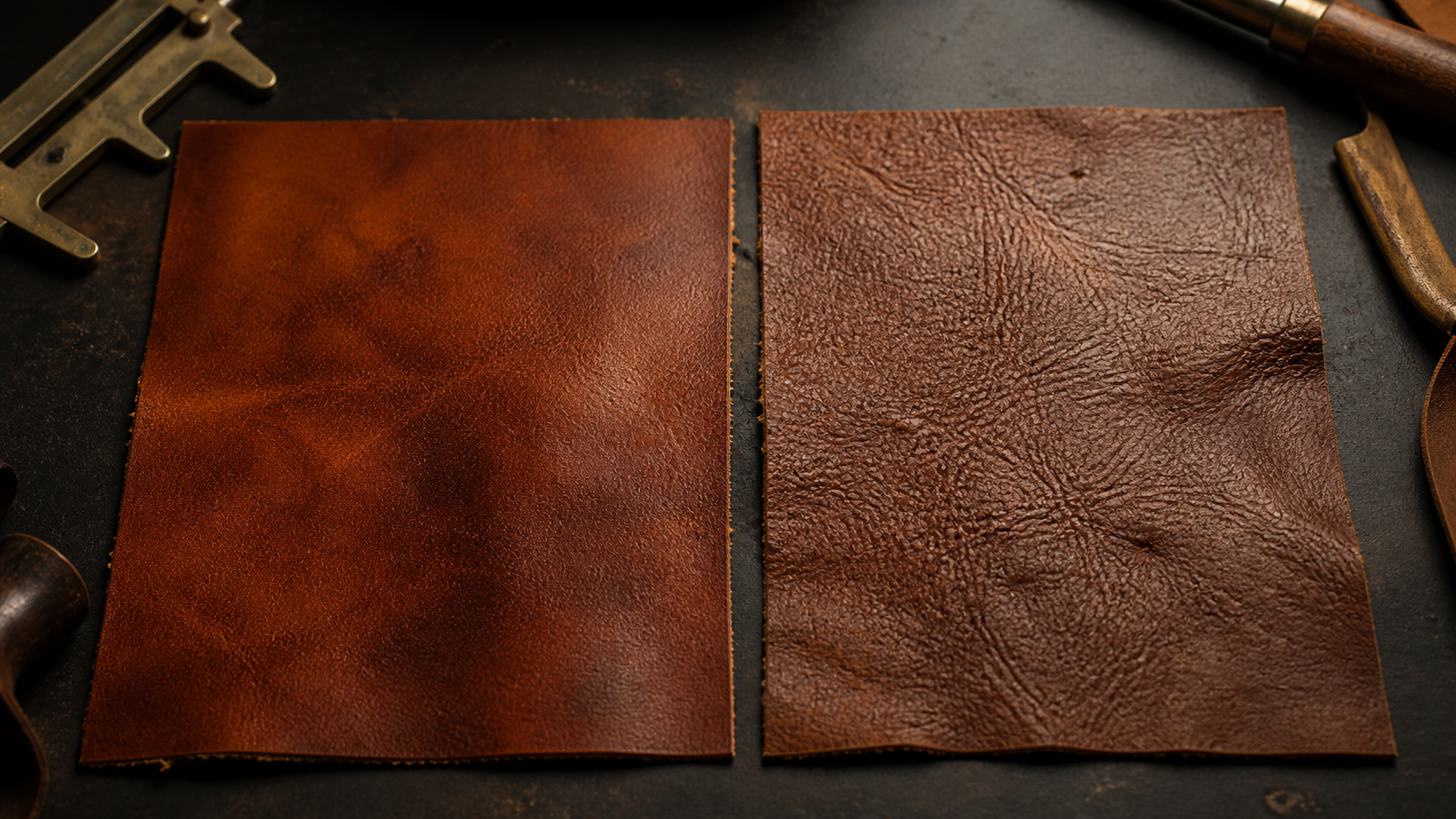
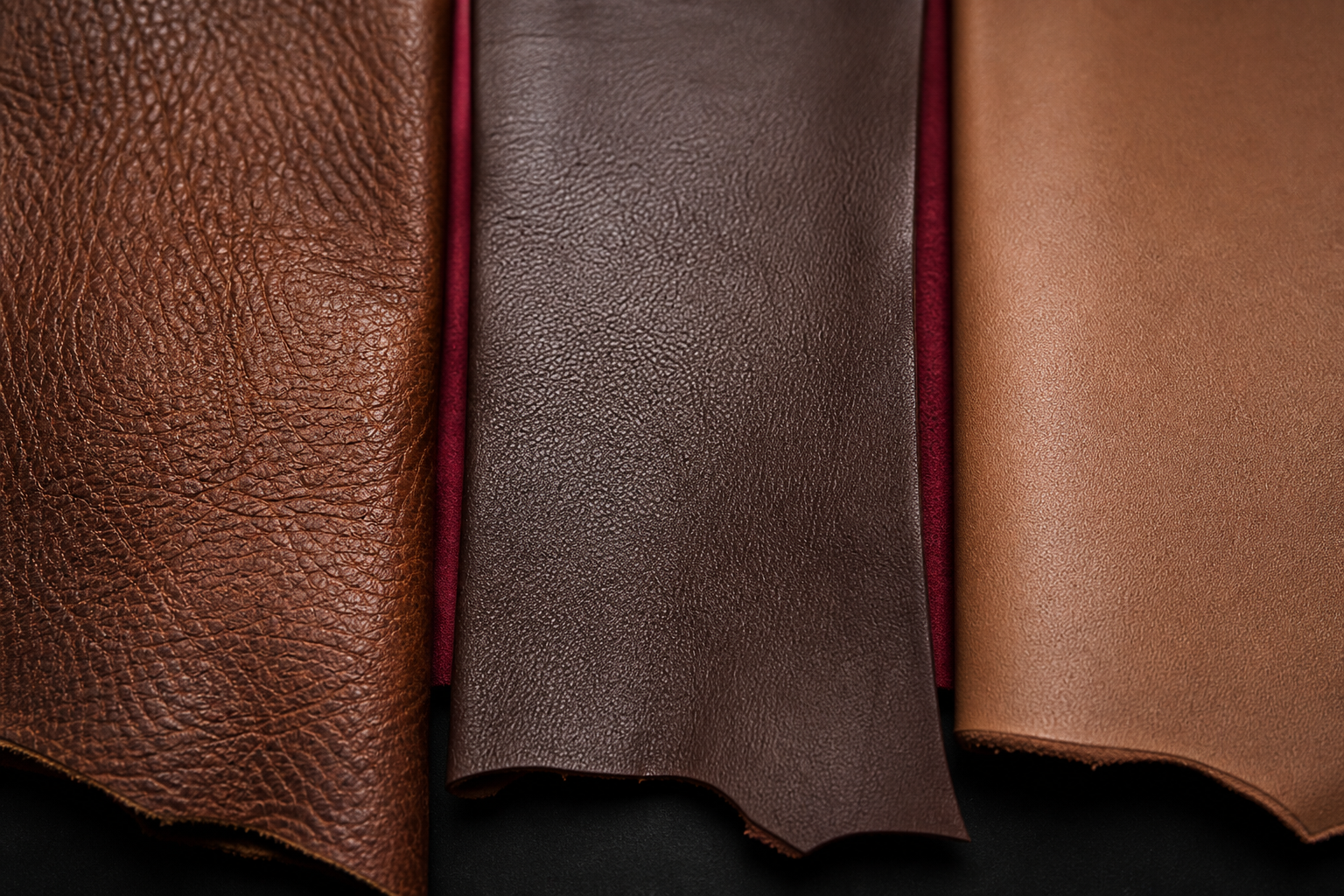
Nubuck vs Suede vs Split Leather
| Factor | Nubuck | Suede | Split Leather |
|---|---|---|---|
| What the term describes | A grain leather surface finely buffed to create a short velvet effect | A leather surface mechanically buffed to create a visible nap | A lower or middle layer formed by horizontally dividing a hide or skin |
| Original grain | Retained, though lightly abraded; the grain pattern may remain visible | Usually absent when made from a flesh split, though suede can describe other napped surfaces | Absent on flesh and middle splits |
| Nap | Very fine, short, tight, and subtle | More open and usually longer, with a stronger two-way writing effect | Not automatic; it may be smooth-finished, coated, oiled, waxed, or sanded |
| Hand feel | Fine, dense, soft, and luxurious | Soft, warm, tactile, and more obviously fibrous | Depends on fibre structure, thickness, tannage, and finish |
| Typical positioning | Premium footwear, bags, upholstery, and selected garments | Fashion garments, footwear, gloves, bags, and trims | Footwear, leather goods, linings, belts, economical panels, or a base for suede and coated leather |
| Main buyer risk | Polishing, oil absorption, water spotting, shade variation, and nap inconsistency | Crocking, loose nap, staining, stretch, and shade movement | Weak fibre, excessive stretch, finish cracking, delamination, or misleading surface descriptions |
Which One Is More Durable?
In comparable species, substance, and tannage, nubuck generally benefits from retaining the denser grain layer. That does not mean every nubuck outperforms every suede or finished split. A weak hide, excessive buffing, poor tannage, or unsuitable thickness can reduce performance. A compact, well-tanned suede split can perform reliably in the correct construction.
Durability should be judged with end-use tests. For garments, evaluate tear strength, seam resistance, elongation, recovery, dry and wet color rubbing, perspiration, and water spotting. For footwear and bags, add flexing, abrasion, finish adhesion, coating stability, and repeated-fold assessment.
Care, Water, and Stain Behavior
Nubuck and suede both have open napped surfaces. Water, oil, and dirt can darken or flatten the fibres, and aggressive rubbing can polish high-contact areas. A suitable protector may improve resistance but cannot make either material maintenance-free. Care instructions should recommend specialist leather cleaning, gentle brushing with the correct tool, and drying away from direct heat.
A pigmented or coated split may initially resist stains better and be easier to wipe clean. Its long-term result depends on coating flexibility and adhesion. Buyers should flex the actual material and finished sample, because a coating that looks acceptable on a flat swatch may crack or separate at seams and folds.
Best Applications
Choose Nubuck
For a fine premium nap, retained grain structure, understated luxury, and durable footwear, bags, upholstery, or selected outerwear.
Choose Suede
For soft drape, tactile fashion value, rich matte color, and jackets, overshirts, skirts, gloves, footwear, bags, or trims.
Choose Finished Split
For controlled surface uniformity, structure, cost efficiency, easier maintenance, or a base for coating and embossing.
Buyer Quality-Control Checklist
- Name the animal species and exact layer: grain nubuck, flesh-side suede, suede split, or finished flesh split
- Record thickness range, tannage, color, temper, finish, and intended product
- Approve nap height, nap uniformity, two-way writing effect, and panel nap direction
- Inspect shade under daylight-equivalent lighting and define an acceptable shade range
- Check loose, pipey, weak, excessively stretchy, or heavily repaired areas before cutting
- Test tear, seam resistance, elongation, recovery, and dry and wet crocking
- For nubuck and suede, assess water spotting, oil sensitivity, polishing, and cleanability
- For finished splits, test flex cracking, abrasion, finish adhesion, and delamination
- Keep an approved sealed swatch and garment sample as the production standard
How to Specify Each Material
A nubuck specification could read: “Cow grain nubuck, tobacco brown, 1.1–1.3 mm, fine short uniform nap, soft-medium temper, visible natural grain character, matched shade and nap direction, rub and water-spot performance to approved standard.”
For suede: “Goat flesh-split suede, cognac, 0.7–0.9 mm, soft temper, short clean two-way nap, controlled stretch, low dry and wet crocking, matched visible panels.” For a finished split: “Cow flesh split, black pigmented and embossed finish, 1.0–1.2 mm, flexible topcoat, medium-firm temper, finish adhesion and flex resistance to approved standard.”
The Practical Sourcing Decision
Choose nubuck when the retained grain layer and fine premium nap justify the cost. Choose suede when softness, drape, tactile depth, and fashion character lead the design. Choose a finished split when surface consistency, structure, maintenance, or budget matters most. Always approve the physical material and test results—not the marketing label.
Hashbloom International develops nubuck, suede, and finished split materials for private-label jackets, footwear, bags, gloves, and accessories. Buyers can submit a target species, color, thickness, hand feel, reference swatch, quantity, and performance requirements for matching and sample development.