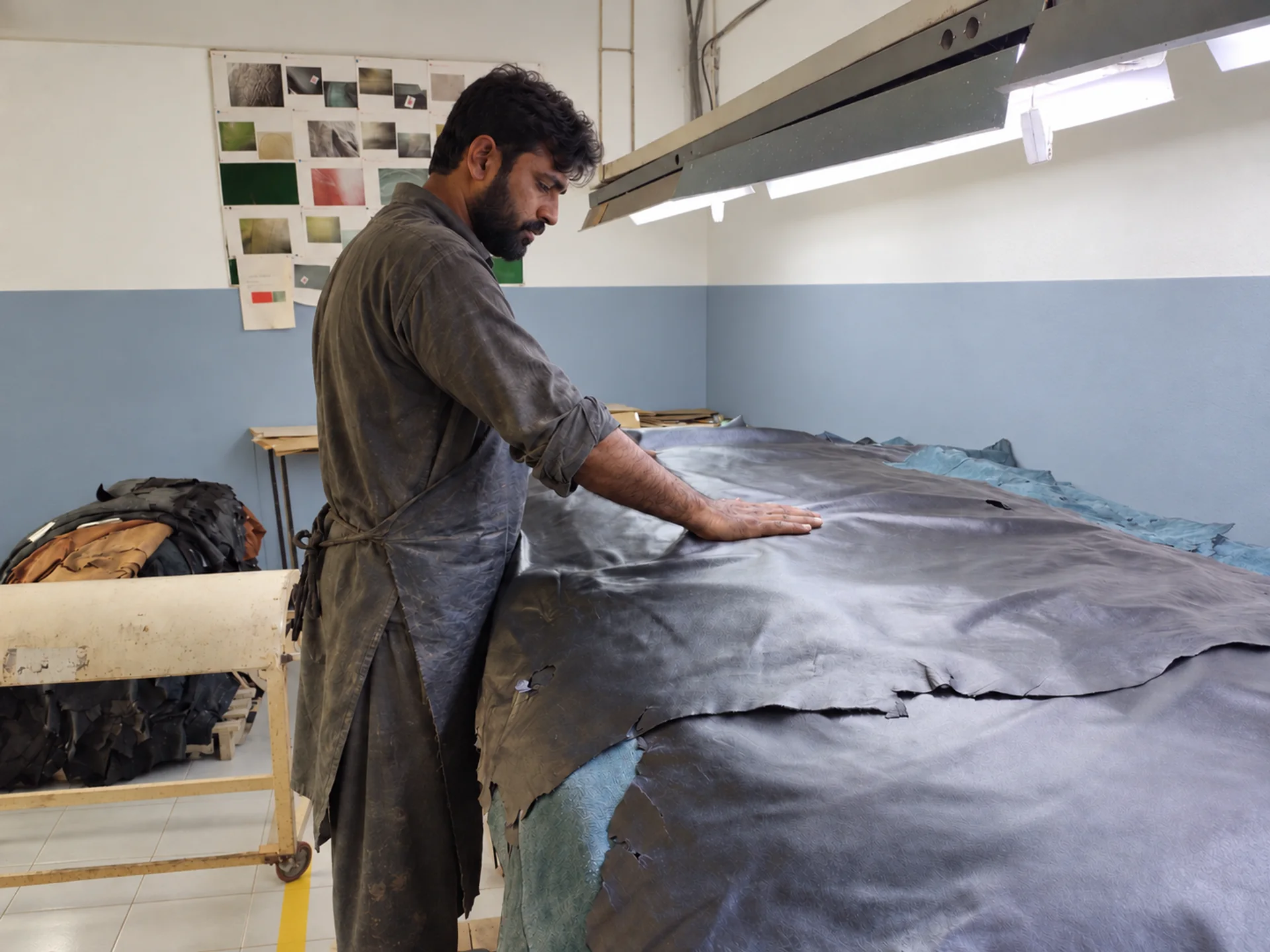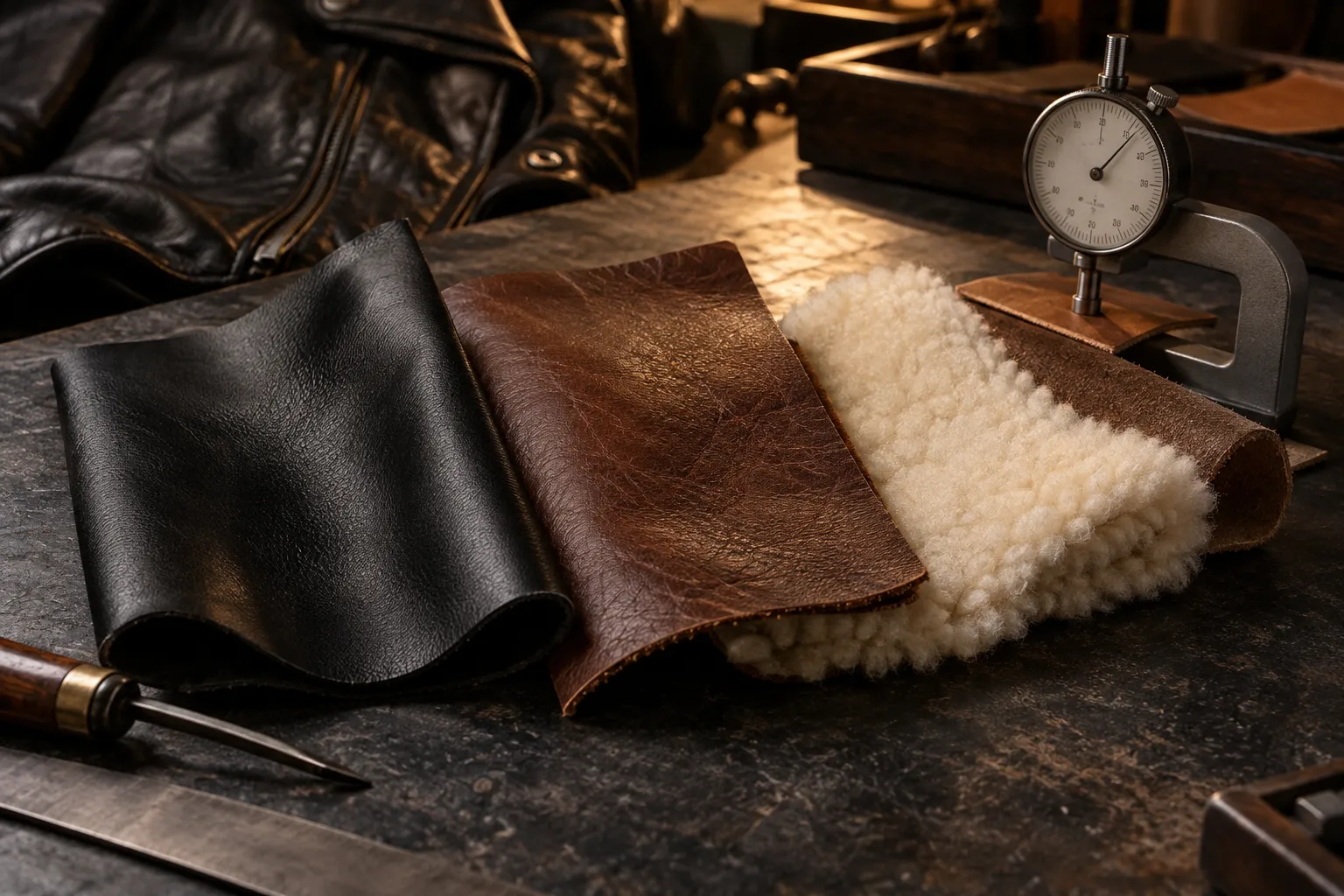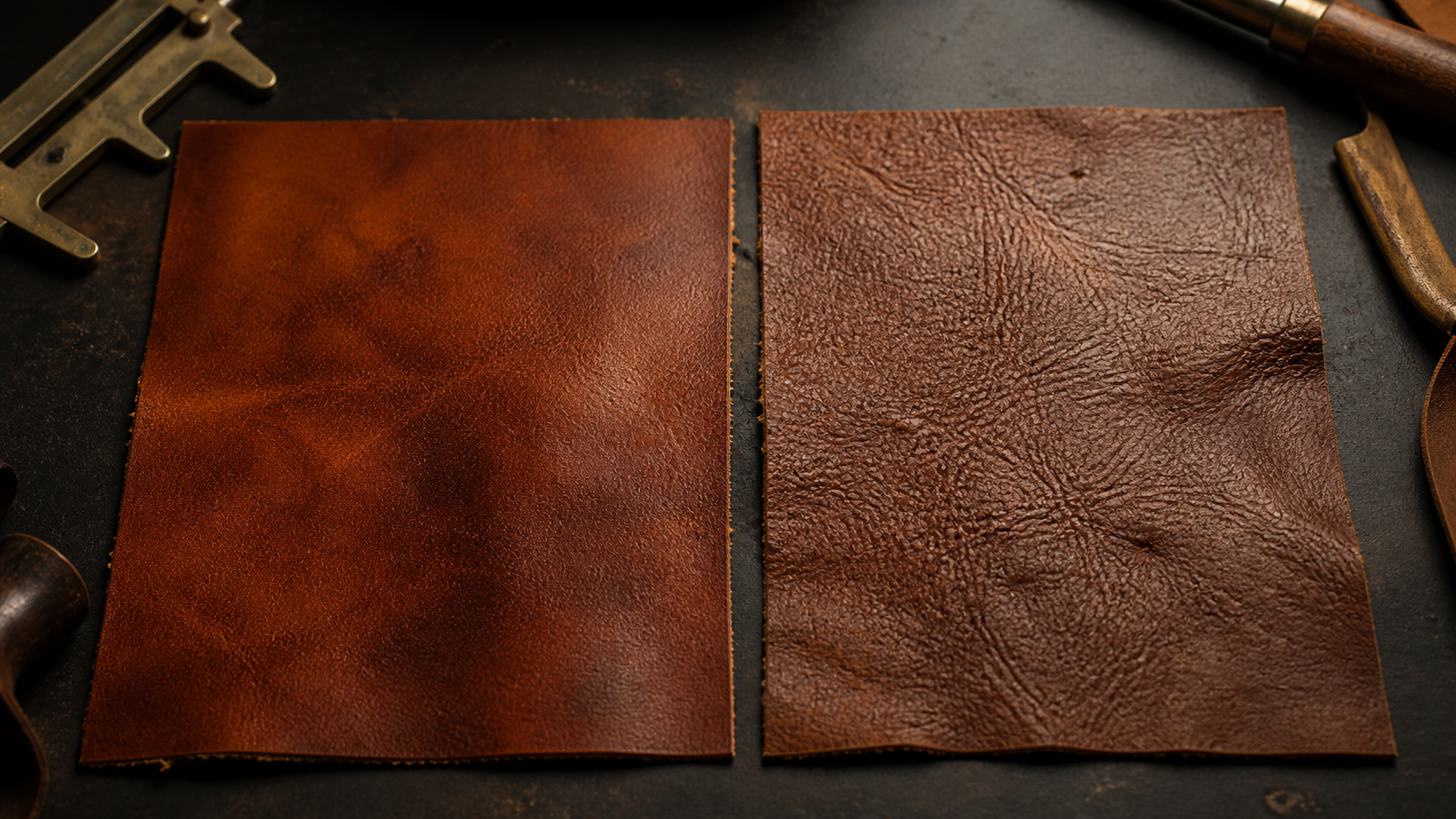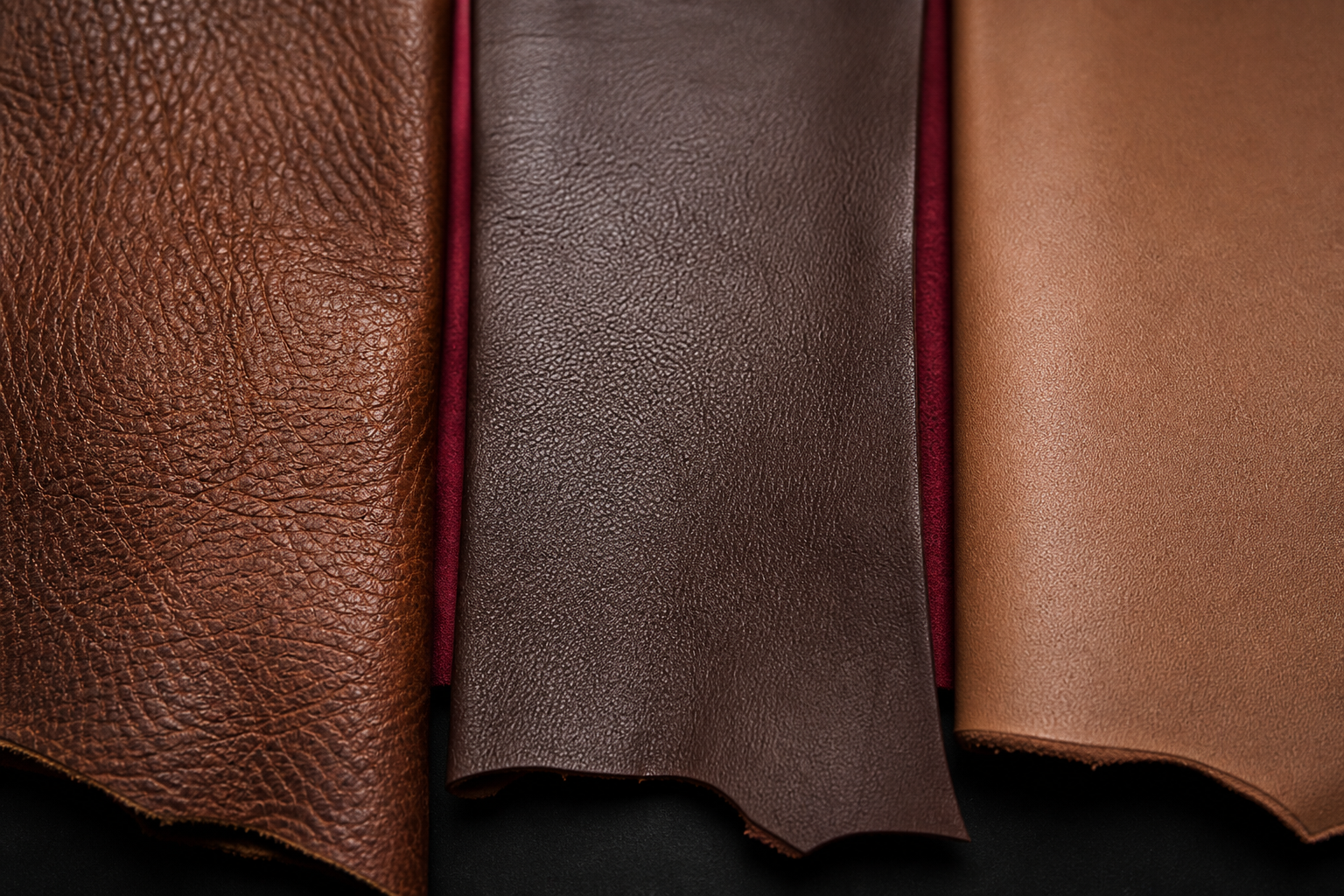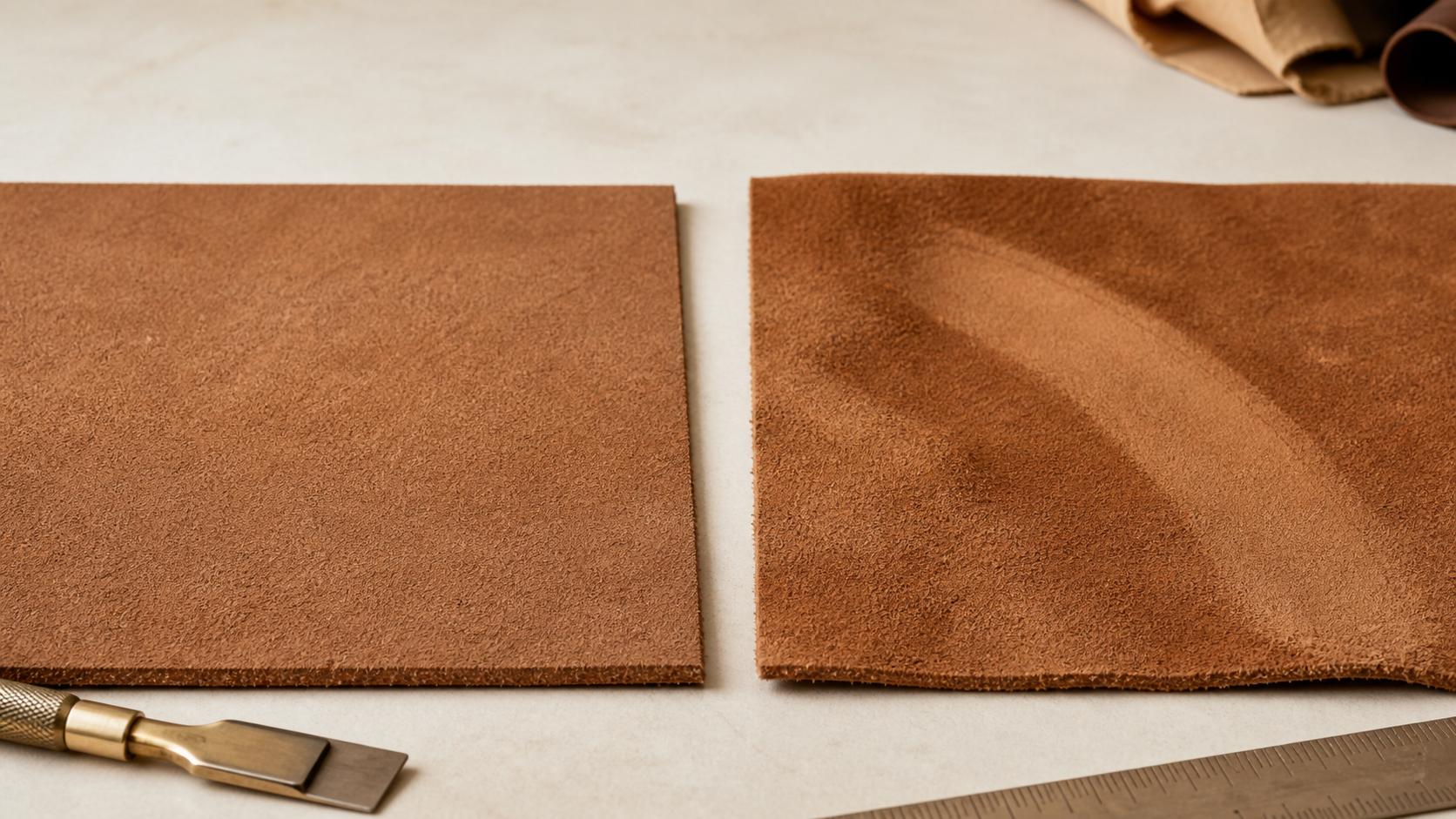
Short answer: goat split is the flesh-side layer produced by horizontally splitting a goat skin. Goat suede is leather whose surface has been buffed to create a soft, velvet-like nap. A goat split can be processed into suede, but it can also receive a smooth coating or another finish.
How a Goat Skin Becomes a Split
A goat skin has a dense outer grain layer and a more open fibrous structure toward the flesh side. In a tannery, a splitting machine can divide the skin horizontally. The upper portion retains the grain surface; the lower portion is the flesh split. International leather terminology therefore uses split leather for a tanned flesh or middle layer whose original grain surface is no longer present.
The split is still real leather because its original collagen fibre structure remains substantially intact and it has been tanned to resist decay. It is not bonded leather, regenerated leather, or a synthetic sheet. Its commercial value depends on substance, fibre compactness, tear strength, tannage, finishing, and how well the tannery controls loose or weak areas.
What Makes Goat Suede Different?
Suede is defined by its surface. The tannery mechanically buffs or sands the leather to raise fine fibres into a controlled nap. When brushed in opposite directions, those fibres reflect light differently and create the familiar two-tone or “writing” effect. Retanning, fatliquoring, drying, staking, buffing grit, and dust removal all influence softness, nap length, color depth, and cleanliness.
Most commercial garment suede is produced from flesh splits because the split already exposes an open fibre structure that responds well to buffing. However, “suede” should not be used as a synonym for every split. A split may instead be heavily finished, plated, coated with a thin polyurethane layer, oiled, or used as a lining. Likewise, a grain-side leather can be lightly abraded into nubuck or other velour-style surfaces, so buyers should always identify both the layer and the finish.
Goat Split vs Goat Suede: Side-by-Side
| Factor | Goat Split Leather | Goat Suede |
|---|---|---|
| What the term describes | The lower layer created when a goat skin is divided horizontally | A velvet-like nap created by mechanically buffing a leather surface |
| Surface | May be unfinished, coated, pigmented, oiled, waxed, or sanded | Open, soft fibre surface with a visible two-way rub effect |
| Grain layer | Absent on a flesh split | Usually absent when made from a flesh split; grain-side suede variants also exist |
| Hand feel | Depends on finish; can be firm, flat, smooth, or fibrous | Soft, tactile, and velvety when the nap is well controlled |
| Appearance consistency | A coating can make color and texture very uniform | Nap direction creates intentional light and dark movement |
| Water and stain response | A finished surface can offer better initial resistance | Open nap absorbs moisture and oils more readily unless protected |
| Typical applications | Footwear, belts, bags, gloves, linings, and economical garment panels | Jackets, overshirts, skirts, bags, footwear, gloves, and premium fashion trims |
| Buyer priority | Specify the finish, thickness, fibre strength, and end use | Specify nap height, nap uniformity, shade, softness, crocking, and cleanability |
Softness, Drape, and Garment Performance
Goat skins are valued for a favorable strength-to-weight ratio, but layer selection still matters. A well-made goat suede can be light, flexible, and comfortable for bombers, overshirts, skirts, and fashion gloves. The nap reduces surface glare and gives the material a warm, premium hand. It also makes color appear richer because the fibres scatter light.
An ordinary goat split does not have one standard feel. A thin pigmented finish can produce a relatively smooth and economical material, while a heavily coated split may feel firmer and less breathable. A weak split can stretch or tear around seams; a dense, well-tanned split can perform reliably in footwear, bags, and reinforced garment panels. The word “split” alone is therefore not a complete quality specification.
Durability: Avoid Simple Grade Claims
Grain leather generally has a denser outer fibre structure than the flesh split, but that does not make every suede fragile or every finished split poor. Durability is the combined result of skin selection, fibre compactness, tanning, thickness, temper, finishing, panel placement, seam allowance, stitch density, and intended use.
For suede garments, common risks include excessive stretch, seam elongation, dry or wet color transfer, uneven nap, shade variation, and oil or water staining. For finished goat split, buyers should additionally evaluate finish adhesion, flex cracking, delamination, surface abrasion, and whether a coating hides weak fibre structure. A sealed material swatch and garment sample are more useful than a marketing grade name.
Water, Stains, and Care
Goat suede has an open surface, so water, oil, and dirt can enter the nap more readily than on a continuously finished split. A suitable protector can improve resistance, but no treatment makes suede maintenance-free. Care labels should recommend specialist leather cleaning, gentle brushing with the correct suede brush, drying away from direct heat, and testing any cleaner on a hidden area.
A pigmented or coated goat split can be easier to wipe clean and may offer better initial water resistance. Its long-term performance depends on coating flexibility and adhesion. If a design involves repeated flexing, folds, or tight seams, the finish must be tested after bending rather than approved from a flat swatch alone.
Which Material Fits Which Product?
Choose Goat Suede When
The collection needs a soft tactile surface, matte luxury, natural shade movement, comfortable drape, and a premium fashion story.
Choose Finished Goat Split When
The product needs a more uniform surface, easier maintenance, a controlled coating, firmer structure, or a more economical material plan.
Jacket fronts and sleeves require consistent shade, stretch, and nap direction. Bags and footwear may benefit from a firmer split, reinforcement, or protective finish. Gloves need softness but also seam strength and controlled elongation. Do not approve a material by touch alone; approve it against the product construction.
Quality-Control Checklist for Buyers
- Name the animal species and layer: goat flesh split, goat suede split, or goat grain leather
- Record thickness range, temper, color, tannage, and intended finish
- For suede, approve nap height, two-way rub effect, nap direction, and shade tolerance
- Check weak, loose, pipey, or excessively stretchy areas before cutting
- Test tear strength, seam resistance, elongation, and panel recovery for the end use
- Evaluate dry and wet color rubbing, perspiration exposure, and water spotting
- For finished splits, test flexing, abrasion, finish adhesion, and coating stability
- Approve panels and a sealed garment sample under daylight-equivalent lighting
How to Write a Better Material Specification
Avoid writing only “goat split” or “premium goat suede.” A useful tech-pack line identifies the material and performance target. For example: “Goat flesh-split suede, cognac, soft temper, 0.7–0.9 mm, short uniform nap, low dry and wet crocking, matched nap direction across visible panels.”
For a finished split, a clearer specification might read: “Goat flesh split, black pigmented finish, medium-soft temper, 0.9–1.1 mm, flexible topcoat suitable for repeated garment flexing, finish adhesion and rub fastness to approved standard.” Physical standards should accompany the wording because suppliers may interpret adjectives differently.
The Practical Sourcing Decision
Choose goat suede for its nap, softness, matte appearance, and fashion value. Choose a finished goat split when surface uniformity, cleanability, structure, or cost control matters more than a natural velvet hand. In both cases, material quality must be judged by the actual skin, process, finish, and test performance rather than by the product name alone.
Hashbloom International develops goat suede and finished goat split for private-label jackets, bags, gloves, skirts, and accessories. Buyers can submit a target color, thickness, hand feel, reference swatch, quantity, and performance requirements for material matching and sample development.