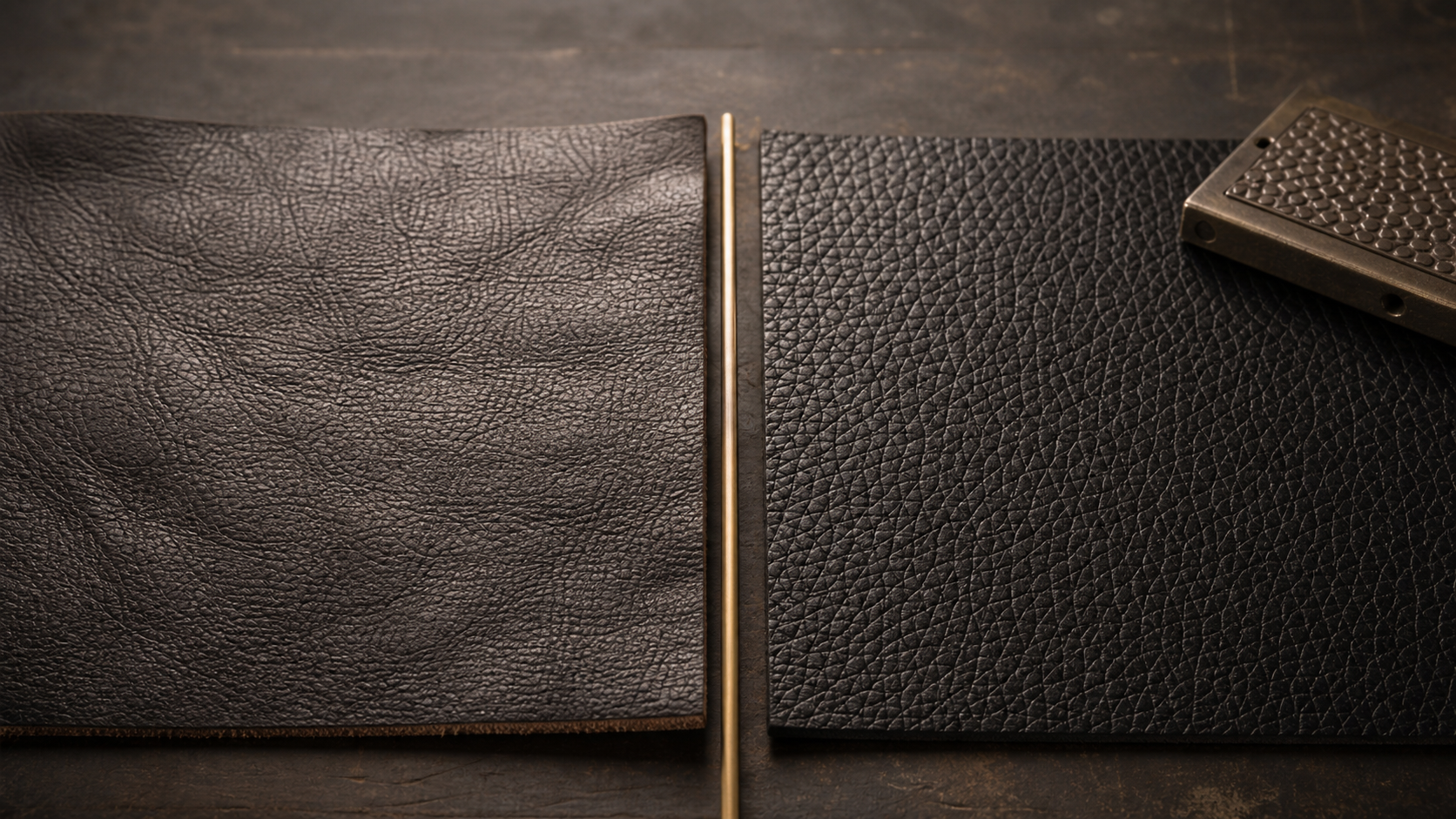
Terminology note: the correct industry term is plate-embossed leather, not “platted leather.” Embossing changes the appearance of real cowhide; it does not change the animal species.
What Is Natural-Grain Cow Leather?
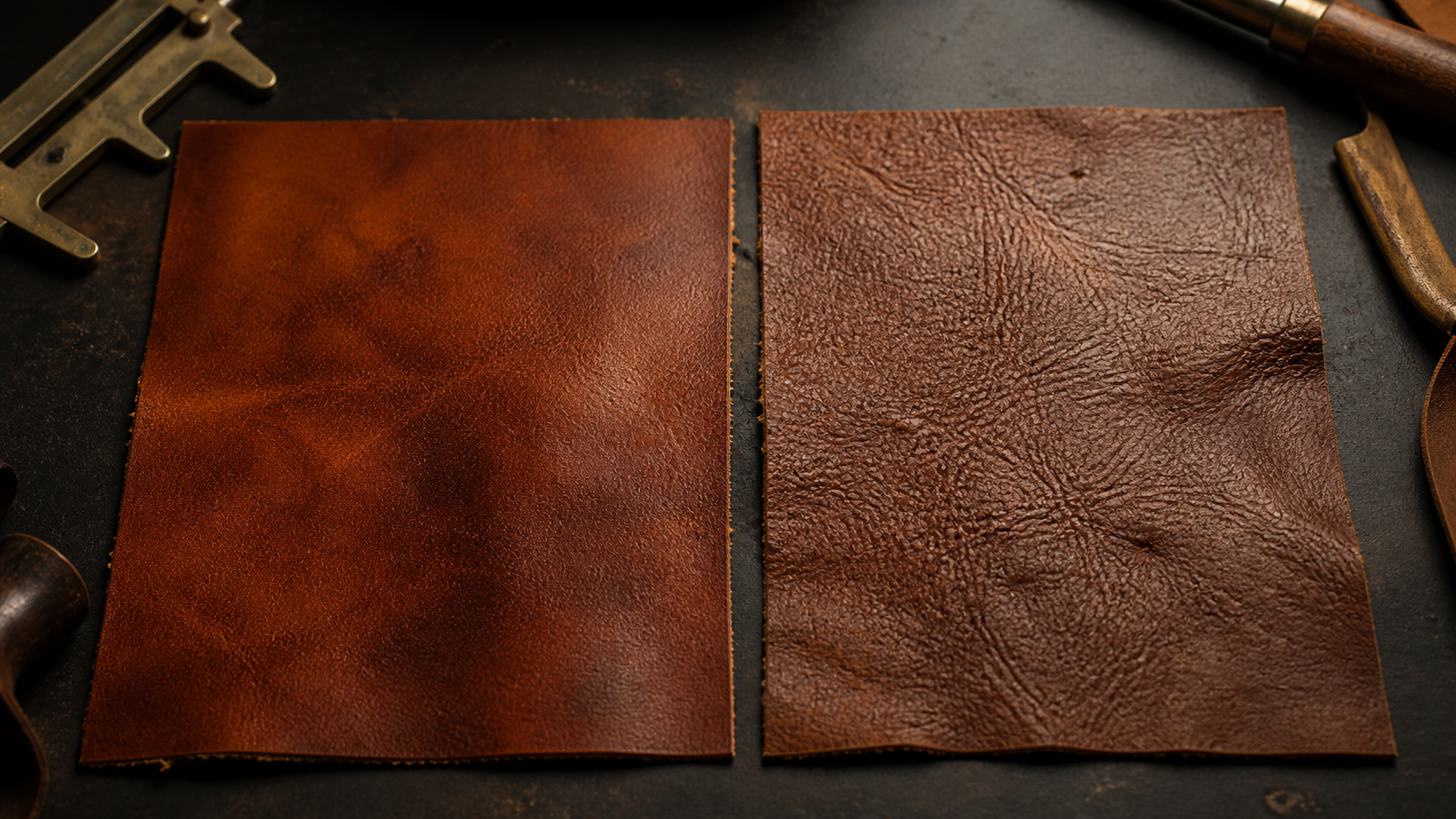
Natural-grain cow leather displays the hide's own pore structure, growth lines, wrinkles, and individual markings. The surface can be full-grain, where the grain layer remains intact, or lightly finished top-grain, where minimal correction improves cleanliness without replacing the natural look. “Natural grain” describes the visual character; it does not by itself guarantee a particular leather grade, tanning system, thickness, or finish.
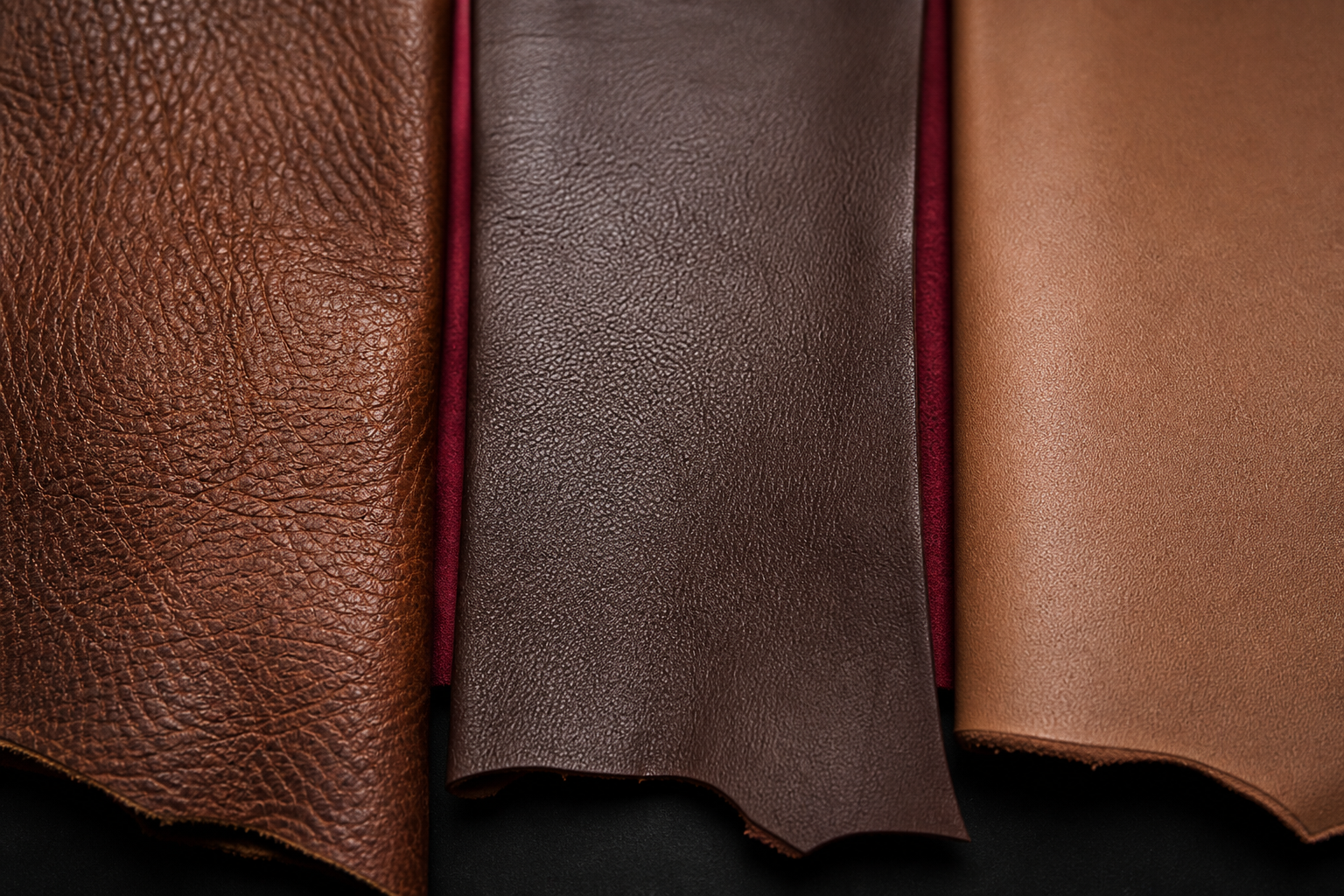
Because every hide developed differently, natural grain is never perfectly identical from panel to panel. That variation is often the point. Premium heritage jackets, belts, and bags use it to communicate authenticity and develop a distinctive patina. Buyers must accept a controlled range of wrinkles, pores, healed marks, and tonal movement rather than demand synthetic-looking uniformity.
What Is Plate-Embossed Cow Leather?
Plate-embossed cow leather is genuine cowhide whose surface is pressed against an engraved metal plate. Heat, pressure, and dwell time transfer the plate's negative pattern into the leather. The base may be full-grain, lightly buffed top-grain, or corrected grain, although corrected top-grain is common because it provides a clean, consistent foundation.
Plates can reproduce a classic small pebble, a large upholstery grain, geometric textures, or fashion patterns. A crocodile-, snake-, or lizard-inspired plate creates an embossed design on cow leather; the material must still be described and sold as cow leather, never as genuine crocodile, snake, or lizard.
Side-by-Side Comparison
| Factor | Natural-Grain Cow Leather | Plate-Embossed Cow Leather |
|---|---|---|
| Surface origin | The hide's original grain remains visible | A grain pattern is pressed into prepared cowhide |
| Appearance | Organic pores, wrinkles, scars, and panel variation | Controlled, repeatable, and visually consistent |
| Hand feel | Varies with tanning and finish; often lively and natural | Can feel soft or firm; deeper plates may feel more structured |
| Cutting yield | Lower when visible marks must be avoided or matched | Usually higher because correction and texture disguise variation |
| Color consistency | May show tonal movement across the hide | More uniform, especially with pigmented finishing |
| Ageing | Develops individual patina and character | Keeps a more controlled look; ageing depends heavily on topcoat |
| Typical cost | Higher for clean, well-sorted hides | Often more economical, but plate and development costs apply |
| Best use | Premium jackets, heritage bags, belts, and moto products | Fashion collections, uniform programs, bags, footwear, and repeat orders |
Durability: Grain Type Is Only Part of the Answer
Natural full-grain cowhide normally offers the strongest surface because its dense outer fibers remain intact. It handles abrasion well and tends to age by burnishing rather than losing an artificial pattern. That makes it a strong choice for motorcycle jackets, workwear, belts, and long-life bags.
Embossing does not automatically make leather weak. A well-tanned, correctly embossed hide can perform extremely well. Problems arise when excessive heat or pressure hardens the leather, when deep relief stretches the grain, or when a heavy pigment and topcoat crack during repeated flexing. The buyer should evaluate the entire construction—base hide, fiber strength, finish adhesion, embossing settings, thickness, and intended use—not judge performance from the pattern alone.
Consistency, Cutting Yield, and Bulk Production
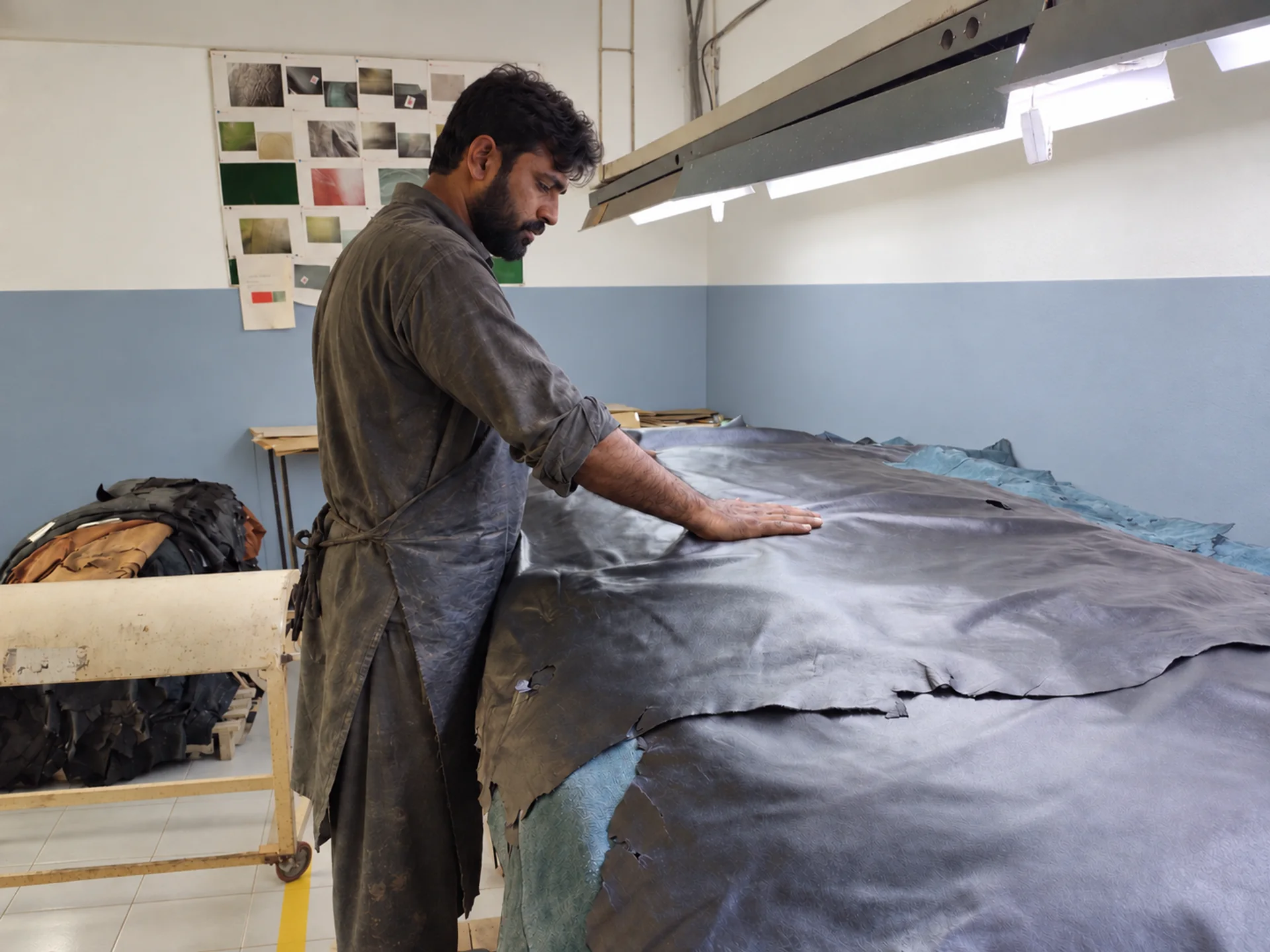
Natural grain requires skilled grading and panel placement. Visible fronts, collars, and sleeves must be balanced for grain size, wrinkles, and color. Scarred or loose areas may be rejected, so the usable cutting yield can fall and material consumption rises. Two finished jackets should match commercially, but they will not be visually identical.
Plate embossing can improve uniformity and hide minor surface variation, allowing more of each hide to be used. It is valuable for large wholesale programs, matching bag panels, footwear components, and repeat collections that need stable appearance across production lots. However, the factory must control plate repeat, direction, registration, and pressure. Large panels may require careful joining or a roller embossing process to avoid visible repeat boundaries.
Feel, Drape, and Thickness
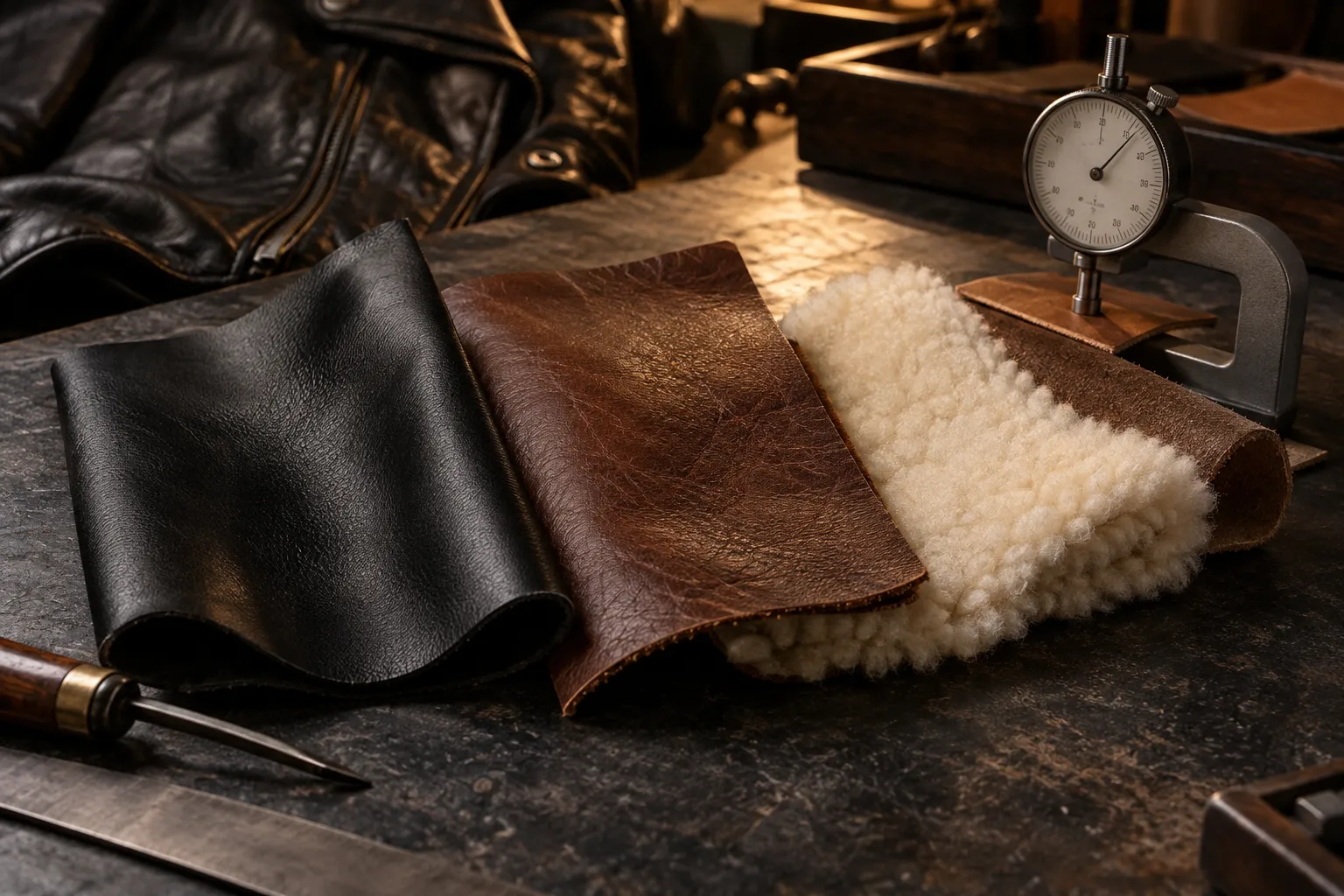
Neither option has one fixed hand feel. Natural-grain cow leather may be soft and drapey for fashion garments or firm and dense for belts. Plate-embossed leather can also be made supple, but deep embossing and heavy finishing commonly add structure. Always specify thickness and temper separately from grain.
- Fashion jackets: commonly soft temper with thickness selected for the silhouette
- Moto jackets: denser leather with abrasion performance and reinforced construction
- Structured bags: firmer temper so panels hold their intended shape
- Belts and small goods: heavier substance or laminated construction for stability
Cost: Compare Total Product Cost, Not Only Hide Price
Clean natural-grain hides command a premium because sorting is strict and usable yield can be lower. Plate-embossed leather often uses the hide more efficiently, but custom plate development, setup, trials, and minimum embossing quantities add cost. A stock plate is usually more economical than an exclusive custom pattern.
For an accurate comparison, calculate leather price per square foot, expected consumption per garment, cutting loss, plate or setup charge, finishing development, reject allowance, and the quantity over which one-time costs will be spread. An apparently cheaper hide can produce the more expensive jacket if its usable yield is poor.
How to Choose for Your Collection
Choose Natural Grain When
Your brand values authenticity, patina, individual character, premium storytelling, and the strongest possible intact grain surface.
Choose Plate Embossing When
You need a controlled fashion texture, consistent repeat orders, better panel matching, improved cutting yield, or a signature custom grain.
A hybrid specification is also possible: select a high-quality top-grain cowhide, apply a subtle natural-looking plate, and use a light aniline or semi-aniline finish. This gives more visual consistency without the flat appearance of a heavy corrected finish. The correct solution depends on the product, target retail price, order size, and the amount of natural variation your customer accepts.
Buyer Approval and Quality-Control Checklist
- Record the animal species as cow leather on the tech pack and labeling
- Approve the leather grade, tannage, thickness range, temper, color, and finish
- For natural grain, approve acceptable scars, wrinkles, grain break, and shade variation
- For embossed leather, approve the plate reference, scale, depth, direction, and repeat
- Test flexing, finish adhesion, dry and wet color rub, tear strength, and seam performance
- Inspect embossing depth from the center to the edges and across separate production lots
- Approve a physical strike-off and sealed garment sample before bulk cutting
- Keep a tolerance standard under daylight-equivalent lighting for final inspection
How to Write the Material Specification
Avoid vague descriptions such as “premium grain leather.” A useful specification names the species, surface, finish, thickness, temper, color, and performance target. For example: “Cow leather, natural full-grain, semi-aniline black, soft temper, 1.0–1.1 mm” or “Cow leather, corrected top-grain, stock pebble plate embossed, black pigmented finish, medium-soft temper, 0.9–1.0 mm.”
Hashbloom International can develop both natural-grain and plate-embossed cow leather for jackets, bags, trousers, skirts, belts, and private-label accessories. Send your product sketch, target texture, thickness, color, finish, quantity, and performance needs so our team can prepare suitable swatches and a development sample.