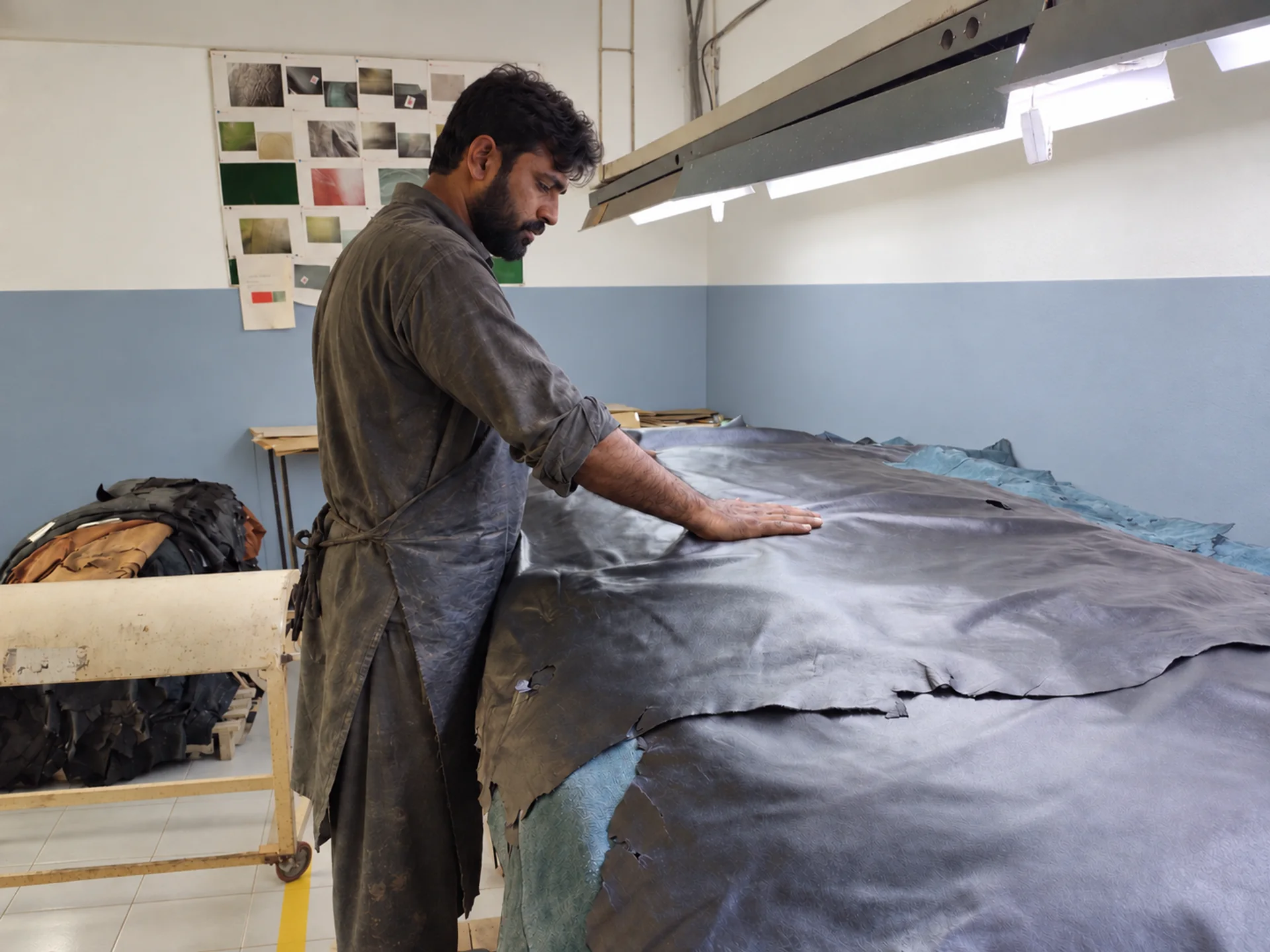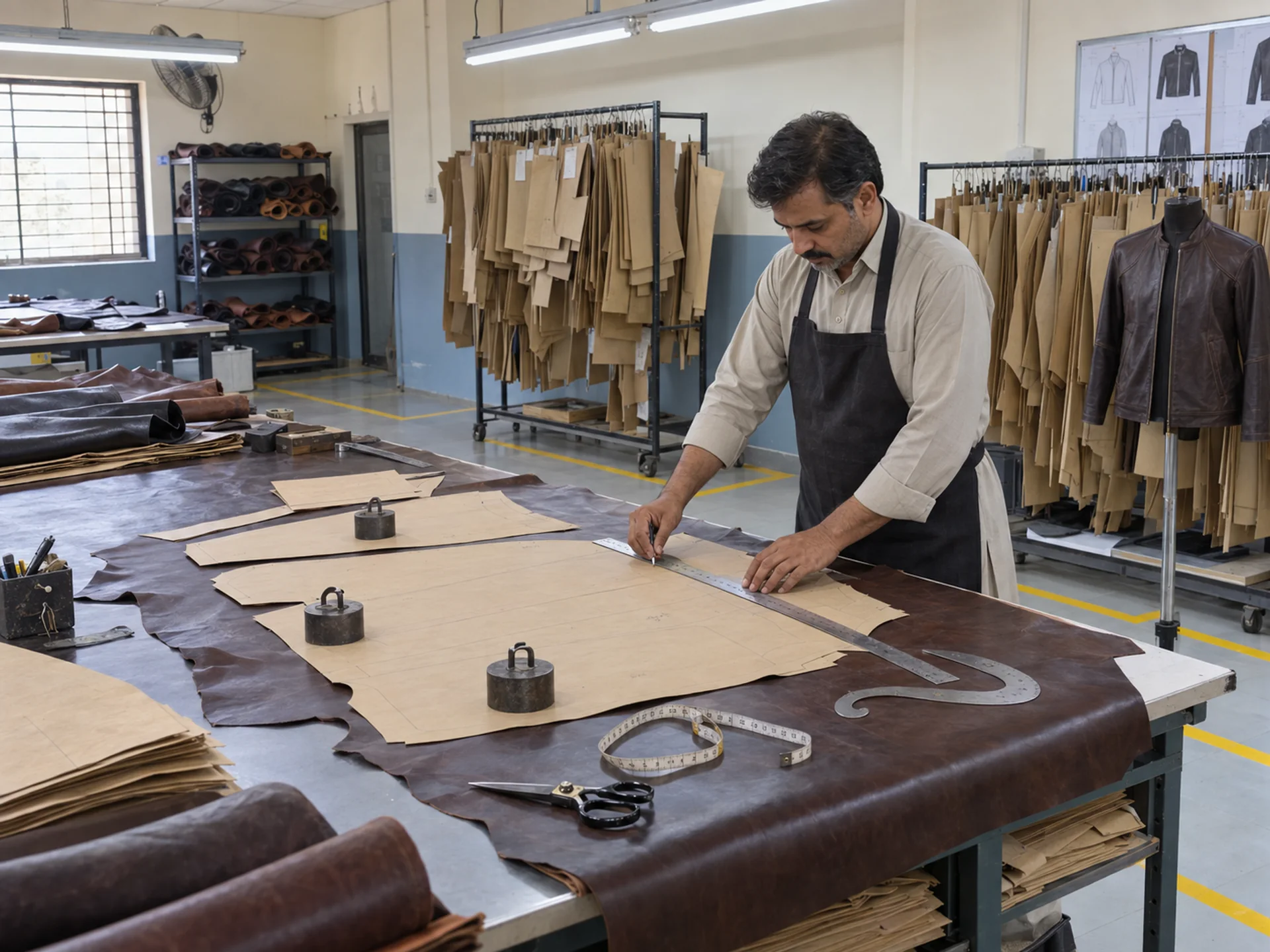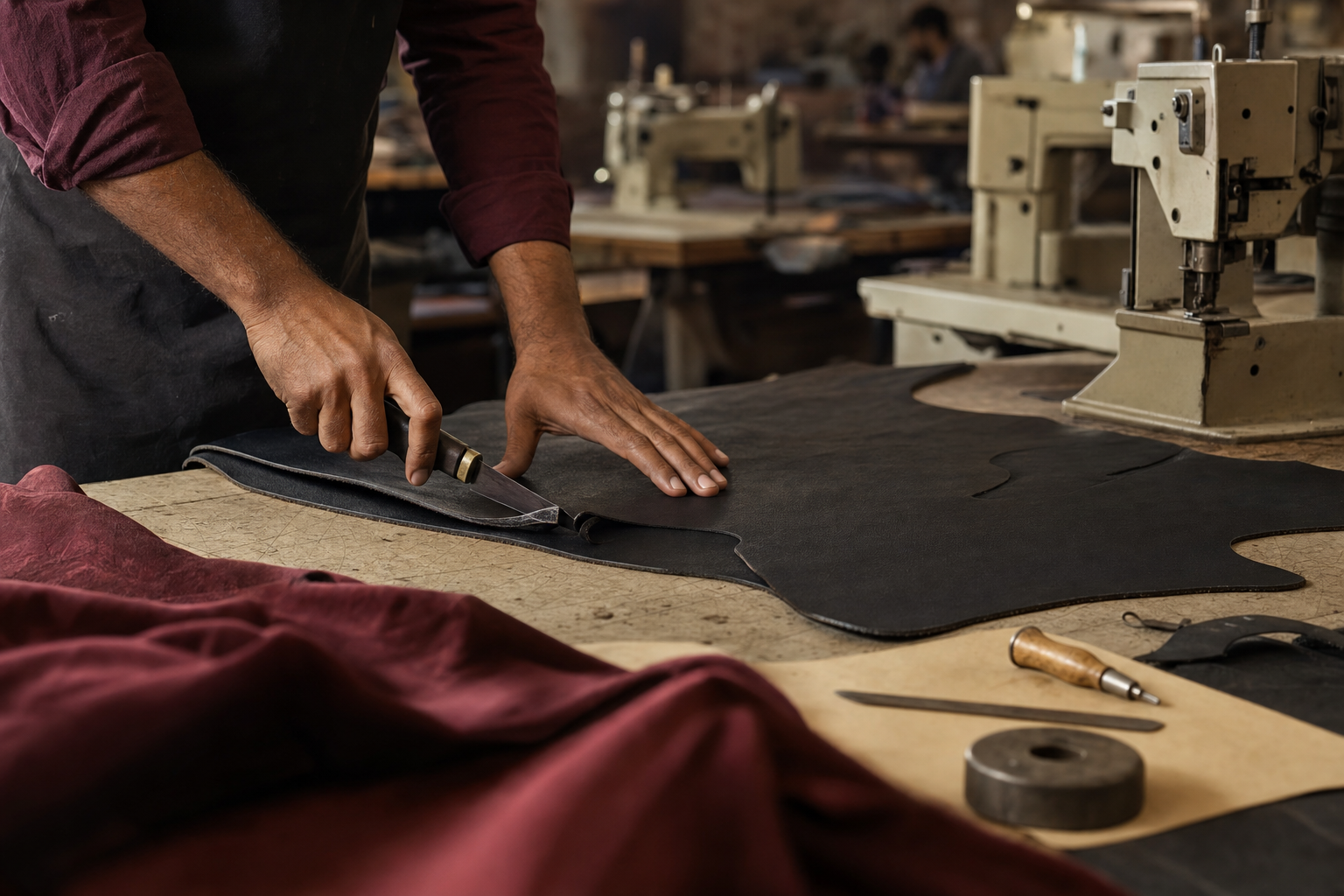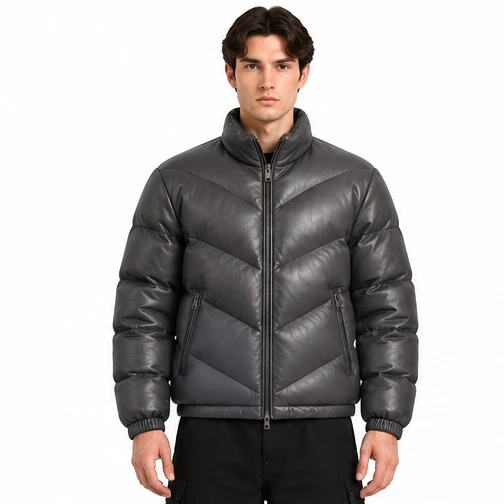
First: This Is Sheep or Cow Leather, Not Exotic Leather
The base material remains sheep leather or cow leather. Embossing changes the surface texture; it does not change the species. A crocodile-inspired plate pressed onto cowhide must be described as crocodile-embossed cow leather, not crocodile leather. The same rule applies to snake-, lizard-, ostrich-, or other animal-inspired patterns.
Clear material labeling protects buyers, helps brands communicate honestly, and supports customs and compliance documentation. It also gives designers access to dramatic fashion grains with more consistent panel size, color, thickness, and supply than genuine exotic skins.
How the Pattern Plate Is Made
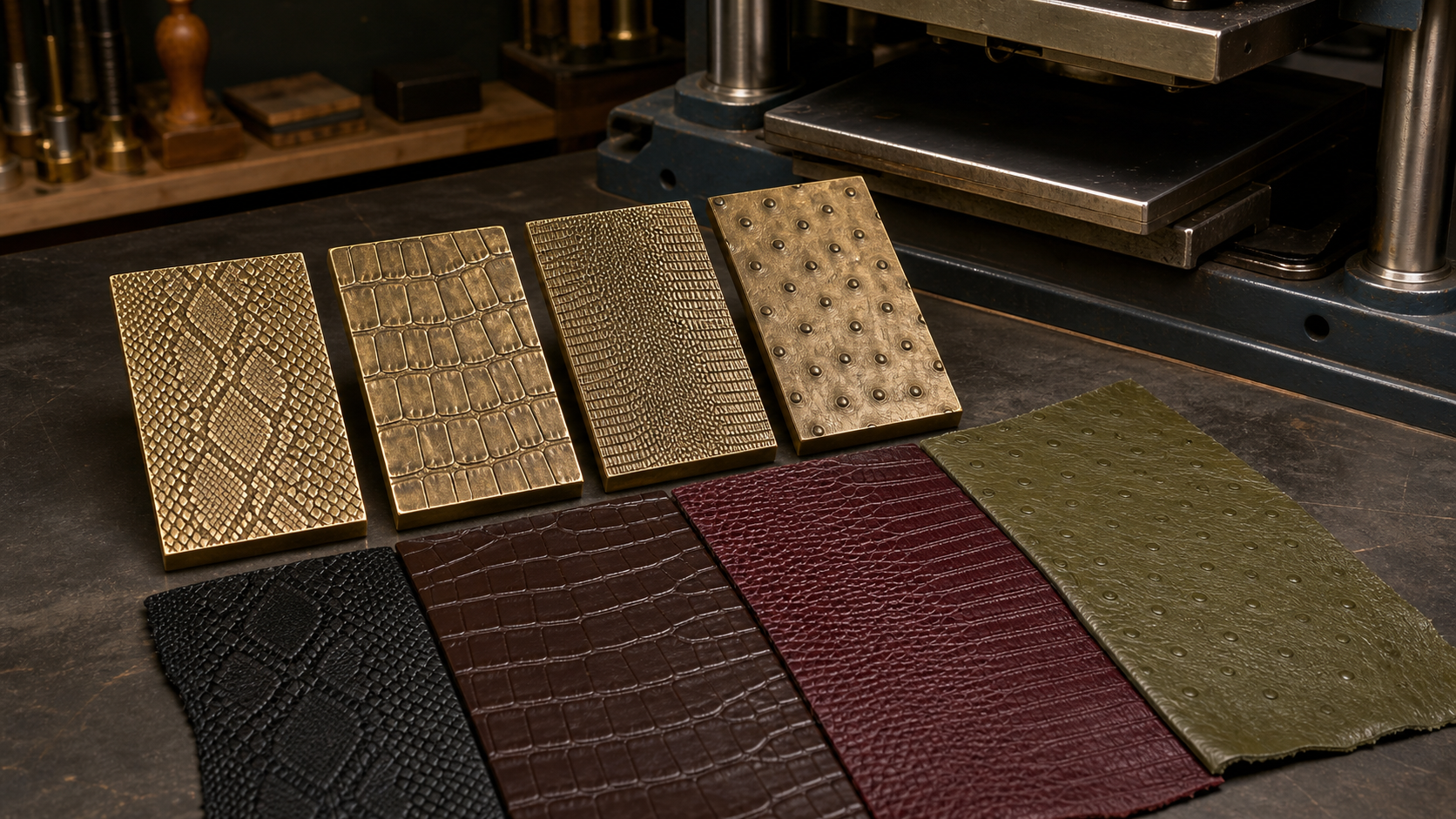
Every result starts with the embossing plate, sometimes called a die. We develop the repeat from approved artwork, a legal reference sample, or a custom grain concept. The scale size, direction, border transitions, repeat length, and depth are refined before the design is engraved or machined into metal in reverse relief.
A small plate works for labels, tabs, pocket flaps, and controlled garment panels. Larger plates or rollers are used when a continuous grain must cover full hides or broad bag and jacket sections. The tooling must repeat cleanly so adjoining impressions do not show obvious gaps or doubled scales.
Choosing Sheep Nappa or Cow Leather
Sheep Nappa is soft, light, and naturally flexible, making it suitable for fashion jackets, skirts, gloves, and garments that need drape. Cow leather offers more body and abrasion resistance, making it a strong choice for structured jackets, handbags, footwear, belts, and larger accessories.
- Soft sheep Nappa accepts refined patterns while retaining garment drape.
- Cow leather supports deeper relief and more structured fashion products.
- Corrected-grain surfaces provide a uniform foundation for consistent embossing.
- Leather thickness and temper are matched to the scale size and final product.
The Production Process: Plate, Pressure, Heat, and Time
- 1Translate the chosen grain artwork or physical reference into a repeatable production pattern.
- 2Machine or engrave a metal embossing plate with the pattern in reverse relief.
- 3Select and prepare sheep Nappa or cow leather with the right thickness, temper, and finish.
- 4Run trials to balance plate temperature, hydraulic pressure, dwell time, and leather moisture.
- 5Press the grain into the leather and inspect scale depth, repeat alignment, and edge definition.
- 6Apply pigment, wax, tipping, glazing, or two-tone finishing to bring out the dimensional pattern.
- 7Condition, soften, grade, and cut the finished leather for the approved fashion product.
Trial pressing is essential. Too little pressure produces a shallow, weak grain. Too much heat or dwell time can harden the leather, flatten its natural handle, or create unwanted shine. We approve the process against a physical standard before running production.
Popular Fashion Grains
| Pattern | Visual Character | Fashion Uses |
|---|---|---|
| Crocodile-inspired | Large rectangular scales with smaller transitional grain | Jackets, handbags, belts, footwear panels, and trims |
| Snake-inspired | Fine repeating scales with directional movement | Statement panels, skirts, small leather goods, and accessories |
| Lizard-inspired | Small, even scales that hold detail on lighter leather | Wallets, gloves, bag panels, and refined garment accents |
| Ostrich-inspired | Rounded follicle-like marks across a softly pebbled field | Luxury-inspired bags, jackets, belts, and footwear |
Finishing Makes the Grain Look Dimensional
Embossing creates physical relief, but finishing creates the fashion effect. A single-color pigment gives a clean modern surface. Hand tipping or roller tipping places a second color on the raised scales. Antiquing settles darker color into the valleys. Wax, glazing, pearl, metallic, matte, or high-gloss topcoats can shift the same plate from subtle to dramatic.
Color development must be approved on the actual embossed leather because light reflects differently across raised and recessed areas. We recommend approving a strike-off that records the base leather, color recipe, plate reference, pressure, temperature, dwell time, and topcoat.
Quality Checks Before Cutting
- Consistent pattern depth from the center to the plate edges
- Clean repeat alignment without double impressions or blank bands
- No cracking, scorching, hardening, or excessive gloss
- Acceptable color rub, flex, and adhesion performance
- Correct species declaration on labels, invoices, and product descriptions
- Pattern placement planned before garment or bag panels are cut
Developing a Custom Embossed-Leather Collection
Send us your product sketch or tech pack, preferred base leather, target grain, color direction, gloss level, panel sizes, and order quantity. Hashbloom International can develop the embossing plate, leather strike-offs, garment or accessory sample, private labels, and bulk production as one coordinated OEM/ODM program.
For accurate sourcing, request the material by its full name—for example, “black crocodile-embossed cow leather” or “burgundy snake-embossed sheep Nappa.” That wording gives the design team a clear aesthetic target while keeping the underlying species transparent.