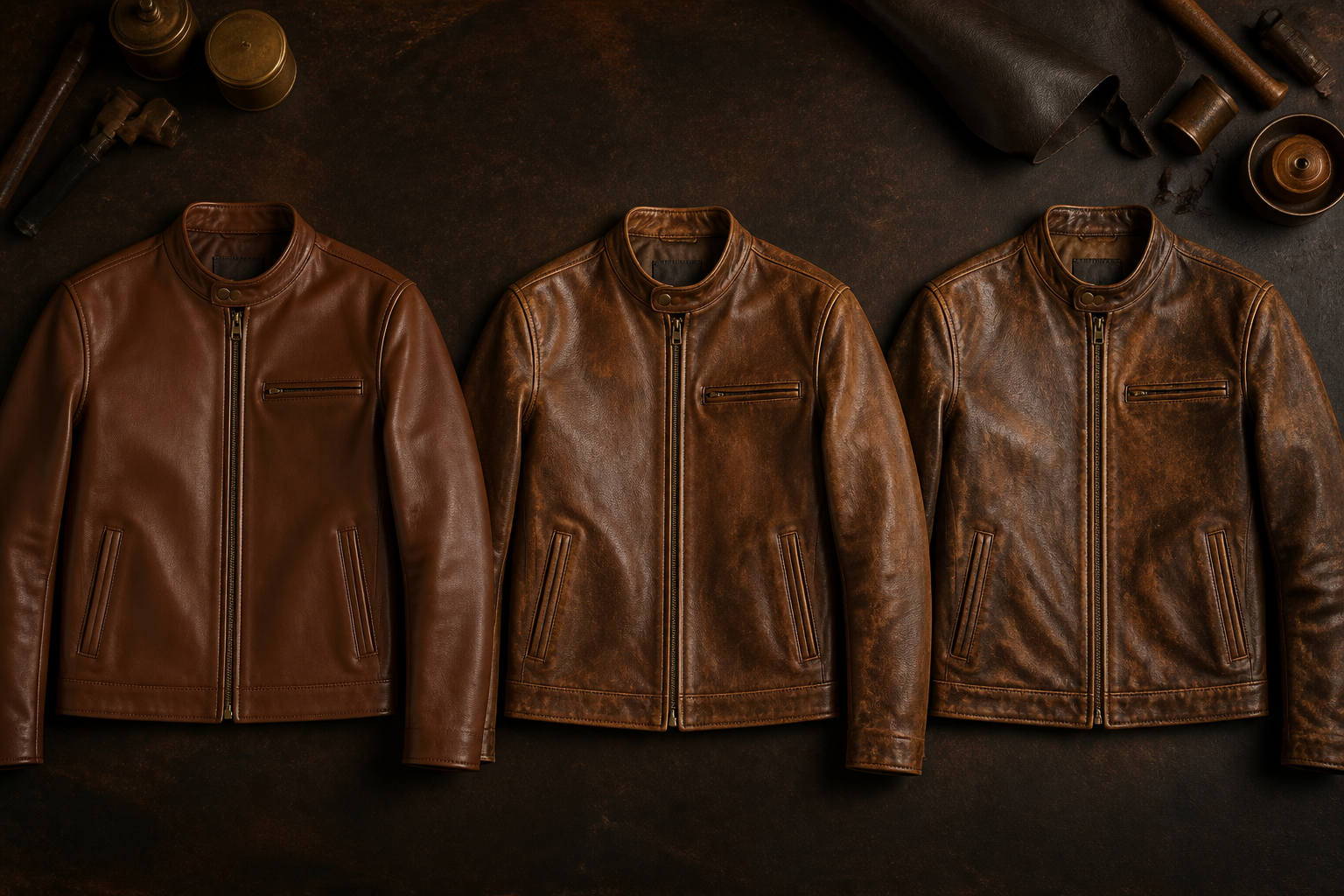
Short answer: a leather garment wash is a controlled post-sewing finishing operation. Water, approved auxiliaries, pigments or waxes, mechanical movement and drying are combined to soften the garment, alter its color, highlight seams and create a worn-in surface. It is different from ordinary textile washing and must be developed for the exact leather and construction.
What Is a Leather Garment Wash?
Most leather is tanned, dyed and finished before cutting. In a garment-wash program, the completed or nearly completed article receives an additional wet or semi-wet treatment. Because panels, seams, folds, zippers and elasticated areas respond differently, washing creates depth that cannot be fully reproduced by treating flat skins alone.
The term covers a family of processes rather than one fixed recipe. A factory may use gentle aqueous washing, enzyme-compatible auxiliaries, pigment application, stone-free abrasion media, hand rubbing, wax, spray effects or combinations of these. The formula must match the leather species, tanning system, base dye, topcoat and desired appearance.
Common Leather Garment Wash Effects
| Effect | Visual result | Typical use |
|---|---|---|
| Clean / no garment wash | Even color, crisp seams and a factory-new surface | Minimal, luxury and formal collections |
| Light vintage wash | Soft tonal movement with subtle seam and edge highlights | Premium casual jackets and overshirts |
| Distressed wash | Stronger highs and lows, softened creases and a worn-in character | Biker, heritage and workwear styles |
| Two-tone / pull-up effect | Color shifts where the leather flexes or is rubbed | Heritage jackets, bags and rugged accessories |
| Waxed or burnished finish | Controlled darkening, depth and selective sheen | Cafe racers, boots and premium outerwear |
How the Process Works
- Leather selection: skins are checked for finish compatibility, shade, thickness, tensile strength and colorfastness. Soft sheep Nappa, goat, cowhide and suede each require a different approach.
- Trial panels and prototype: the factory tests small panels, then washes one complete sample. This reveals seam puckering, shade migration, hardware marking and shrinkage.
- Garment preparation: sensitive trims may be protected or installed after washing. Pockets are emptied, closures secured and the load balanced to reduce uncontrolled abrasion.
- Wet treatment: the garment is processed at controlled liquor ratio, temperature, pH, time and drum speed. Softening, mild cleaning or color-modifying products may be introduced according to the approved recipe.
- Effect development: pigments, rubbing, waxes, sprays or localized hand work build contrast at seams, edges and natural flex points.
- Drying and conditioning: slow controlled drying reduces hardening and distortion. Garments are then conditioned, tumbled, staked or hand softened to restore handle.
- Finishing and inspection: the final topcoat, touch-up and pressing are completed before measurement, appearance and performance checks.
Why Washed Leather Feels Softer
Mechanical movement flexes the leather fibre network while moisture and suitable fatliquoring or softening agents reduce stiffness. The seams also relax, producing a more natural drape. Excessive action, however, can weaken the finish, stretch openings or make the garment feel empty and over-processed. Softness must therefore be balanced against body, tear strength and shape retention.
Key Production Risks
- Shrinkage and measurement change: sleeve, body and chest dimensions can move after wet processing.
- Uneven shade: natural absorbency, panel orientation and finish variation can create uncontrolled patches.
- Color transfer: insufficiently fixed dyes or surface pigments may crock onto lining, labels or light clothing.
- Finish peeling or cracking: a topcoat not designed for washing may lose adhesion.
- Hardware damage: zippers, snaps and buckles can mark leather, corrode or lose plating.
- Hard handle: poor drying or inadequate conditioning can leave leather boardy.
- Odor and residue: unsuitable chemicals or incomplete rinsing may leave an unacceptable smell or surface deposit.
Quality-Control Checks for Buyers
How to Specify the Effect in a Tech Pack
A phrase such as “vintage brown wash” is too subjective for bulk production. Include a sealed physical sample or approved development garment, front and back photographs under controlled lighting, leather species and thickness, base color, target hand feel, gloss level, acceptable high-low contrast, seam and edge intensity, measurement tolerances after wash, hardware finish and colorfastness requirements.
Also define natural variation limits. Garment washing intentionally creates individuality, but bulk goods still need an agreed commercial range. Approve a light limit, target and dark limit when noticeable shade movement is expected.
Care Guidance for Washed Leather
Washed leather should not be treated like a machine-washable textile after purchase. Buyers should provide care instructions based on laboratory and wear testing. In most cases, advise specialist leather cleaning, storage away from direct heat and sunlight, immediate blotting of spills, and cautious use of conditioners only after testing on a hidden area. Aggressive household detergents can remove the carefully developed finish.
Final Buyer Takeaway
Leather garment washing is both a chemical process and a craft finish. When developed carefully, it adds softness, depth and authentic character that elevates a leather collection. The reliable route is to lock the leather article, construction, wash formula and appearance standard together, then control every bulk lot against the approved garment.