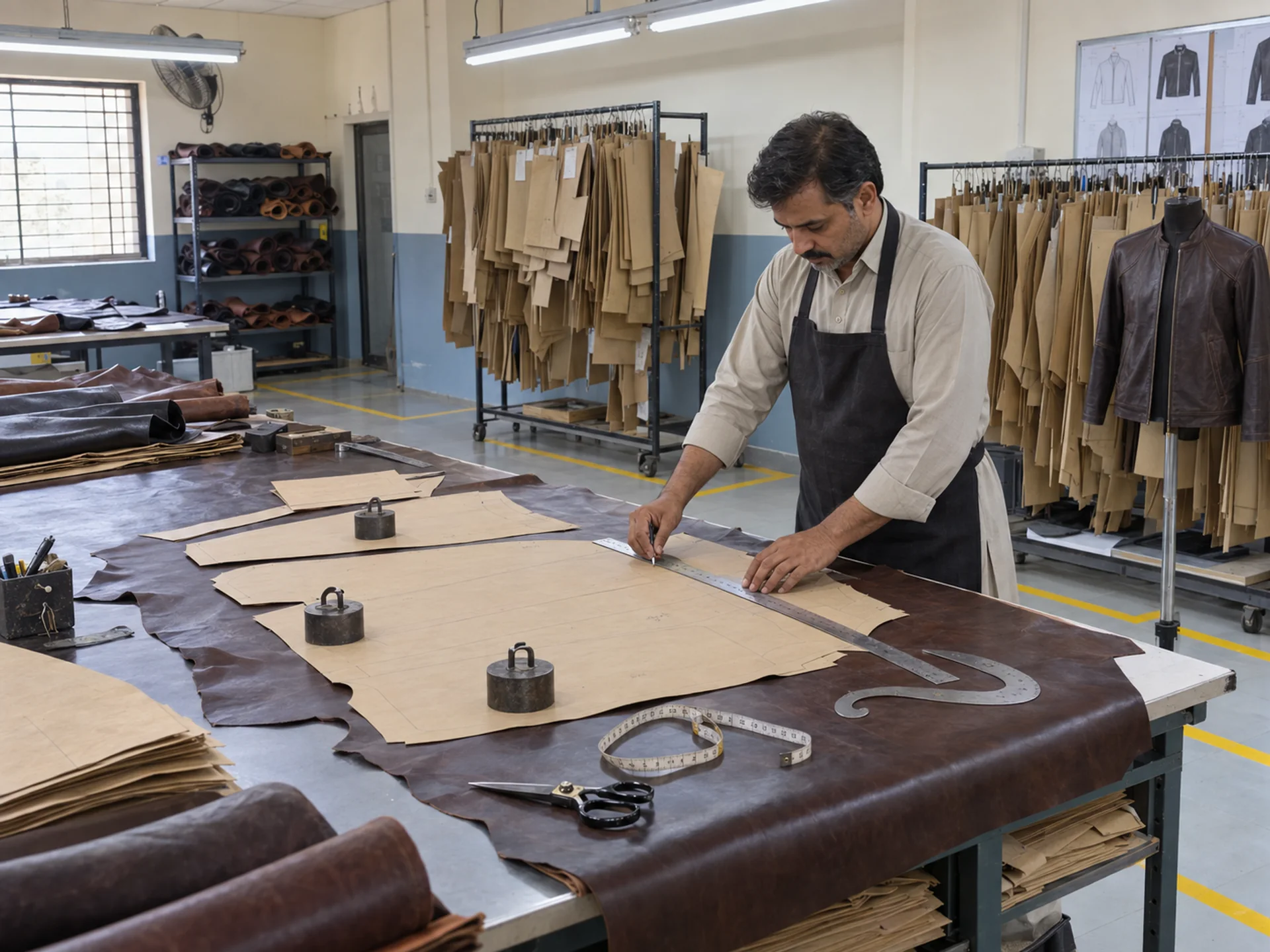
Choosing a leather jacket manufacturer in Pakistan involves more than comparing photographs and a price per piece. Before placing an order, buyers need to understand who will produce the garments, which operations will happen at the facility, how the sample will be approved and what the quotation includes.
This guide provides a practical verification checklist for fashion brands, retailers and private-label buyers. It explains what evidence to request and how to turn the answers into a documented production brief. It also links to Hashbloom International’s factory case study and company film so you can review our published production information before making an enquiry.
Start with a verification record
Create one record for each supplier. Save the document or reference supplied, the date checked, the person who answered and any open question. A polished website can introduce a business; it cannot replace a current review of the facility, materials and order terms.
| Check | Evidence to request | Question to resolve |
|---|---|---|
| Business identity | Business name, address and relevant registration information | Does the contracting entity match the quotation and invoice? |
| Production location | Current facility walkthrough and process explanation | Which operations are in-house and which are subcontracted? |
| Certification claims | Certificate number, issuer, scope and validity details | Can the issuer confirm the current status and covered location? |
| Material specification | Leather and lining swatches, trim references and written bill of materials | Is the proposed material the same as the quoted material? |
| Sample approval | Measured sample, revision record and approved specification | What becomes the reference for bulk production? |
| Quality control | Inspection stages, agreed acceptance criteria and reporting format | How will defects be identified, recorded and resolved? |
| Order terms | Written quotation, schedule, payment and shipping responsibilities | What is included, and what still needs confirmation? |
1. Confirm the business and the production location
Ask for the business name used on quotations and invoices, the factory address, a named contact and the appropriate registration information for your procurement process. Compare the details across the documents you receive. Clarify any difference between a trading name, a sales office and the entity supplying the order.
Ask directly whether the supplier operates the factory, coordinates partner factories or combines both models. Establish where pattern development, leather cutting, stitching, finishing and inspection will take place. Discuss whether subcontracting needs your approval and how specifications will be controlled across locations.
For Hashbloom’s published facility information and contact details, visit our leather clothing manufacturer in Pakistan page. Request current confirmation of the location and operations relevant to your project.
2. Review factory evidence that relates to your order
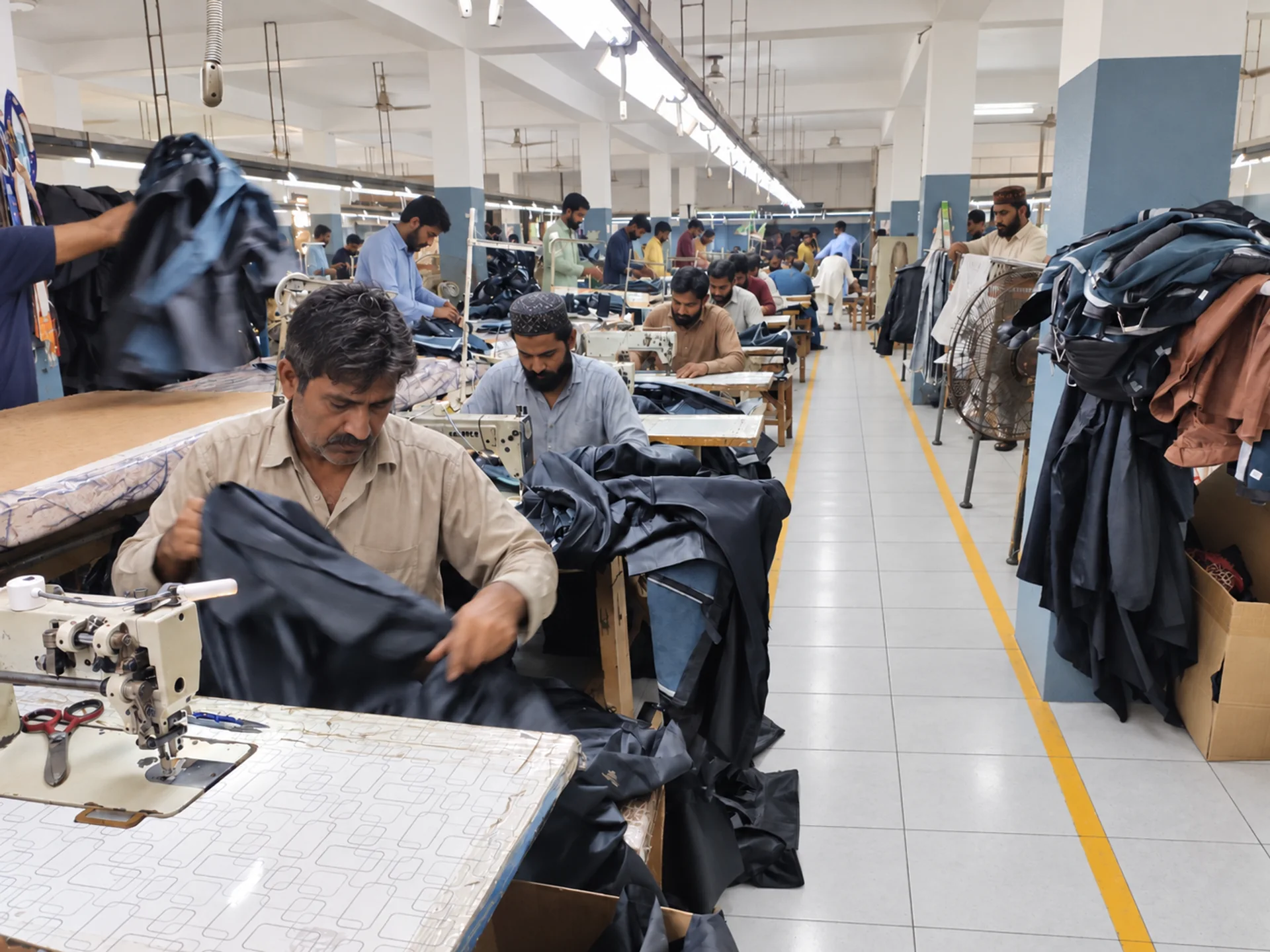
Request a current video walkthrough or arrange a live call. Ask the supplier to show the areas that matter for your garment: the pattern room, material inspection, cutting tables, stitching operations and quality checks. Ask who will manage your development and what information travels with the order between departments.
Factory photographs help explain a process, but they do not by themselves establish present capacity or prove that a particular order has been made there. Ask about available production slots, the proposed sequence of work and the way progress will be reported.
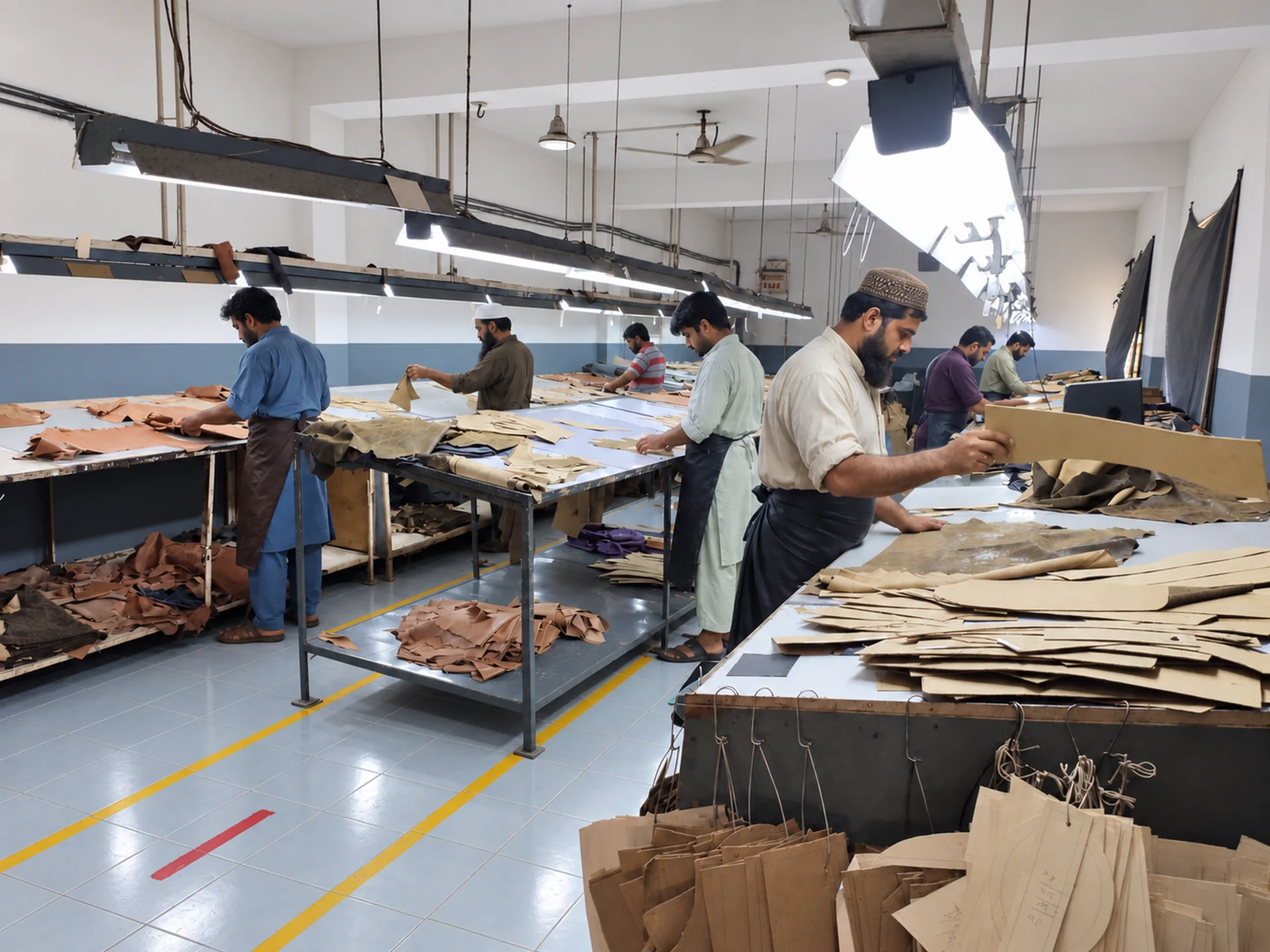
Our in-house factory case study describes the move from outsourced production to an internal team. The company film below offers another introduction to the facility. Use these references as a starting point for a project-specific discussion, then request any additional evidence your purchasing process requires.
3. Check certification details with the issuer
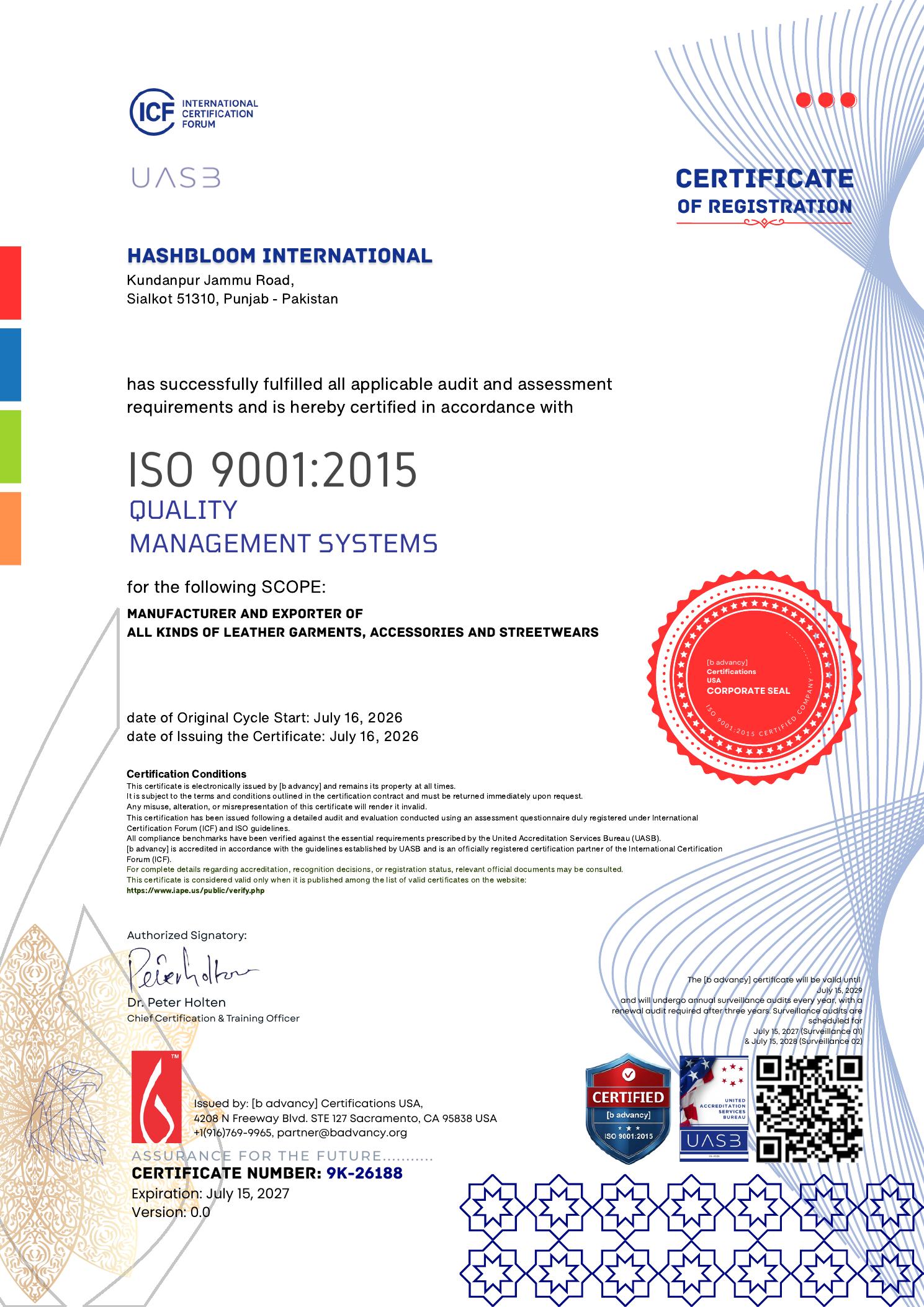
If a supplier presents a certificate, request the complete document and check the named organization, location, standard, scope, certificate number and validity information. Confirm current status with the issuing certification body; where an accredited certificate is claimed, also review the accreditation information.
ISO explains that certification is performed by external bodies, rather than by ISO itself. Its official certification guidance describes verification routes, including contacting the relevant bodies. Keep the response with your supplier review.
Hashbloom publishes a copy of certificate 9K-26188 for buyers to review: view the published certificate. Confirm its current status and applicable scope with the issuer as part of your own review. A management-system certificate does not establish a jacket’s warmth, waterproofing or protective performance; request evidence for any separate product claim.
4. Match the quotation to physical material references
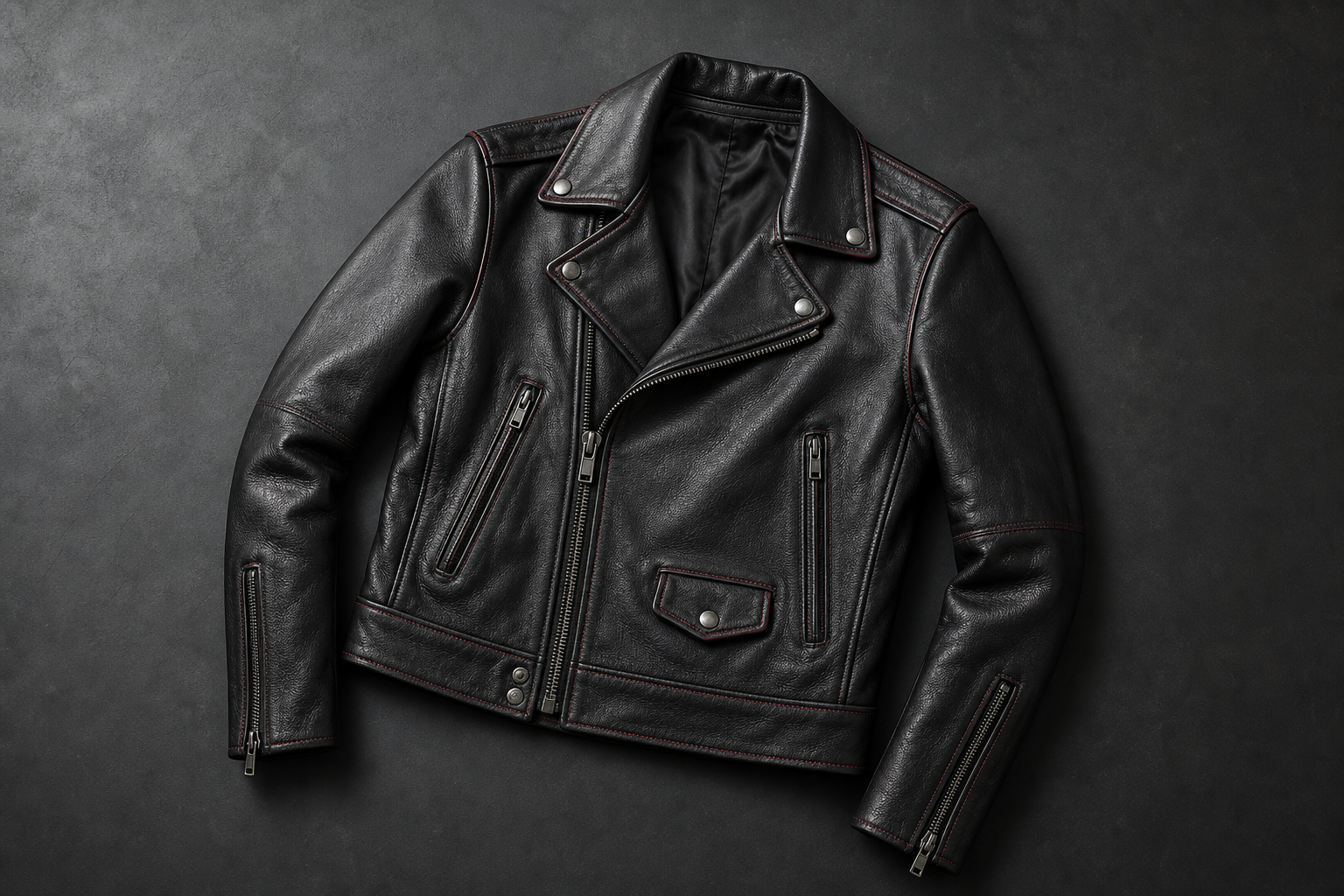
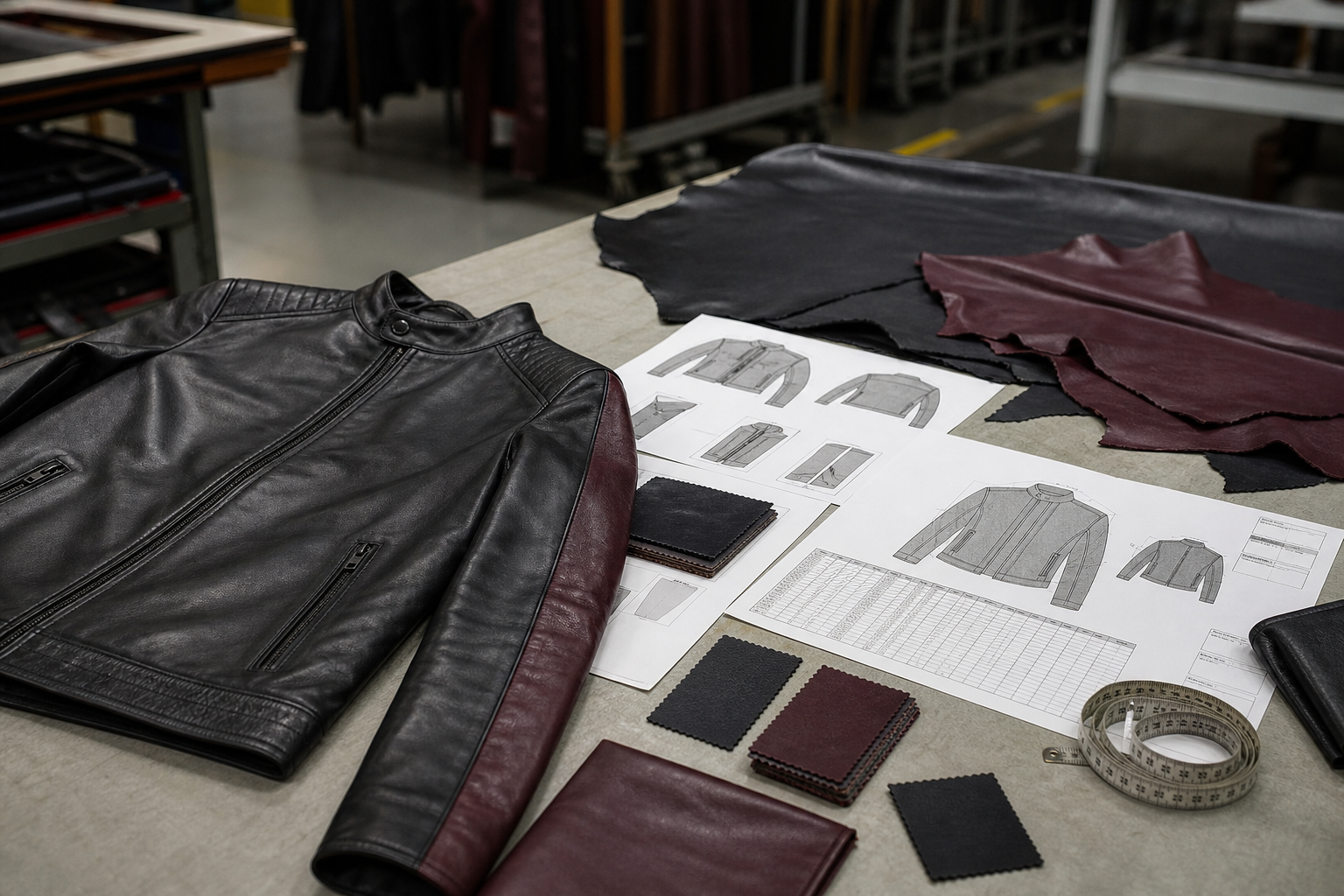
Specify leather species, finish, thickness, hand feel, colour and acceptable natural variation. Ask for a physical swatch of the leather proposed for your order. A general term such as “genuine leather” is not a complete purchasing specification.
Record the lining composition and weight, any insulation, zipper and snap references, reinforcement, labels and packaging. Where denim or another fabric is combined with leather, specify both materials and review their compatibility on the sample. Agree any testing needed for the finished garment and destination market before making performance claims.
Use our leather thickness guide and factory-ready tech pack guide to organize the brief. Keep the approved swatches and written specification linked to the quotation so later substitutions require a clear decision.
5. Treat sampling as an approval process
Ask what the sample fee covers, how revisions are handled and which materials will be used. If a development sample uses a substitute lining or trim, record that difference and arrange approval of the intended bulk component before production.
Measure the sample against agreed measuring points and tolerances. Check fit over the intended underlayer, forward reach, seated comfort, pocket access and closure operation. Review the base size and grading rather than assuming a proposed size chart has already been tested across the complete range.
Keep dated revision notes and identify the final approved sample and specification. Our leather jacket sample approval checklist provides a structure for recording those decisions.
6. Agree how quality will be checked
Discuss checks at material receipt, during cutting and assembly, and before packing. Agree which defects are unacceptable, how measurements will be assessed, what inspection report you will receive and who will approve a shipment. If you require an independent inspection, confirm access, timing and responsibilities in advance.
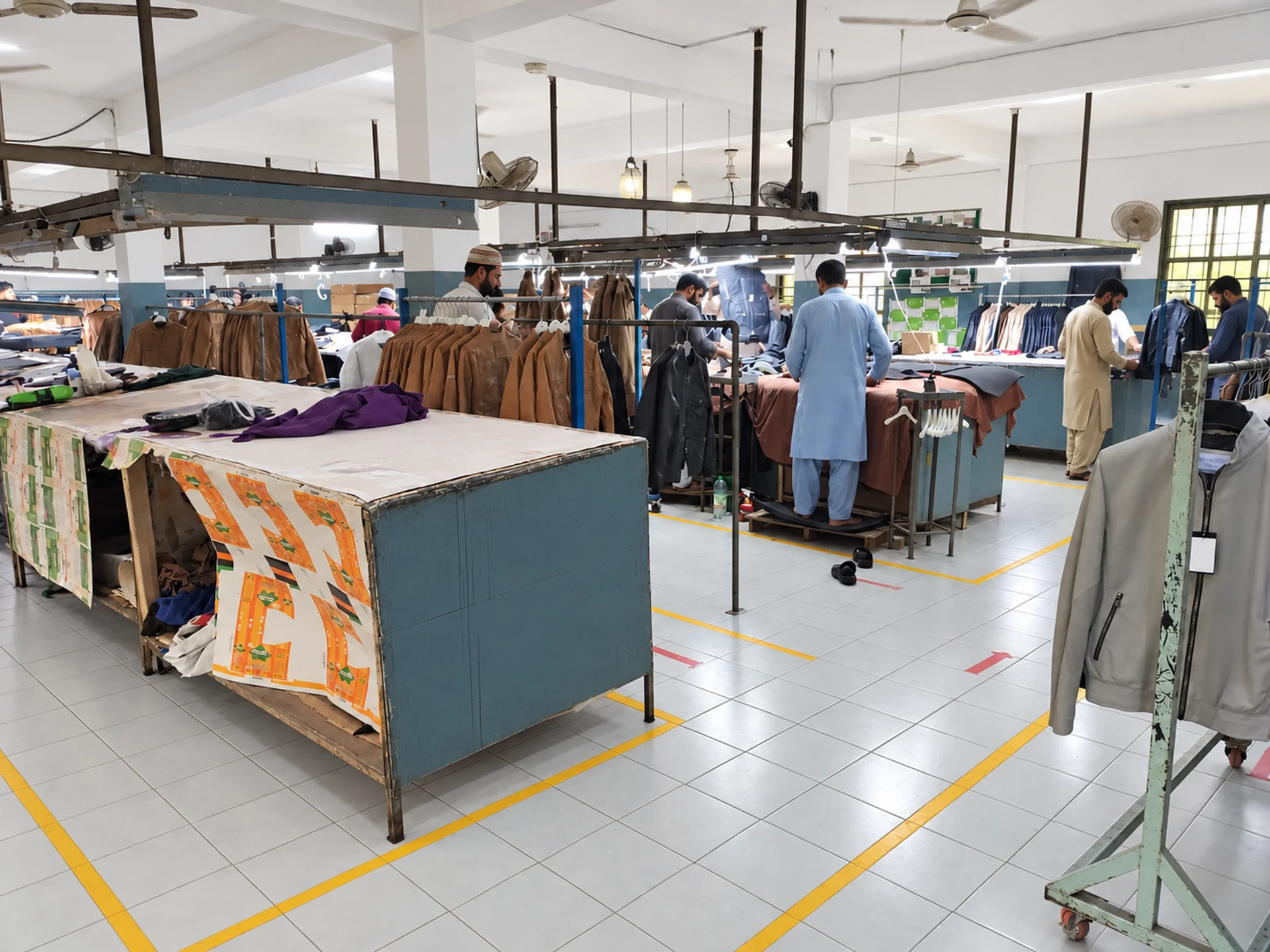
Ask how the supplier handles a failed check, repairs and reinspection. For leather jackets, the discussion should cover shade matching, seam appearance, hardware, lining, measurements, branding and packing. An inspection plan needs agreed acceptance criteria, rather than a general promise of “premium quality.”
7. Confirm MOQ, scheduling and order terms in writing
Check minimum quantities by style and colour, along with separate minimums for custom leather, lining or trims. Ask when the schedule starts and which approvals or material deliveries must happen first. Distinguish sample development, bulk production and shipping time.
Hashbloom’s listed MOQ starts at 50 pieces per style. Typical published development schedules are 7–10 working days for samples and 25–35 working days for bulk after approval, subject to materials, revisions, capacity and the confirmed offer. Request a written schedule for your own order.
Compare quotations against the same bill of materials, quantities, branding, packaging and delivery responsibilities. Record sample charges, tooling where applicable, payment stages, inspection arrangements and the process for resolving nonconforming goods. Clarify the named destination and shipping responsibilities before treating a quoted price as a complete delivered cost.
Questions to resolve before placing an order
- Who is responsible for my sample, production updates and final approval?
- Which operations will be subcontracted, and how will changes be communicated?
- Are the quoted leather, lining and hardware tied to approved references?
- What happens if the sample needs another revision?
- What inspection evidence will I receive before shipment?
- Which costs and timing assumptions remain open?
Pause the order decision while important inconsistencies remain unexplained. Examples include conflicting business details, unclear production locations, refusal to define materials or pressure to approve bulk production before the sample is settled. Ask for clarification and keep a written record of the answer.
What to send Hashbloom for a useful quotation
Send your design reference or tech pack, preferred leather, lining requirements, target quantity per style and colour, size breakdown, branding artwork, destination and requested delivery date. Include the inspection requirements and any documentation your purchasing team needs.
You can begin with our leather jacket manufacturing page or browse jacket development concepts. State which details are fixed and which you would like the factory to help develop.
Frequently asked questions
Can I verify a manufacturer remotely?
You can review documents, arrange a live facility call, request samples and discuss independent inspection. The level of review should match your order and procurement requirements; photographs alone do not resolve every question.
Does a certificate replace sample approval?
No. Review the certificate’s current status and scope separately, then approve the actual materials, fit, construction and production reference for your jacket.
Is the lowest quotation the best option?
Compare offers against the same specification and delivery responsibilities. A lower price may reflect different materials, quantities, construction or included services, so resolve those differences before deciding.
Can a new brand enquire before completing a tech pack?
Yes. Send clear references, target quantities, fit preferences and material ideas. Ask the team to identify the development work, sample costs and remaining decisions needed for a quotation.
Discuss your private-label jacket project
Share your design and purchasing requirements with our Sialkot team. We can review the brief, discuss the relevant factory operations and confirm the sampling and quotation requirements for your project.