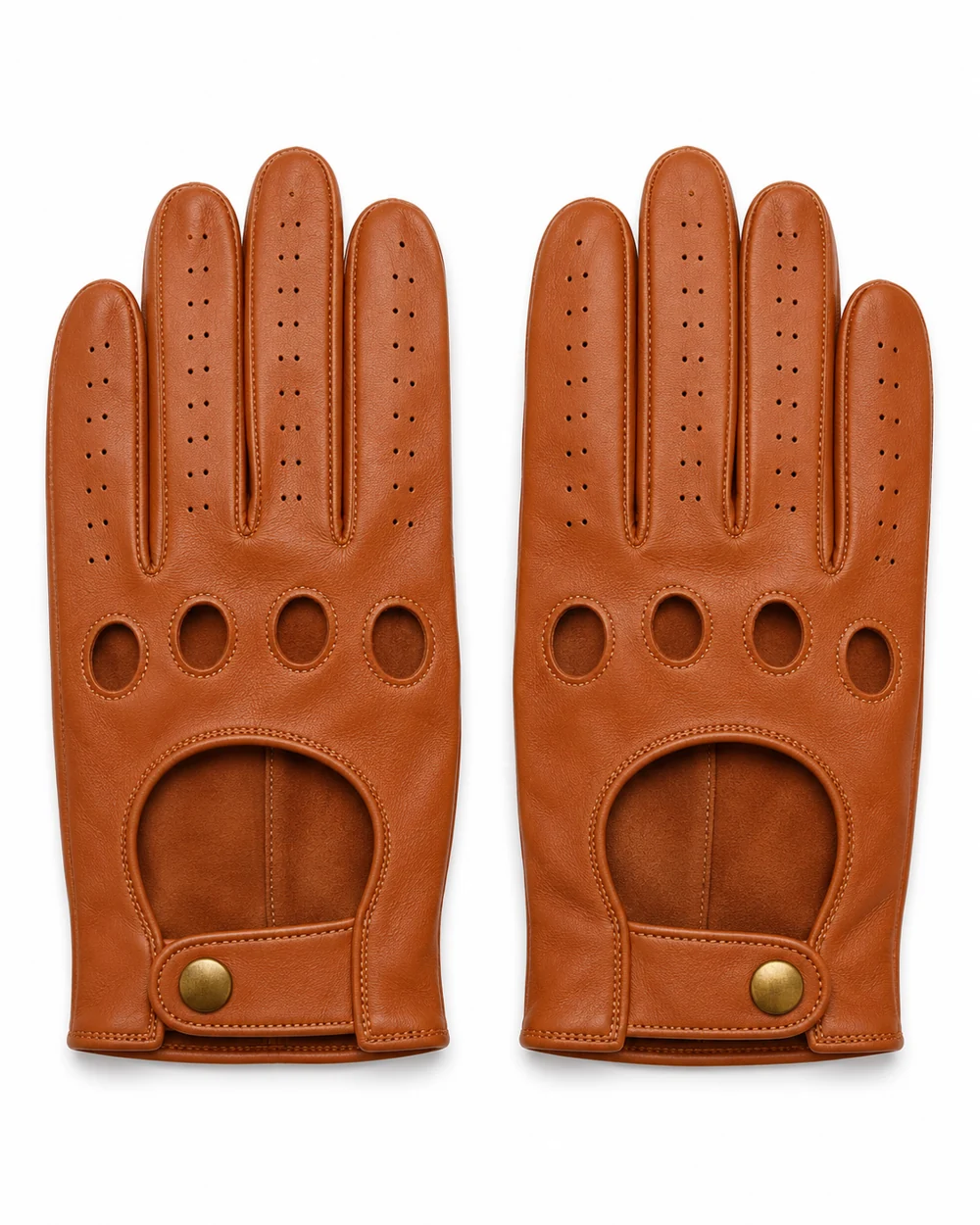
A successful private-label glove order starts with a clear brief: who will wear the gloves, how they should fit and which details your brand needs to control. A photograph communicates appearance, but it cannot establish lining composition, finger measurements or the quality of a finished pair.
This guide helps fashion brands, retailers and wholesale buyers organize those decisions before requesting a factory quotation. Use the five Hashbloom International concepts below as starting points, then agree materials, construction and fit through physical sampling.
1. Choose the glove type around your customer
Begin with the intended use and selling season. A lined dress glove belongs in a different development brief from an unlined driving glove. Specify whether the customer expects a close tailored fit, extra wrist coverage or open fingertips. Decide which styles complement your outerwear or accessories range before adding colour variations.
For an opening collection, shortlist a manageable number of styles and review your own customer enquiries, retailer feedback and sales history. These design concepts are not a global demand ranking or evidence of ready-made stock. Their purpose is to help you communicate a manufacturable product direction.
2. Compare five leather glove design concepts
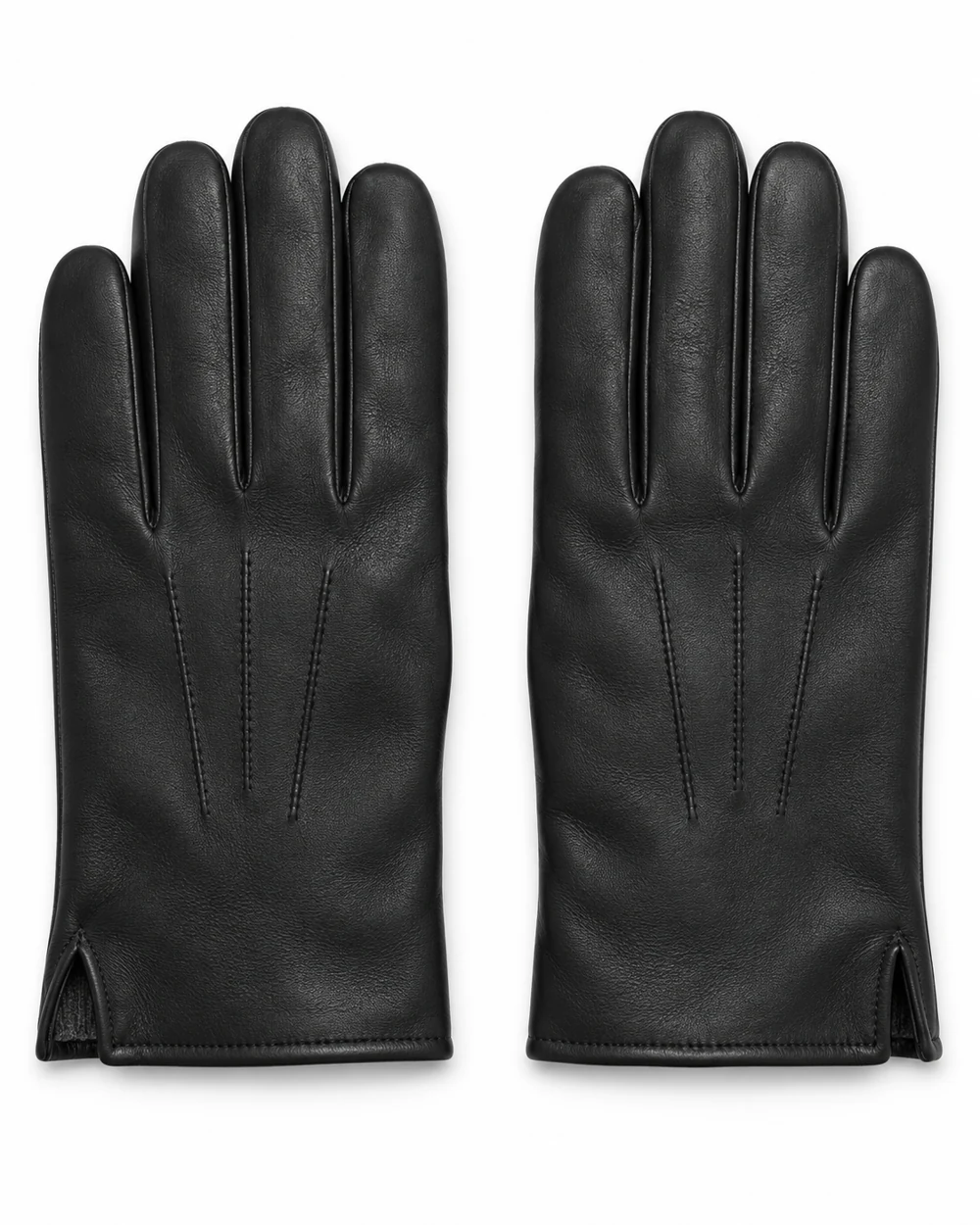
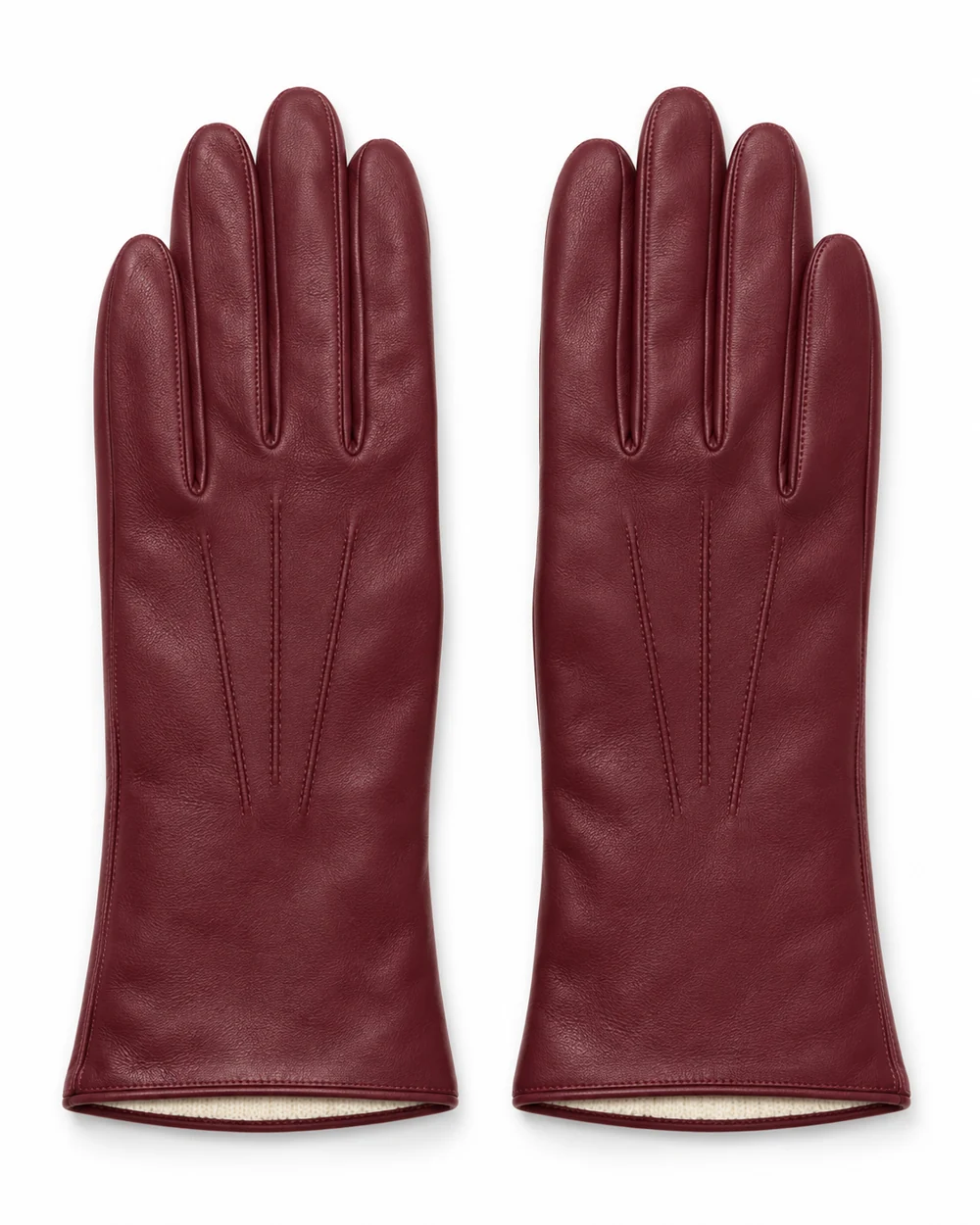
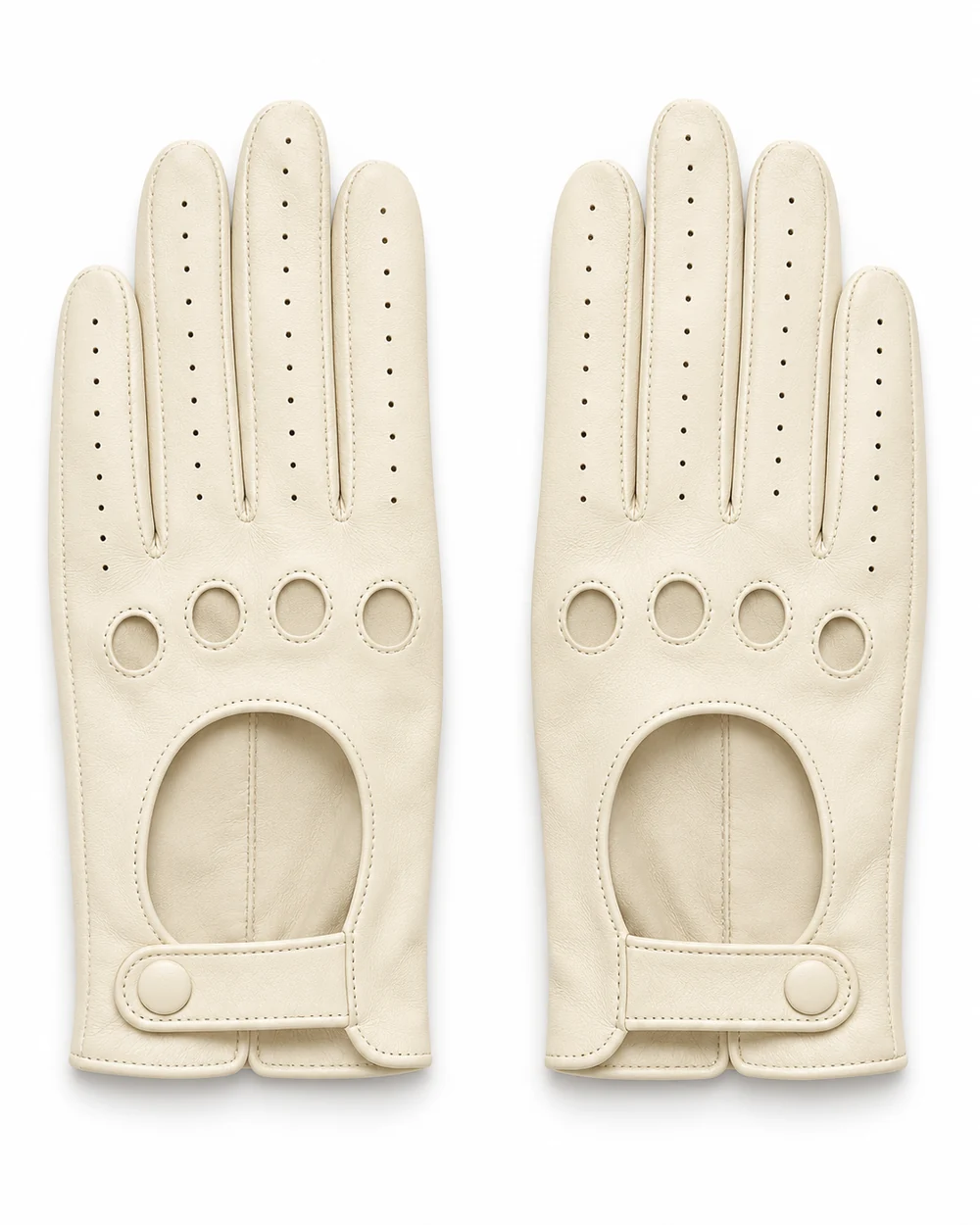
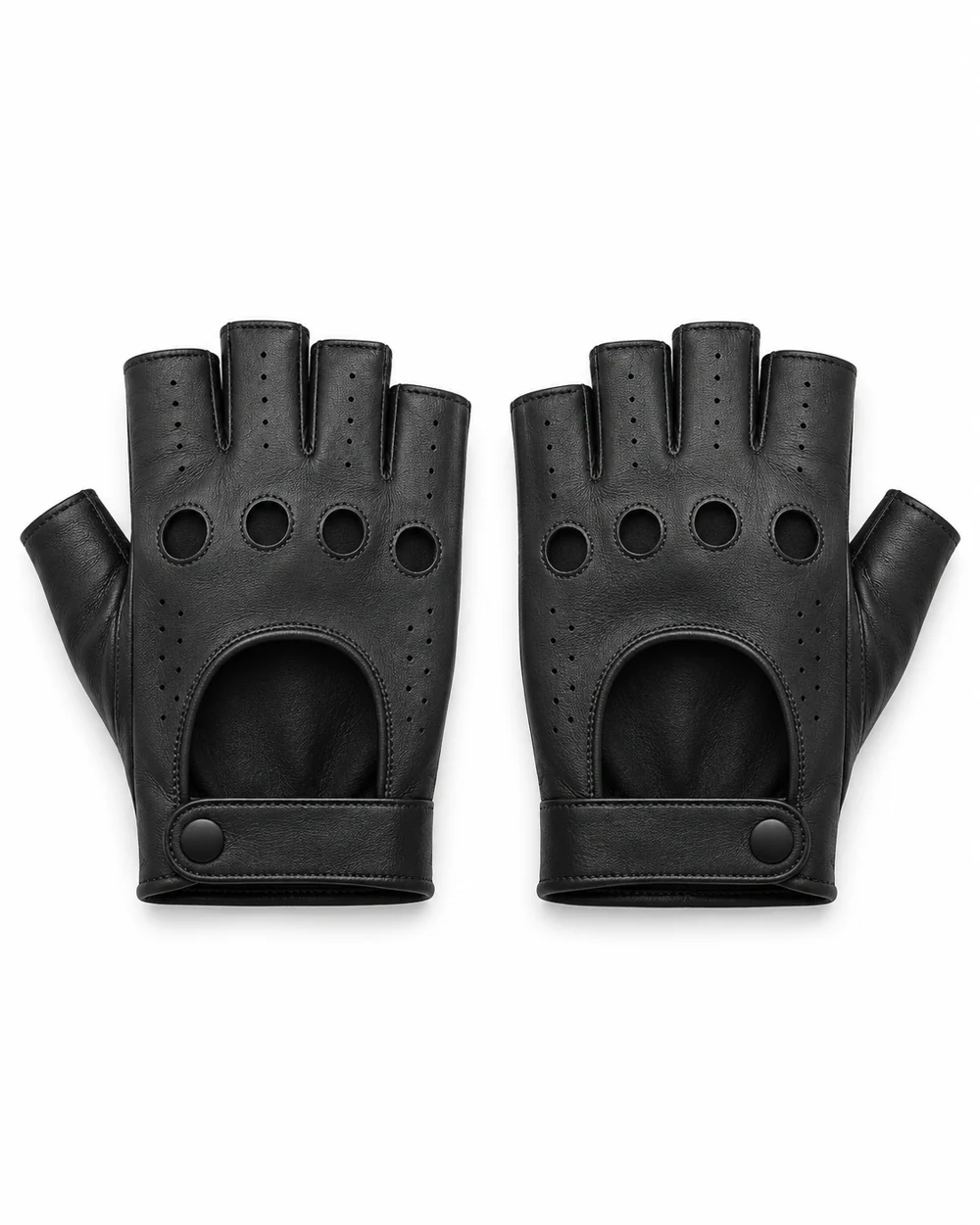
The five illustrated styles cover men's and women's lined dress gloves, full-finger driving gloves and a fingerless option. Product images are AI-generated design concepts. Leather, lining composition, measurements and construction remain subject to physical sample approval.
| Design | Proposed direction | Main sample check |
|---|---|---|
| Men's black cashmere-lined dress gloves | Three-point back, short cuff and proposed cashmere knit lining | Finger length, lining bulk and cuff clearance under a coat |
| Women's burgundy cashmere-lined gloves | Slim full fingers, longer wrist and proposed cashmere lining | Finger-web depth, wrist ease and paired fit |
| Men's cognac perforated driving gloves | Full fingers, open back and snap wrist strap | Thumb reach, knuckle openings and internal seam comfort |
| Women's ivory driving gloves | Slim perforated fingers and covered snap | Palm fit, closure ease and approved ivory shade |
| Black fingerless driving gloves | Short open fingers, open thumb and adjustable strap | Opening lengths, edge finishing and movement |
3. Specify the leather instead of relying on a name
Ask the supplier to identify the animal species, finish, thickness range and colour reference. Sheep nappa is proposed for these five styles; goatskin or cowhide can be discussed for another brief. Do not treat a species name as a complete specification or a guarantee of performance.
Review physical swatches for softness, stretch, grain appearance and acceptable natural variation. Agree whether visible markings are acceptable and how shade matching will be assessed within a pair. For pale colours, review the leather alongside lining, thread and packaging so the complete presentation is approved together.
Specify any required colourfastness, finish-rub or other material checks with the supplier, including the test method and acceptance criteria. The leather chosen for a digital image is not a tested material approval.
4. Confirm lining composition and its effect on fit
A lining description should identify fibre composition and the agreed construction, rather than only using a luxury-sounding name. For cashmere proposals, confirm whether the chosen article is pure cashmere or a blend and approve the supporting material information before finalizing labels or retail copy.
Other lining directions can be discussed according to your brief, including wool blends, fleece or lightweight textile linings. Assess the actual material inside the glove: extra bulk can change finger allowance, dexterity and the feel of the cuff. Fit approval should use the intended production lining.
For unlined driving styles, inspect the internal seams directly. Check that seam edges and wrist hardware feel comfortable during movement. A lined glove does not automatically carry a tested temperature rating; agree evidence separately if your brand needs a warmth claim.
5. Build a useful sizing and measurement brief
Start by measuring the dominant hand around the widest part of the palm, excluding the thumb. Also record hand length from the wrist crease to the middle-finger tip. Use those body measurements to establish the target wearer, then develop the finished-glove chart with the factory.
State clearly which values are body measurements and which are product measurements. Include individual finger lengths, thumb position, cuff opening and finished glove length where relevant. An S–XL label alone does not define a fit block, and a men's chart should not be reused automatically for a women's or unisex style.
Review the sample with the hand open, curled and holding an appropriate reference object. Look for pressure between fingers, excessive fingertip space, restricted thumb movement or a cuff that is difficult to put on. Agree tolerances and grading rules before approving the full size set.
6. Understand MOQ, sampling and price factors
Hashbloom's listed starting MOQ for these glove programs is 50 pairs per style. Confirm the quantity split by colour and size, because custom-dyed leather, special linings or branded hardware may have their own minimums. Request prices against the same specification when comparing suppliers.
Quotation inputs include leather selection, lining, pattern complexity, perforation, seam finishing, closure hardware, branding, packaging and order volume. Sample charges, revision allowances and delivery costs should be identified separately. A request-quote listing is not a fixed bulk price.
Typical published planning guidance is 7–10 working days for sampling and 25–35 working days for bulk after approval. The written project schedule should confirm material availability, revisions and production capacity; shipping and customs time are separate. See the leather MOQ and sampling guide for the broader workflow.
7. Approve branding, packaging and care information
Send vector artwork or a clear logo file with finished dimensions and placement. Discuss debossing, woven labels, branded snaps and hangtags, then review the chosen method on the actual leather. Small glove panels require careful placement so branding does not conflict with seams or wrist movement.
Approve left/right pairing, size identification, barcodes and individual-pair packaging. Include destination-market label requirements in the brief and agree care instructions for the complete leather, lining and trim combination. For general leather handling, avoid direct heat when drying and use only care products suitable for the approved finish.
8. Use a physical sample approval checklist
- Compare both gloves for shade, grain appearance, finger length and overall balance.
- Check stitching, finger-web seams, thumb attachment and internal seam comfort.
- Inspect lining attachment, cuff edges, snap security and wrist adjustment.
- Confirm perforation spacing and opening edges on driving styles.
- Review logo placement, labels, care wording and packed presentation.
- Record measurements, required corrections and the final approved reference.
If touchscreen functionality is requested, identify the intended conductive areas and verify response on the target devices. Driving styling does not establish motorcycle or industrial protection. Any protective application needs a separate agreed specification and appropriate testing before related claims are made.
9. Send a quotation brief the factory can use
Include your selected style link, reference drawings, target customer, leather and colour, lining preference, size range, quantity per style and colour, branding artwork, packaging and destination. Add your requested delivery date and identify any performance or documentation requirements before costing begins.
Ask the written quotation to clarify sample fees, included revisions, payment terms, shipping responsibilities and approval milestones. Hashbloom International's private-label leather glove manufacturing team in Sialkot, Pakistan can review the brief and confirm the next development step.
Frequently asked questions
Can I order these glove styles with my own logo?
Request your preferred style with artwork, quantity and material requirements. Logo method, placement and any custom-trim minimums are confirmed during quotation and sampling.
Are the illustrated cashmere-lined gloves confirmed production samples?
No. The images are design concepts, and cashmere lining is a development proposal. Confirm the actual lining composition, fit and construction on the physical sample before ordering.
Can I change colours, lining or sizing?
Include the changes in your brief. Availability, minimum quantities and sample approval determine the final production specification.
What is the minimum order?
The listed starting minimum is 50 pairs per style. Confirm colour splits, custom materials and packaging requirements in your written offer.
Start your private-label glove project
Choose a design, outline your target quantity and sizes, and share your leather, lining and branding preferences. Request a sample and factory quotation so the next decision is based on an agreed specification.
Further reading: Dents glove measurement guide and Dents leather glove care guidance. External guidance is general reference; your approved product specification and care instructions govern your order.