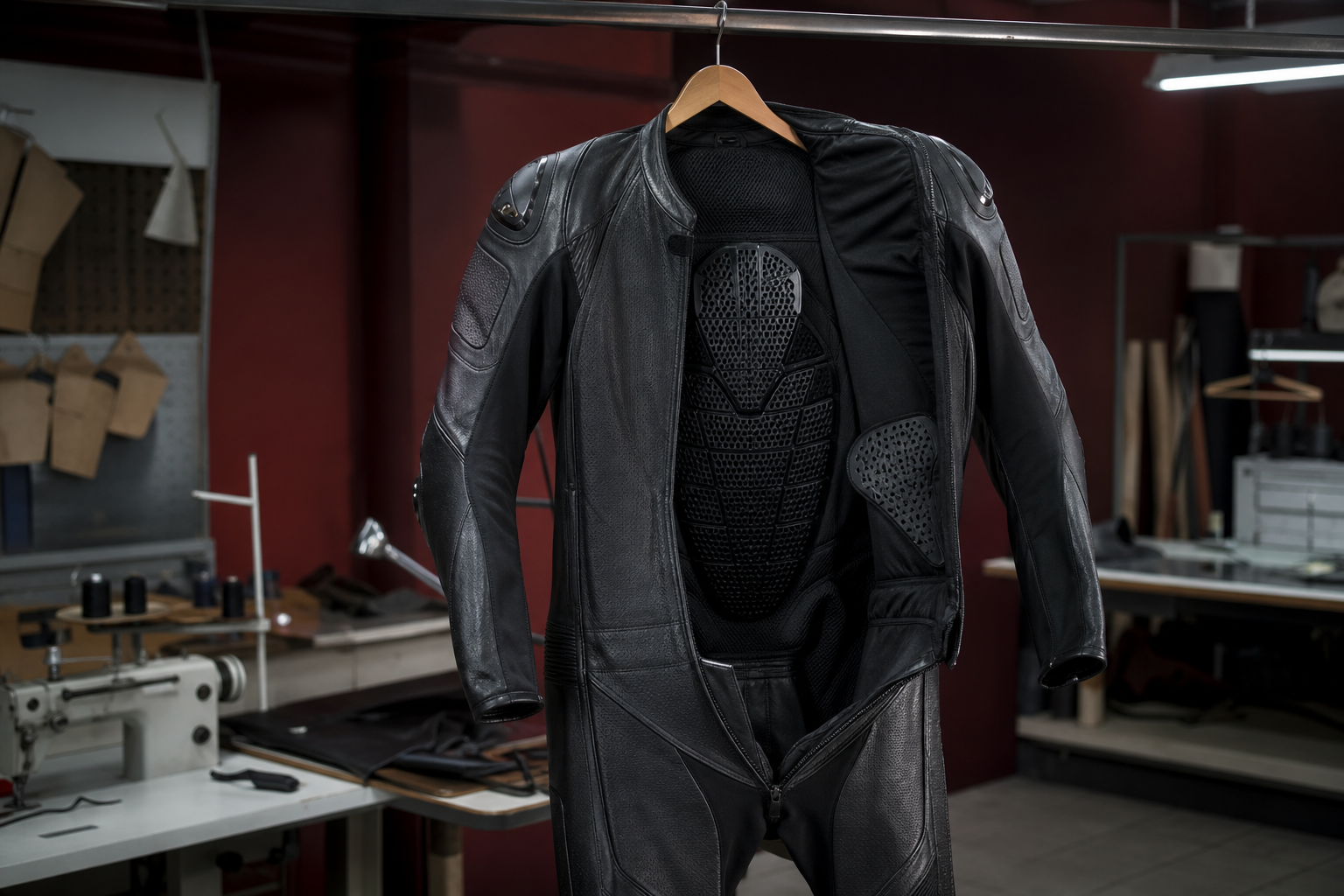
One-Piece vs Two-Piece: Which to Spec
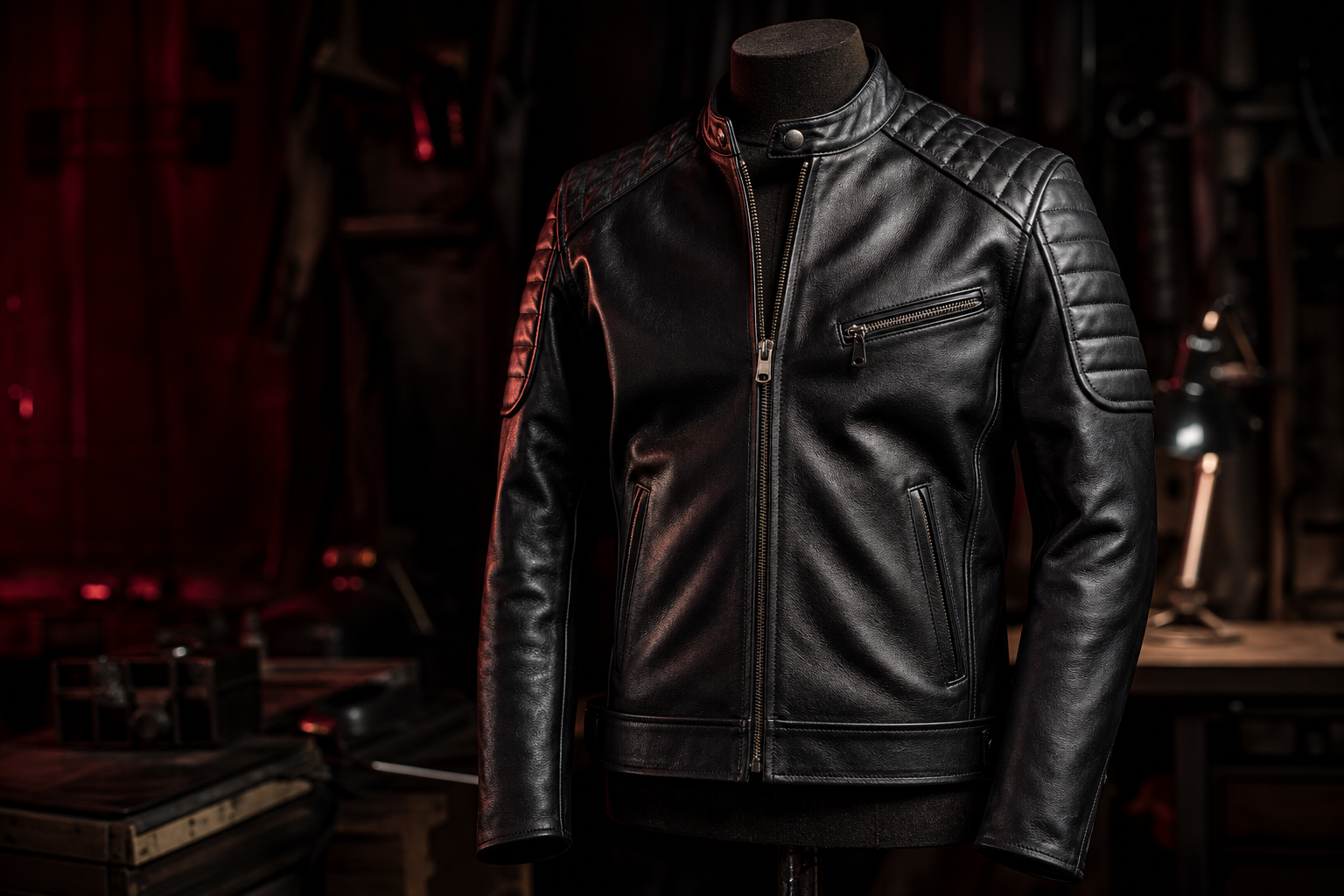
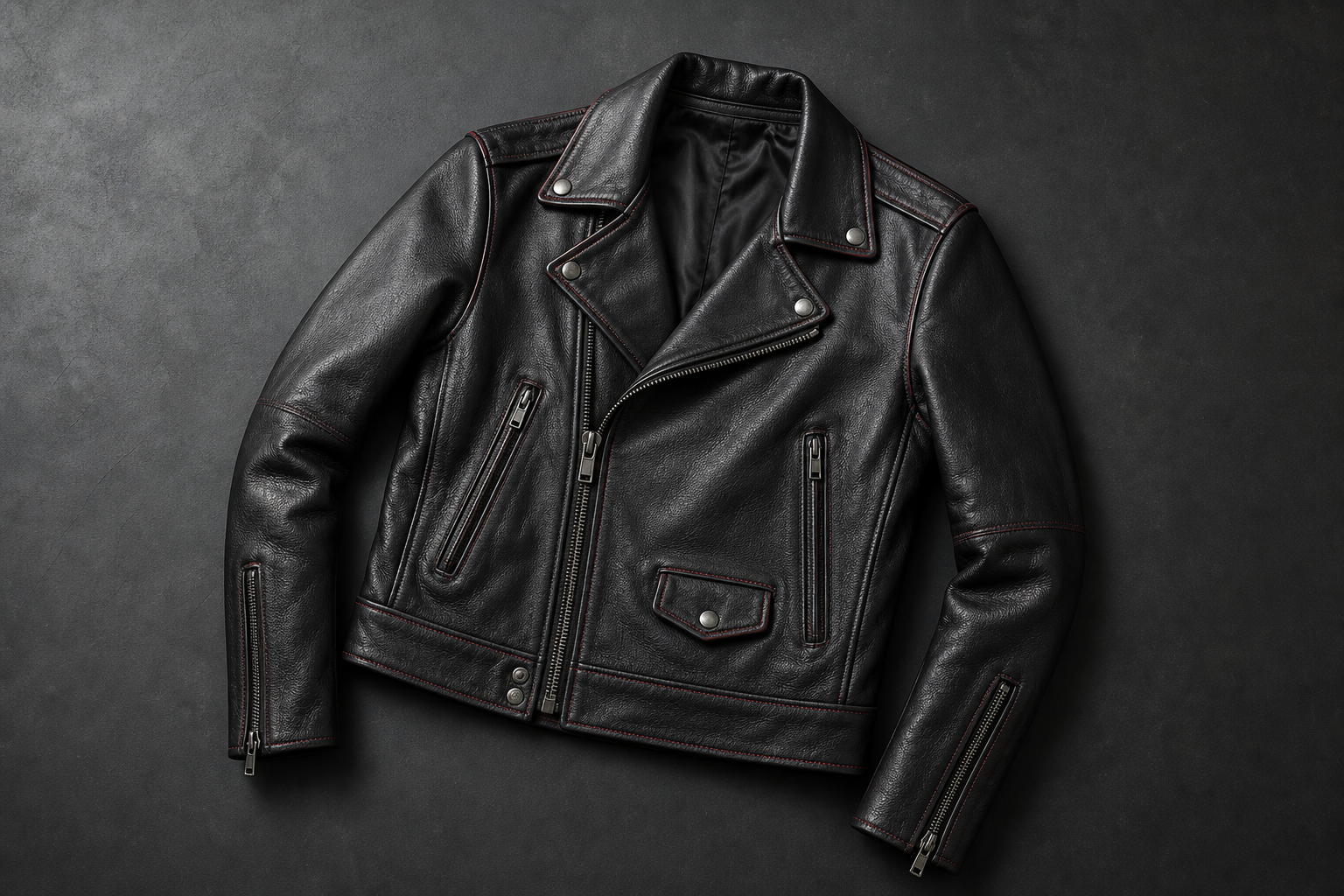
One-piece suits are the standard for track-focused riders because there is no gap at the waist where a jacket and pants can separate under impact. Two-piece suits — a jacket and pants that zip together at the waist — trade a small amount of protection for everyday usability, since the pieces can be worn separately. Most consumer-facing moto brands build a two-piece range first and add a one-piece race suit as a flagship product once the pattern room has proven out armor placement.
Panel Mapping & Stretch Zones
A riding position is not a standing position — the knees are bent, the back is rounded forward, and the arms reach ahead. Pattern development for a moto suit starts from a seated riding posture, not a standard body block, and stretch panels (usually a leather-look stretch textile or perforated leather) are set into the underarm, inner elbow, back yoke, and knee to preserve mobility without giving up abrasion coverage on the outer panels.
- Pattern developed from seated riding posture, not standing body block
- Stretch panels at underarm, inner elbow, back yoke, and knee
- Independently reinforced armor pockets at shoulder, elbow, hip, and knee
- Aramid or Kevlar thread option for critical seams on race-oriented suits
- Waist-connecting zip for two-piece suits, tested for full range of motion
Stitch Classes That Matter
Main body seams on a performance moto suit are typically double or triple row stitched rather than single-pass, since a single row of stitching is the first thing to fail under slide friction. Armor pocket openings and stretch panel joins use a different stitch class than the outer shell seams, because they are managing a different kind of stress — flex and repeated opening rather than a single high-load event.
MOQ & Lead Time for Suit Programs
Because a moto suit involves more components — hide, stretch panels, armor pocket hardware, connecting zips — than a standard jacket, Hashbloom International recommends starting a suit program at the 50-piece MOQ with a single size run for initial market testing before committing to a full graded size set. Sample lead time runs 10–14 days given the added components, with bulk production at 25–35 days from sign-off.