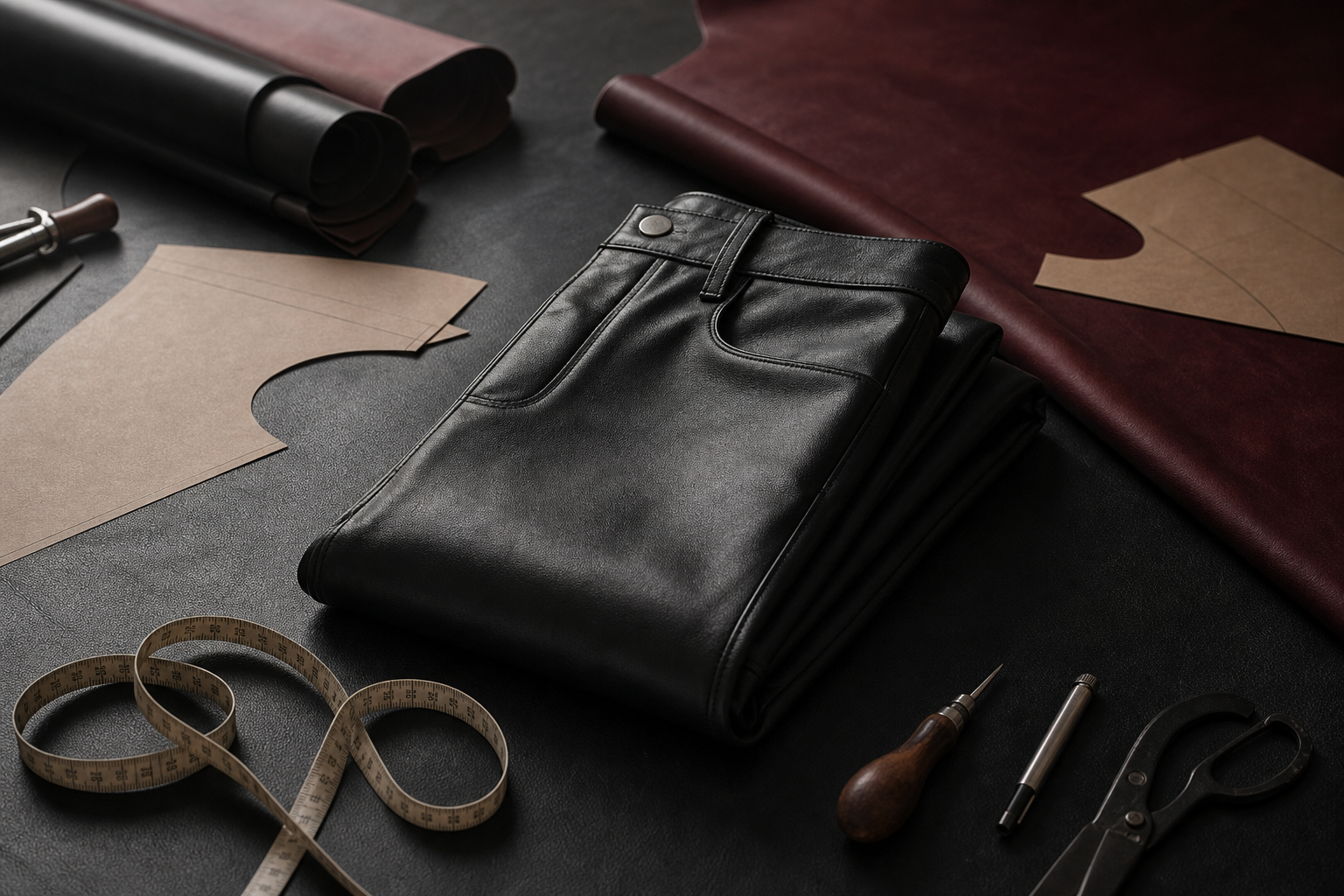
Why Leather Pants Need a Dedicated Fit Block
A woven trouser pattern cannot be traced directly onto leather and expect the same result. Leather has minimal cross-grain stretch, so ease has to be engineered into the pattern at the knee, seat, and waistband rather than relied on from the material itself. Hashbloom International develops a leather-specific fit block for every new pants style, starting from body measurements and confirming range of motion — sitting, walking, and on a motorcycle for riding-oriented styles — before cutting a first sample.
Panel Construction & Stretch Zones
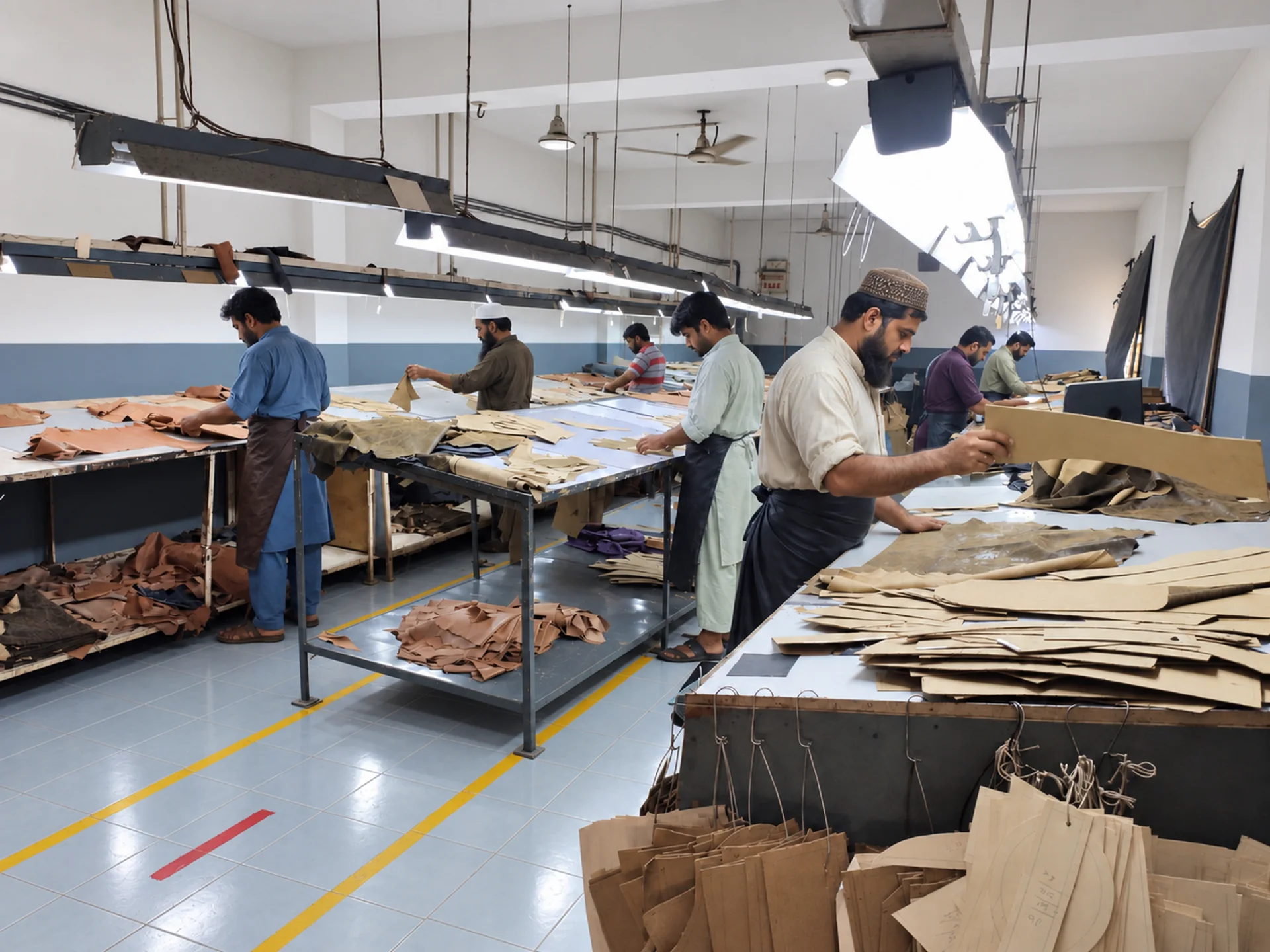
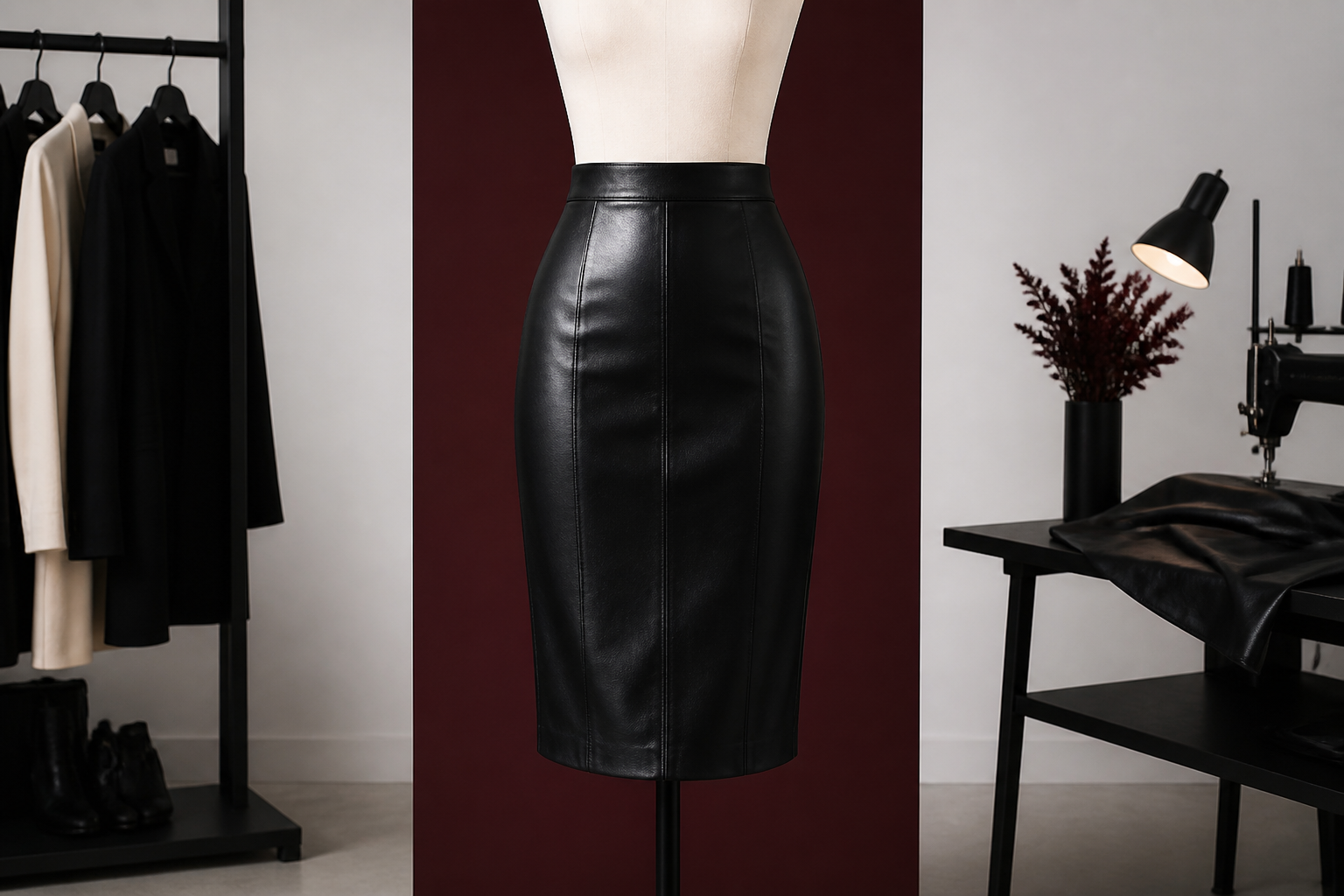
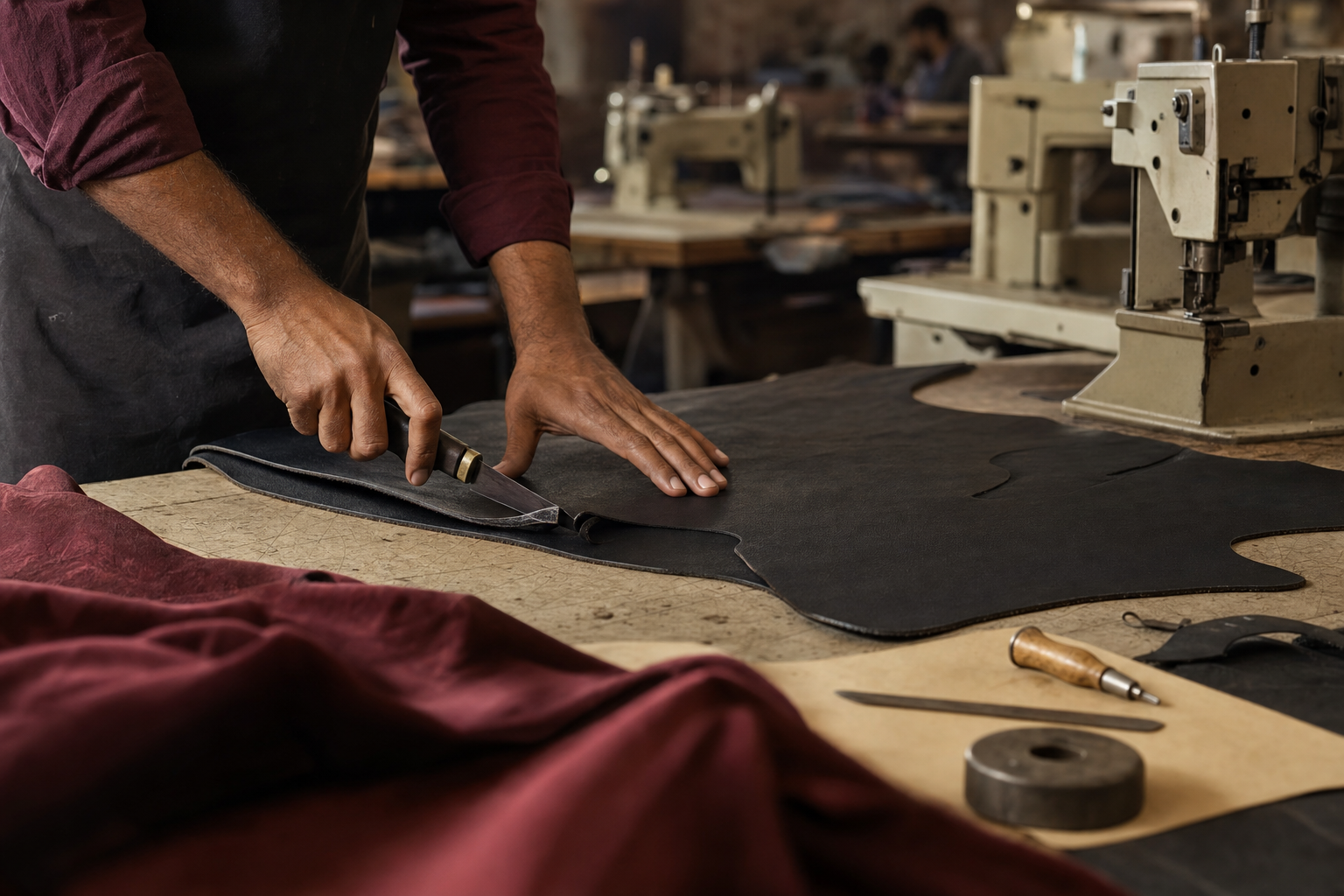
Most leather pants are built from multiple panels rather than a single front and back piece, both to make efficient use of hide (which comes in irregular shapes) and to place seams where they can accommodate movement. A common solution for moto-oriented leather pants is a stretch gusset panel — usually a leather-look stretch fabric — set into the inner knee or seat, which restores mobility without giving up the leather look from the visible outer panels.
- Multi-panel construction for efficient hide usage and targeted ease
- Optional stretch gusset at knee or seat for riding and mobility
- Reinforced belt loops and waistband facing for structure under wear
- Lining choice (unlined, partial, or full) confirmed at spec stage
Lining & Waistband Choices
Unlined leather pants feel closer to the body and cost less, but they show wear faster at the seat and knee. A partial lining at the seat and thigh balances comfort and price; a full lining is standard for premium fashion-positioned pants. Waistband construction should be confirmed separately — a rigid waistband with belt loops reads differently than an elasticated back panel, and the two require different pattern approaches.
Sampling to Bulk at Hashbloom International
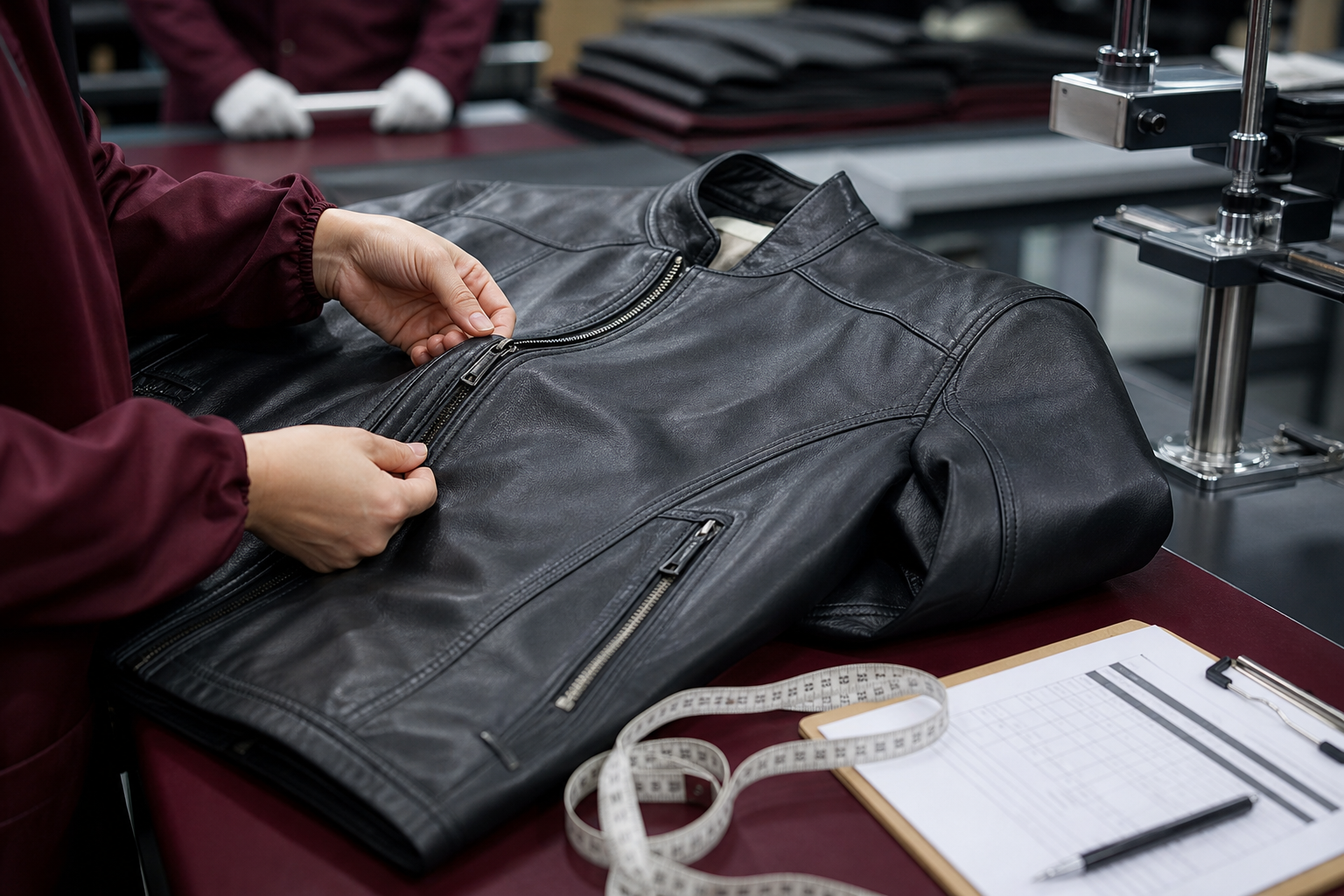
Because fit is the highest-risk variable in leather pants, Hashbloom International builds in two fit-sample rounds as standard before locking a size set for grading. MOQ is 50 pieces per style and colorway, sample lead time is 7–10 days per round, and bulk production runs 25–35 days from final sign-off, with DDP shipping worldwide.