Structure Comes From the Interior, Not Just the Hide
A common mistake in first-time bag briefs is assuming a thicker hide alone will hold shape. In practice, structure comes from internal reinforcement — a stiffened base board in a tote, foam or buckram interlining in a duffel's end caps, or a structured frame insert in a handbag — combined with a hide weight matched to the bag's size and load. Hashbloom International specs interior reinforcement as a standard line item on every bag tech pack, not an optional add-on.
Category-Specific Construction Notes
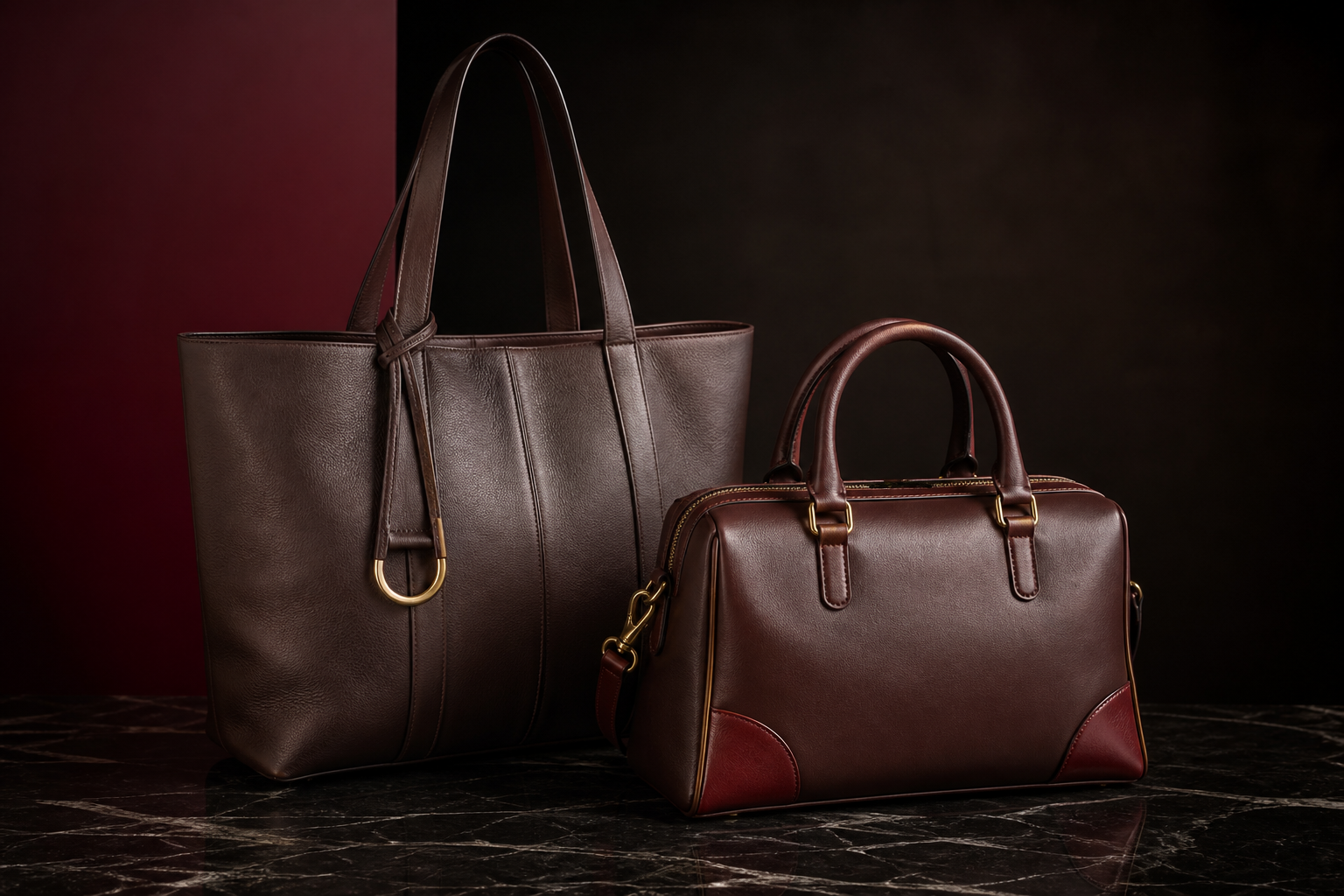
- Totes: reinforced base board, riveted handle attachment points, open or zip-top closure
- Duffels: stiffened end caps, a full-length bottom-mounted zip, and a detachable shoulder strap
- Handbags: internal frame or stiffener, magnetic or zip closure, and a structured base
- All categories: branded hardware (zip pulls, D-rings, feet) confirmed at hardware sourcing stage
Lining & Interior Organization
Interior lining is both a cost lever and a functional decision. A basic cotton or poly lining protects the hide's interior side and is standard on most bags; a branded jacquard lining adds a premium touch at modest cost. Interior organization — zip pockets, a laptop sleeve, key clip — should be finalized before the pattern is cut, since adding a pocket after tooling is set can shift the whole panel layout.
Hardware Sourcing for Bags
Zip pulls, D-rings, feet studs, and buckles are more visible on a bag than almost any other leather category, since the hand interacts with the hardware constantly. Confirm finish (brushed brass, matte black, polished nickel) and load rating for strap-connecting hardware, especially on duffels and cross-body bags carrying real weight.
MOQ & Lead Time
Hashbloom International runs bag OEM programs at a 50-piece MOQ per style and colorway. Given the added interior components, sample lead time is typically 10–14 days, with bulk production in 25–35 days from sign-off and DDP shipping available worldwide.